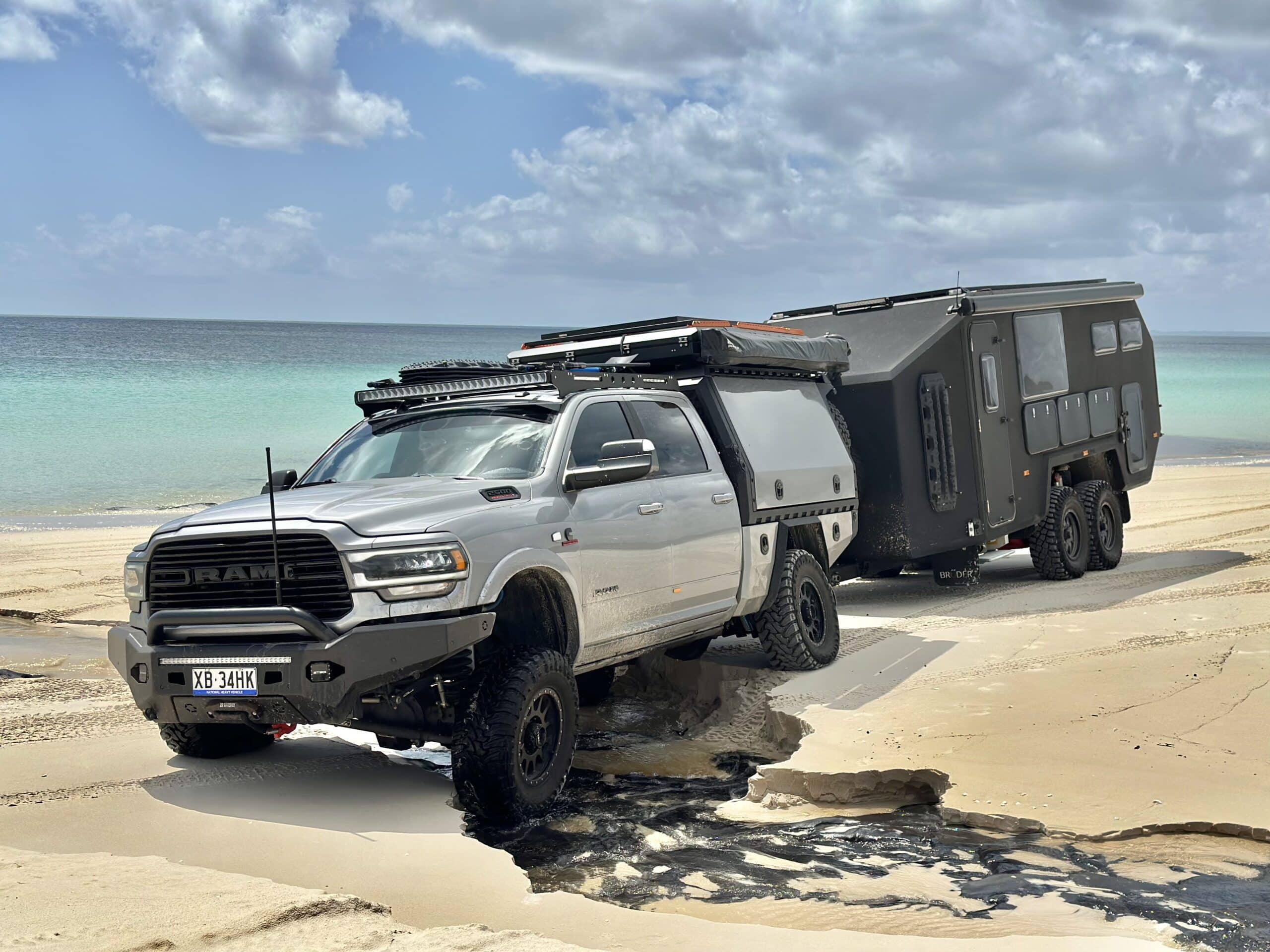
I asked Grok how the harvester model can match performance of the EV.
For the Harvester (range-extended) Scout Terra to match the full BEV version's performance—especially the projected 10,000+ lbs towing, similar acceleration (likely around 3.5-4.5 seconds 0-60 unloaded), and sustained power under heavy load—it would need to overcome the core limitations from its smaller battery and generator setup compared to the BEV's larger, higher-power-density battery pack.
No single magic fix exists without some trade-offs, but here's exactly what it would take in practical engineering terms:
1. Significantly boost peak and sustained power delivery from the entire system
The BEV pulls massive instant power (hundreds of kW) straight from its big battery for towing demands like hills, passing, or acceleration with a trailer. The Harvester's smaller LFP battery has lower power density and can't deliver the same high-discharge bursts without issues like overheating or voltage drop.
What it takes: A much more powerful generator (for example, an upsized engine putting out 250-300+ hp continuous with strong torque mapping) that can feed high power directly or recharge the battery buffer quickly enough during heavy towing. Scout's current non-turbo 4-cylinder (likely around 1.5L tuned for roughly 230 hp steady) falls short for BEV-level peaks, so they'd need something closer to a tuned 2.0L or larger, or advanced hybrid buffering that blends generator and battery seamlessly for short bursts.
2. Adopt or hybridize battery chemistry for higher power output
LFP is great for cost, longevity, safety, and being able to fully charge regularly, but it sacrifices peak power capability.
What it takes: Switch to (or mix in) higher-power NMC cells, or use next-gen LFP variants with better power density. This could raise cost or weight, or reduce some of the durability advantages Scout is aiming for with the Harvester.
3. Implement aggressive software modes and thermal management
Scout already talks about a "Heavy Duty Mode" for towing and severe use that leans more on the engine.
What it takes: Advanced battery management to allow higher sustained discharge rates, superior cooling systems (liquid cooling for both battery and generator), and smart power blending so the generator handles the baseline load while the battery covers peaks. This approach could get very close without major hardware changes, though it might slightly hurt efficiency or range during towing.
4. Minimize the weight and complexity penalties
The Harvester adds the generator (roughly 200-300 lbs), fuel tank (about 15 gallons = 100-120 lbs full), and related plumbing, which eats into payload and affects tongue weight/stability for towing.
What it takes: Optimize component placement (Scout already moved the generator forward of the rear axle for better weight distribution), use lightweight materials, or accept small reductions in payload or towing margins elsewhere. Scout has said they can handle the dynamics quite well, so this part looks manageable.
Scout's CEO Scott Keogh said in early March 2026 that they have a "tool kit" and "some solutions" to avoid the initial roughly 50% derate (down to about 5,000 lbs) without announcing specifics yet. Their official site still lists over 10,000 lbs towing for the Terra (no split between BEV and Harvester), which suggests they're targeting parity or something very close. Recent coverage from outlets like The Drive and MotorTrend notes Scout is actively working on this, likely through a combination of software tweaks, generator optimizations, and mode enhancements.
Bottom line: It's achievable with smart engineering—no fundamental physics law prevents it—but it would involve compromises such as a beefier (and potentially more expensive) generator, minor efficiency or range hits during towing, or added cost/weight. If Scout succeeds (as their statements imply), the Harvester could deliver BEV-level towing and performance while keeping the big advantage of 500+ miles total range. Until final SAE-rated specs arrive (closer to 2027 production), it's educated optimism versus the earlier halving concern. For zero-compromise maximum performance right now, the pure BEV remains the clearest choice.
Source: Autoblog
https://search.app/gTsxa





 I am down with Benson and Stabler using a Scout to have a Special Vacation Unit. They go to the woods and it’s all oh what do we got here? Looks like an unextinguished campfire, lit last night, still smouldering, blah blah blah forensic detail, here come some bon mots about foliage, and here comes a pun about kindling. Benson asks Stabler if they’ll ever just get a chance to rest easy for a change and some crack is made by Stabler as pertains to nerds on the internet mad that they don’t kiss. It is assumed that you, the viewer, are chuckling. Tent asplodes from Scout. “Don’t worry, there’s plenty of room for two” because AW YEAH YOU KNOW THEY GONNA DO IT NERDS WHO LIKE THIS TV SHOW. Replace Benson and Stabler with your beloved TV pairing that you want to see do kisses.