



So happy that Jose got his R2. The coolest thing was he named it Wasabi


So happy that Jose got his R2. The coolest thing was he named it Wasabi


Something is weird about their numbers.
 riviantrackr.com

The question that matters isn’t the EPA range. It’s the usable range. Almost nobody plans to arrive with 0% battery.
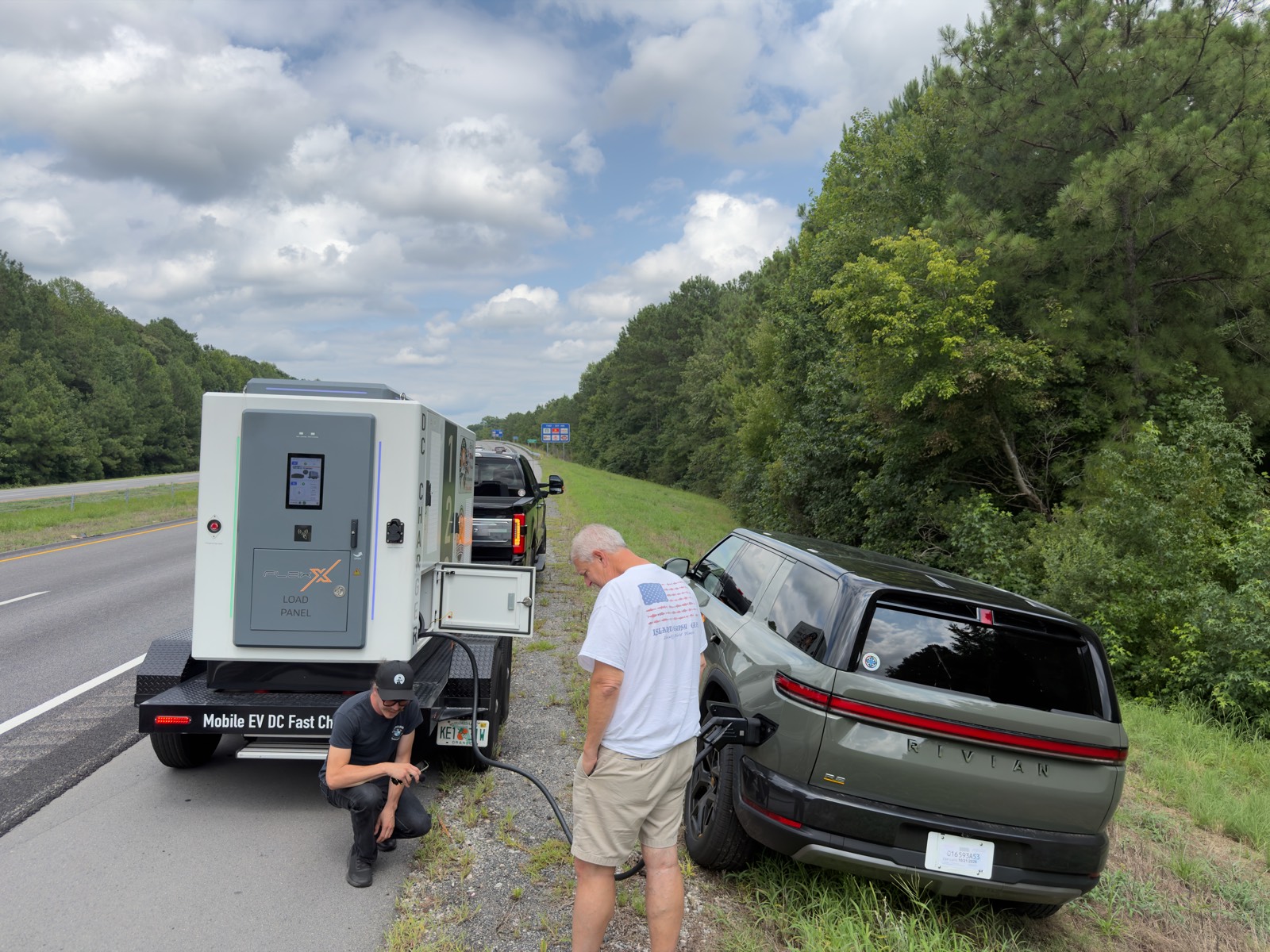
At 25% SoC, Jose hit about 200 miles. I think at 10% SoC it was 230 miles. If you Pay for 330 Miles of range, you would hope to get somewhere close to that.Like the top comment on that blog:

Arriving at zero can be winning if you are headed home and have a charger... I will go to the single digits on the return trip from any road trip knowing I can plug in upon arrival. Of course, if I am headed to a DCFC charger, I would aim for ~20% SOC.Like the top comment on that blog:
That will take a while to get used to.Arriving at zero can be winning if you are headed home and have a charger... I will go to the single digits on the return trip from any road trip knowing I can plug in upon arrival. Of course, if I am headed to a DCFC charger, I would aim for ~20% SOC.
I take it you aren't the kind of person to wait for the gas light before filling up? On both our Grand Cherokee and Pacifica, the range goes to "low" below 30 miles. My goal is to drive another 10-15 before filling up. I know the size of both gas tanks and even with the extra driving, I almost always have another 2 gallons in the tank when I fill up.That will take a while to get used to.
I don’t go much below a quarter tank. Don’t like it.I take it you aren't the kind of person to wait for the gas light before filling up? On both our Grand Cherokee and Pacifica, the range goes to "low" below 30 miles. My goal is to drive another 10-15 before filling up. I know the size of both gas tanks and even with the extra driving, I almost always have another 2 gallons in the tank when I fill up.
My wife on the other hand gets nervous when the range is under 50. She works 8 miles from the house. Math says she could drive to work and back 3 times. Her brain says must fill now.

We are getting better and better at the faith part of owning an EV and challenging the rangeArriving at zero can be winning if you are headed home and have a charger... I will go to the single digits on the return trip from any road trip knowing I can plug in upon arrival. Of course, if I am headed to a DCFC charger, I would aim for ~20% SOC.
That's why I always compare stated tank capacity to what I'm putting in the tank as I test a new-to-me vehicle lower and lower in the range. I had one vehicle where zero meant zero, though I can't remember what it was now. I usually don't run below 1/8 tank, but I like knowing exactly how far I can go, should the need arise.Just know that the faith part varies by any OEM.
For example, Swedes are very literal, and if you run a gas Volvo to zero and it runs out of gas, well, then you know that "zero" means "zero" gas in that tank in Sweden. It will also mean "zero" gas left for you if you are driving that Volvo in the USA.
This actually makes too much sense, but you do need to know - esp. if you have been pre-conditioned by other OEM's that allow you to drive for another 30 miles.
Arriving at zero can be winning if you are headed home and have a charger... I will go to the single digits on the return trip from any road trip knowing I can plug in upon arrival. Of course, if I am headed to a DCFC charger, I would aim for ~20% SOC.
Driving style plays a huge role to date (albeit 3 months) the Lexus is providing the range it stated and sometimes more. Come winter I’m sure that will changeYeah I think the arrival % is going to be much more context driven than with a gas car. On a road trip I'd want to get home with as close to 0 as possible, but I'd definitely have more range anxiety on the road since I don't know enough about the charging infrastructure.
We just did a Philly -> Virginia Beach trip which was ~275 miles one way. In the R2 it looks like I'd have to make a charging stop on the way but it would definitely be something I'd have to preplan because the direct-route infrastructure is somewhat lacking, and if we're stopping for a bit I'd want to make sure it's a place where the family feels comfortable as well.
Kind of a bummer because with the "330 mile" range I was thinking I could make it in a straight shot.
IMHO, if you are bummed about a 10 minute charging stop to reach your destination, you might never be happy with any EV. That stretch also has pretty good infrastructure. I've charged on that route from Philly through Delaware at Tesla, Rivian, WaWa EA, ChargePoint and chargers located in some of the turnpike rest areas - I don't think I've ever had any problems down that way.Yeah I think the arrival % is going to be much more context driven than with a gas car. On a road trip I'd want to get home with as close to 0 as possible, but I'd definitely have more range anxiety on the road since I don't know enough about the charging infrastructure.
We just did a Philly -> Virginia Beach trip which was ~275 miles one way. In the R2 it looks like I'd have to make a charging stop on the way but it would definitely be something I'd have to preplan because the direct-route infrastructure is somewhat lacking, and if we're stopping for a bit I'd want to make sure it's a place where the family feels comfortable as well.
Kind of a bummer because with the "330 mile" range I was thinking I could make it in a straight shot.
Yeah I think the arrival % is going to be much more context driven than with a gas car. On a road trip I'd want to get home with as close to 0 as possible, but I'd definitely have more range anxiety on the road since I don't know enough about the charging infrastructure.
We just did a Philly -> Virginia Beach trip which was ~275 miles one way. In the R2 it looks like I'd have to make a charging stop on the way but it would definitely be something I'd have to preplan because the direct-route infrastructure is somewhat lacking, and if we're stopping for a bit I'd want to make sure it's a place where the family feels comfortable as well.
Kind of a bummer because with the "330 mile" range I was thinking I could make it in a straight shot.
IMHO, if you are bummed about a 10 minute charging stop to reach your destination, you might never be happy with any EV. That stretch also has pretty good infrastructure. I've charged on that route from Philly through Delaware at Tesla, Rivian, WaWa EA, ChargePoint and chargers located in some of the turnpike rest areas - I don't think I've ever had any problems down that way.