We own EVs. Ask Us Anything.

  • From all of us at Scout Motors, welcome to the Scout Community! We created this community to provide Scout vehicle owners, enthusiasts, and curiosity seekers with a place to engage in discussion, suggestions, stories, and connections. Supportive communities are sometimes hard to find, but we're determined to turn this into one.

    Additionally, Scout Motors wants to hear your feedback and speak directly to the rabid community of owners as unique as America. We'll use the Scout Community to deliver news and information on events and launch updates directly to the group. Although the start of production is anticipated in 2026, many new developments and milestones will occur in the interim. We plan to share them with you on this site and look for your feedback and suggestions.

    How will the Scout Community be run? Think of it this way: this place is your favorite local hangout. We want you to enjoy the atmosphere, talk to people who share similar interests, request and receive advice, and generally have an enjoyable time. The Scout Community should be a highlight of your day. We want you to tell stories, share photos, spread your knowledge, and tell us how Scout can deliver great products and experiences. Along the way, Scout Motors will share our journey to production with you.

    Scout is all about respect. We respect our heritage. We respect the land and outdoors. We respect each other. Every person should feel safe, included, and welcomed in the Scout Community. Being kind and courteous to the other forum members is non-negotiable. Friendly debates are welcomed and often produce great outcomes, but we don't want things to get too rowdy. Please take a moment to consider what you post, especially if you think it may insult others. We'll do our best to encourage friendly discourse and to keep the discussions flowing.

    So, welcome to the Scout Community! We encourage you to check back regularly as we plan to engage our members, share teasers, and participate in discussions. The world needs Scouts™. Let's get going.


    We are Scout Motors.

Yesterday before the snow started I left the house at 6am with 95% 202 estimated range outside temp was 18F, I was out for 7 hours, drove for 140 miles, temp when I returned home was 22F. The snow started around 8am which is when I started to see a drop in range of about 10 miles range. In the car temperature was set between 70-74 mostly set on floor and window. I returned home with 11% 20 miles estimated range, having averaged 3.3 Mi/KwH so I lost around 40 miles of estimated range after the snow started. Though I kept my interior comfortable for me, and wasn’t concerned with my range, honestly had no idea it got that low until I got home.
That’s good info to hear
 
I had a big thing written, but don't have the time to edit it for clarity.

For a BEV, a 10-40% reduction in range shouldn’t be surprising.
You’re using the primary energy source for both reacting to reductions in efficiency and for warming the cabin.

For an ICEV, a 10-20% reduction in range shouldn’t be surprising.

What should be alarming is that when it’s not extremely cold, a 21-gallon ICEV pickup can only go as far as a 3-gallon-equivalent BEV pickup.
Sure, in the winter all that wasted heat can be useful to warm the cabin of a gassy vehicle, but during most of the year, that’s just wasted energy.
 
I am not sure if this has been discussed before, but do y'all think Scouts will support pass thru power?

Let's say I go to an Enduro race with a Stark Varg EX electric dirt bike, and have a BEV Scout Terra parked in an RV parking spot with a 30a outlet.

Could I leave the Terra plugged in all day, and still use the 240v plug in the Terra to fast charge the dirt bike?

I was not sure if there is a limitation to the power coming in and out by the battery control module or whatever controls charging ..
 
I am not sure if this has been discussed before, but do y'all think Scouts will support pass thru power?

Let's say I go to an Enduro race with a Stark Varg EX electric dirt bike, and have a BEV Scout Terra parked in an RV parking spot with a 30a outlet.

Could I leave the Terra plugged in all day, and still use the 240v plug in the Terra to fast charge the dirt bike?

I was not sure if there is a limitation to the power coming in and out by the battery control module or whatever controls charging ..
There’s no technical limitation to doing this.

The Lightning allows full power draw from the Pro Power Onboard inverters while also charging. I regularly run my camping fridge from the onboard inverter while also charging the Lightning at a DCFC.

Obviously if the charging rate is slower than the power draw on the inverter, then you’ll lose battery state of charge.

Note that a 30 Amp outlet (TT-30) in an RV spot is a 120 Volt plug so the maximum charge rate you can get from that is 16 Amps * 120 Volts = 1.92 kW. You’d likely only get 12 Amps * 120 Volts = 1.4 kW. The J1772 standard limits 120 Volt charge rate to no more than 16 Amps. Most chargers stay at 12 Amps.

You want a 50 Amp RV hookup. That’s 240 volts and you would run at 40 Amps * 240 Volts = 9.6 kW.

Still, as I say every opportunity: every plug is a potential charger, so take what you can get.
 
The Lightning is hitting 30,000 miles this week and the Mustang is hitting 60,000 miles in the next couple of weeks.

Scheduled Maintenance:
Lightning:
  • Every 12 months or 10,000 mi (16,000 km).
    • Rotate the tires, inspect for tire wear and measure the tread depth.
    • Perform a multi-point inspection (recommended).
    • Inspect the brake pads, shoes, rotors, drums, brake linings, hoses and the parking brake.
    • Inspect the cooling system coolant level, coolant strength, and the cooling system hoses.
    • Inspect the halfshaft boots.

Mustang Mach-E:
  • Every 12 months or 10,000 mi (16,000 km).
    • Rotate tires, inspect tire wear and measure tread depth. Perform multi-point inspection (recommended).
    • Inspect brake pads, shoes, rotors, drums, brake linings, hoses and parking brake.
    • Inspect cooling system level, strength and hoses. Inspect half-shaft boots.
    • Inspect steering linkage, ball joints, suspension and tie-rod ends.
    • Inspect wheels and related components for abnormal noise, wear, looseness or drag.
  • Every 20,000 mi (32,000 km)
    • Replace cabin air filter.
  • We’ll also be inspecting and possibly replacing the struts and shocks due to use in an extreme environment (regular driving on washboard roads and on badly-maintained highways).
 
Battery life… Why I’m not at all concerned.

In general, batteries without thermal controls degrade fastest in the first couple of years or tens of cycles and then their degradation levels out over time with an asymptotic approach to some baseline lowest capacity. This degradation is also called “capacity fade.”

Our Mustang’s battery is 50 months old. We’ve DCFC fast charged it a couple hundred times since we bought it. According to its OBD2 information, the battery pack is at 93.5% State of Health. Watever that really means, is unclear, but let’s pretend it means what we all assume State of Health means.

A capacity fade of 6.5% over 50 months is a little less than 1.6% per year.
If capacity fade is linear (it’s not), 1.6% per year would mean 12.5 years before the battery capacity fades to 80% and 18.75 years to fade to 70%.

With a more realistic capacity fade, the battery is likely to last 20 years before we reach 80% and 30 years before we reach 70% capacity.


Screenshot_20260330-090625.png


Screenshot 2026-03-30 at 19.10.38.png
 
Battery life… Why I’m not at all concerned.

In general, batteries without thermal controls degrade fastest in the first couple of years or tens of cycles and then their degradation levels out over time with an asymptotic approach to some baseline lowest capacity. This degradation is also called “capacity fade.”

Our Mustang’s battery is 50 months old. We’ve DCFC fast charged it a couple hundred times since we bought it. According to its OBD2 information, the battery pack is at 93.5% State of Health. Watever that really means, is unclear, but let’s pretend it means what we all assume State of Health means.

A capacity fade of 6.5% over 50 months is a little less than 1.6% per year.
If capacity fade is linear (it’s not), 1.6% per year would mean 12.5 years before the battery capacity fades to 80% and 18.75 years to fade to 70%.

With a more realistic capacity fade, the battery is likely to last 20 years before we reach 80% and 30 years before we reach 70% capacity.


View attachment 14584

View attachment 14583
This may be difficult to do because of so many variables. But, how does that compare to an ICE (internal combustion engine) degradation from new? Let’s say the engine is perfect from the factory. We know that’s not always the case. Things like emissions systems, rings, injectors, valvetrain, etc. While not part of the engine, let’s not forget the transmission. None of this also mentions the “wear items” like cooling system, belts, hoses, spark plugs, water pump, filters, and other required maintenance that has a great determination on longevity.
 
I think there are several ways to answer that.

First, consider the warranty for the drivetrain. Since there aren't any vehicles that can be directly compared with the Mustang BEV, I'll shift to the F-150. It has a 5-year, 60k mile drivetrain warranty. The Lightning has the standard, federally-mandated 8-year, 100k mile drivetrain warranty. That warranty is just a contract for major drivetrain failures, so doesn't guarantee anything more than replacement of failed parts. But it's a start. The ICEV only gets 60% of the warranty the BEV gets.

Next we can consider the regularly scheduled maintenance. All of the parts of the gas truck that need maintenance include regular oil changes, transmission fluid checks and changes, coolant charges, belts, etc, as you noted. If those things are neglected, the lifetime of the gas engine will be just a few years. If they're not neglected, you're regularly replacing critical components and still the average age of a vehicle on the road is only 12 years...

Another approach is to look at fuel economy and emissions as a vehicle ages. If the maintenance schedule for an ICEV is followed, the fuel economy fade is about 1-2 percent per year, with major drops after about 8-10 years and ~100k miles. Some vehicles can lose 30% or more of their fuel economy by 10 years. Most lose closer to 15-20% by year 10. If the maintenance schedule isn't maintained, those numbers can be much worse. Emissions follow a similar pattern. And often the vehicle will continue running without certain parts so an old vehicle might be 50% efficient and emit 2-5x as much pollution as it did when it was new.
 
I think there are several ways to answer that.

First, consider the warranty for the drivetrain. Since there aren't any vehicles that can be directly compared with the Mustang BEV, I'll shift to the F-150. It has a 5-year, 60k mile drivetrain warranty. The Lightning has the standard, federally-mandated 8-year, 100k mile drivetrain warranty. That warranty is just a contract for major drivetrain failures, so doesn't guarantee anything more than replacement of failed parts. But it's a start. The ICEV only gets 60% of the warranty the BEV gets.

Next we can consider the regularly scheduled maintenance. All of the parts of the gas truck that need maintenance include regular oil changes, transmission fluid checks and changes, coolant charges, belts, etc, as you noted. If those things are neglected, the lifetime of the gas engine will be just a few years. If they're not neglected, you're regularly replacing critical components and still the average age of a vehicle on the road is only 12 years...

Another approach is to look at fuel economy and emissions as a vehicle ages. If the maintenance schedule for an ICEV is followed, the fuel economy fade is about 1-2 percent per year, with major drops after about 8-10 years and ~100k miles. Some vehicles can lose 30% or more of their fuel economy by 10 years. Most lose closer to 15-20% by year 10. If the maintenance schedule isn't maintained, those numbers can be much worse. Emissions follow a similar pattern. And often the vehicle will continue running without certain parts so an old vehicle might be 50% efficient and emit 2-5x as much pollution as it did when it was new.
Very interesting. I did not even think about furl economy degradation. Even if the battery is not 100% of capacity, the average electrical use is still going to be close to the same.
 
I should have noted. There are other ways to look at the future projection of the Mustang’s battery lifetime.

The Mustang has 56,670 miles on it. According to EPA range, which isn’t too far off from our real-world highway range, we get about 312 miles per battery cycle. So 56,670 miles divided by 312 miles/cycle is about 182 cycles. If we keep driving about the same as we have been, then 50 months for 182 cycles is about 3.6 cycles per month. With NMC’s worst estimated cycle lifetime, we can look forward to about 1000 cycles. 1000 cycles / 3.6 cycles/month = 275 months, or ~23 years.

Or…

We drive about 1133 mile per month on average in the Mustang. With about (6.5% capacity fade / 56.7k miles) = 0.11% per 1000 miles, we can linearly project about 30% capacity fade to be about 273k miles. Again, capacity fade is much stronger in the first couple hundred cycles, so using a linear projection is inconsistent with reality. We can expect about 300-500k miles on the battery before it reaches 70% capacity.
 
I need to check my battery health. What OBD2 scanner/app are you using to calculate this?

My Ioniq9 has a battery health page, and last I checked (1000-1500 miles ago I think), our battery health was still at 100%.

We're only at 5500 miles, and ~6months of ownership, but I should go check again and see.
 
Last edited:
I need to check my battery health. What OBD2 scanner/app are you using to calculate this?

My Ioniq9 has a battery health page, and last I checked (1000-1500 miles ago I think), our battery health was still at 100%.

We're only at 5500 mils, and ~6months of ownership, but I should go check again and see.
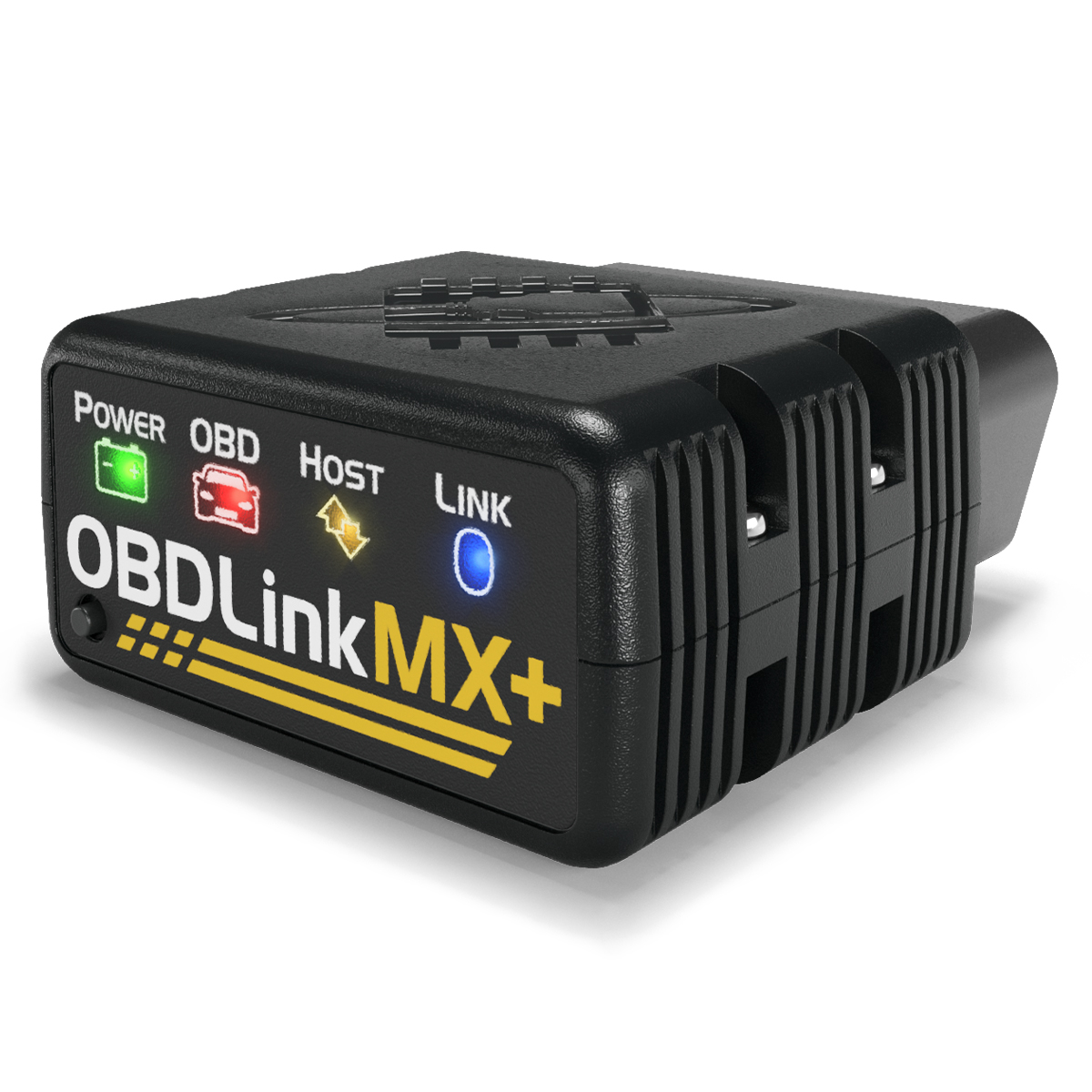
I use this OBD2 reader:

And the CarScanner app. State of Health is not (as far as I know) a mandated value; I don’t know if the Kia/Hyundai ecosystem has it easily accessible.
 
I use this OBD2 reader:

And the CarScanner app. State of Health is not (as far as I know) a mandated value; I don’t know if the Kia/Hyundai ecosystem has it easily accessible.
I bought this OBD2 reader as recommended for use with the Ioniq 5 to support navigation with ABRP as a vast improvement over the Hyundai onboard navigation.
 
I use this OBD2 reader:

And the CarScanner app. State of Health is not (as far as I know) a mandated value; I don’t know if the Kia/Hyundai ecosystem has it easily accessible.
I've heard of Carscanner, haven't ever used it though.

And while I've used ODB2 scanners in the past, they weren't these phone connected ones. It was just a code lookup.

Any difference between this OBD2 scanner and something like this one?


I bought this OBD2 reader as recommended for use with the Ioniq 5 to support navigation with ABRP as a vast improvement over the Hyundai onboard navigation.
I've heard this is possible, but haven't explored it yet. So you're feeding ABRP info about the current SOC from the OBD2 scanner? I suppose that is making ABRP more accurate? But what else does this provide/how do you set this up?

I'm looking to do my first major road trip with the Ioniq (most likely) in a few months, so may explore this further.
 
I've heard of Carscanner, haven't ever used it though.

And while I've used ODB2 scanners in the past, they weren't these phone connected ones. It was just a code lookup.

Any difference between this OBD2 scanner and something like this one?


I've heard this is possible, but haven't explored it yet. So you're feeding ABRP info about the current SOC from the OBD2 scanner? I suppose that is making ABRP more accurate? But what else does this provide/how do you set this up?

I'm looking to do my first major road trip with the Ioniq (most likely) in a few months, so may explore this further.
CarScanner’s usefulness is mulit-fold.

1) You can use it in a sort of monitor mode so you can track things while you drive. This gives you a much better idea of some of the variables than the display on the vehicle. You can get an idea of what the charge curve looks like for your particular vehicle. It’s helpful to see the generic plots, but your particular environment and context will always change that curve a bit. You can use it to get an idea of how temperature or elevation impact your efficiency in a more immediate sense.

2) You can use it to pull and reset codes.

3) You can use it to grab instantaneous information such as State of Health.

Those data can be stored onto your phone or a cloud drive.
CarScanner does expose some limitations of the OBD2 protocol, namely that it very low bandwidth. This means Carscanner can only pull one PID at a time. It round robins through the set you have on your exposed dashboard. But it’s far from perfect.

I haven’t used the scanner you linked, so I can’t say how similar they are. They seem similar. One thing I like about the one I linked is that you have to press a button on the device to put it into pairing mode so it’s not possible for someone else to take it over from outside of the vehicle if the doors are locked or if the vehicle is moving.
 
I've heard this is possible, but haven't explored it yet. So you're feeding ABRP info about the current SOC from the OBD2 scanner? I suppose that is making ABRP more accurate? But what else does this provide/how do you set this up?

I'm looking to do my first major road trip with the Ioniq (most likely) in a few months, so may explore this further.
Yes, this feeds live info and data about your driving style into ABRP making it more accurate from what I understand. I am still in the early stages of using it.
Example of setup:

Real world example of OBDII to ABRP:
 
I've heard of Carscanner, haven't ever used it though.

And while I've used ODB2 scanners in the past, they weren't these phone connected ones. It was just a code lookup.

Any difference between this OBD2 scanner and something like this one?


I've heard this is possible, but haven't explored it yet. So you're feeding ABRP info about the current SOC from the OBD2 scanner? I suppose that is making ABRP more accurate? But what else does this provide/how do you set this up?

I'm looking to do my first major road trip with the Ioniq (most likely) in a few months, so may explore this further.
SORRY! Correction...I purchased OBDLink CX. If you plan to use the OBD2 reader with ABRP, be sure to check inside the ABRP app for compatible devices. OBDLink MX+ is not recommended for ABRP.

 
Last edited: