


Generator + Solar integration

  • From all of us at Scout Motors, welcome to the Scout Community! We created this community to provide Scout vehicle owners, enthusiasts, and curiosity seekers with a place to engage in discussion, suggestions, stories, and connections. Supportive communities are sometimes hard to find, but we're determined to turn this into one.

    Additionally, Scout Motors wants to hear your feedback and speak directly to the rabid community of owners as unique as America. We'll use the Scout Community to deliver news and information on events and launch updates directly to the group. Although the start of production is anticipated in 2026, many new developments and milestones will occur in the interim. We plan to share them with you on this site and look for your feedback and suggestions.

    How will the Scout Community be run? Think of it this way: this place is your favorite local hangout. We want you to enjoy the atmosphere, talk to people who share similar interests, request and receive advice, and generally have an enjoyable time. The Scout Community should be a highlight of your day. We want you to tell stories, share photos, spread your knowledge, and tell us how Scout can deliver great products and experiences. Along the way, Scout Motors will share our journey to production with you.

    Scout is all about respect. We respect our heritage. We respect the land and outdoors. We respect each other. Every person should feel safe, included, and welcomed in the Scout Community. Being kind and courteous to the other forum members is non-negotiable. Friendly debates are welcomed and often produce great outcomes, but we don't want things to get too rowdy. Please take a moment to consider what you post, especially if you think it may insult others. We'll do our best to encourage friendly discourse and to keep the discussions flowing.

    So, welcome to the Scout Community! We encourage you to check back regularly as we plan to engage our members, share teasers, and participate in discussions. The world needs Scouts™. Let's get going.


    We are Scout Motors.

mastertroll

Scout Community Veteran
Jun 29, 2025
193
168
Oklahoma
I've been talking with the guy that created a generator system (Everdrive) for the Ford Lightning. It involves running a cable across through the bottom of the carriage that attaches to the front charging area. This allows you to run a charger through the bed of the truck. It's all plug and play, there's no modifying or drilling required. This got me thinking about Scouts offering which I doubt that this will be taken seriously but I wish more thought would be put into it by thinking ahead. (innovation)

1. Do the same thing with the charging receptacle. If I loaded a generator in the bed or tow hitch like shown in the video, I could charge while driving and extend my range. This is especially important if there are emergencies and you can't charge. There are tons of reasons to do this. One is the vehicle will never get the rated range. Two, people who don't want the compromises of the built in generator. It's modular system and obviously you can remove the generator for that special use case or emergency scenario.
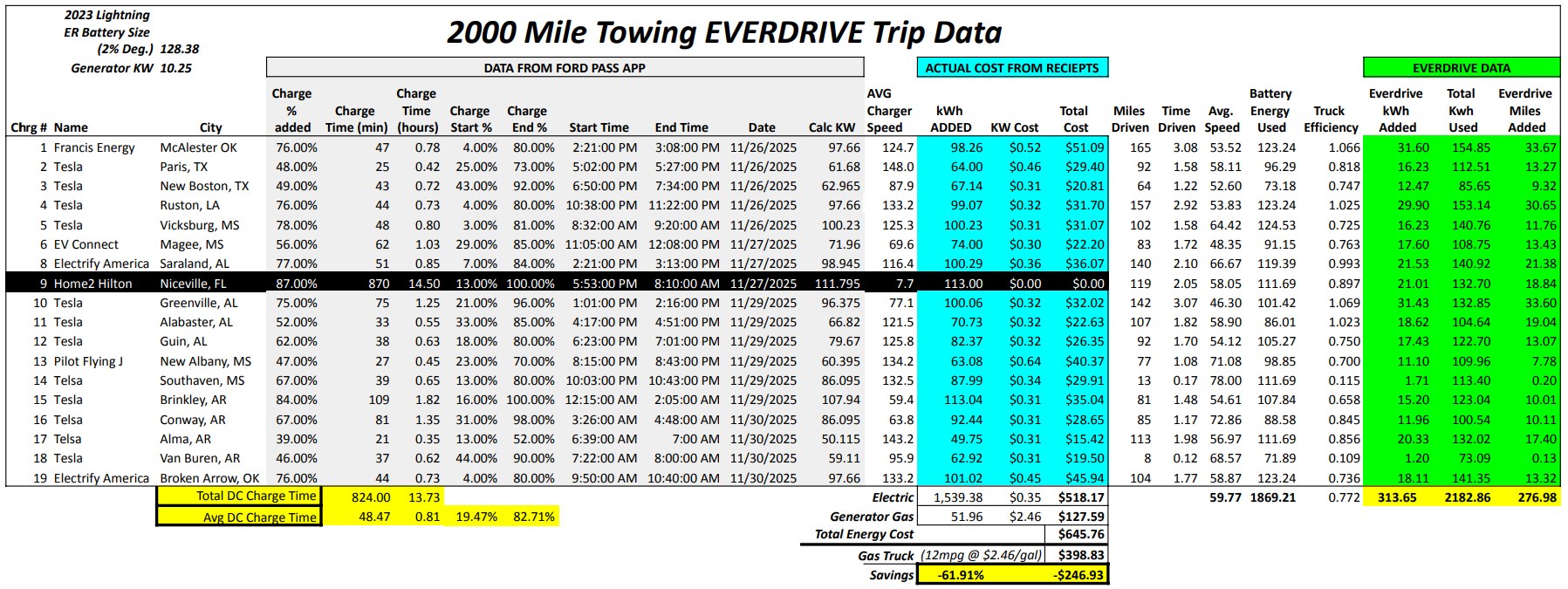
592901188_25445959525013112_5833408770506715011_n.jpg


Showing how to easily integrate into a Ford lightning. (vehicle that wasn't designed to be an extended range)


2. Built in Solar connections to inverter. We need direct access to the inverter. Solar panels don't have to be limited to the bed or top. I imagine a connection that is seamlessly built into the frame involving connections but if anything put some MC4 inputs in the bed at the minium. Places to integrate solar would be hood, top and bed. This type of system would allow 5-10 miles+ a day and provide power to the vehicle or tools onsite without dipping into range. If you got stuck out in the middle of nowhere with no grid. You may become a hunter gatherer but you could in the end make it out. Lastly, Scout is marketed as offgrid and outdoor... Don't miss being a leader (not a follower).

(this is just showing that you can build a hood with more solar)
(Claims 10 miles a day)


https://www.worksport.com/products/solis (600 Watts in the bed)
https://www.youtube.com/shorts/QH2pyI0Q-Rk
https://www.youtube.com/watch?v=h-u0Z2zmiHs
 
Upvote 0
I don't see enough of a use-case between the Harvester and full EV model to warrant spending the effort to have an aux input while you drive. If simple programming allows the charger input to be used while driving though, I'd be okay with that and I think you can figure out the range solution on your own from there.
 
  • Like
Reactions: J Alynn
I don't see enough of a use-case between the Harvester and full EV model to warrant spending the effort to have an aux input while you drive. If simple programming allows the charger input to be used while driving though, I'd be okay with that and I think you can figure out the range solution on your own from there.
Plugging a cord into the charger input while driving down the road? Some people actually do that. I personally wouldn’t want to. You’d need to have the input in the truck bed.
For those who don’t want to accept the usual compromises in towing capacity and performance, just having the option matters. It doesn’t cost anything but a little extra thought during design — and it can be genuinely useful for the people who want to take advantage of it
 
  • Haha
Reactions: R1TVT
Plugging a cord into the charger input while driving down the road? Some people actually do that. I personally wouldn’t want to. You’d need to have the input in the truck bed.
For those who don’t want to accept the usual compromises in towing capacity and performance, just having the option matters. It doesn’t cost anything but a little extra thought during design — and it can be genuinely useful for the people who want to take advantage of it
If the inverter ends up right behind the rear axle, it shouldn't be too hard for Scout to have an optional charging kit with factory connectors from the inverter to a charging outlet in the bed, possibly including a DC port for solar. I don't think it makes sense to increase costs for everyone, but a factory option for this purpose could make sense.
 
If the inverter ends up right behind the rear axle, it shouldn't be too hard for Scout to have an optional charging kit with factory connectors from the inverter to a charging outlet in the bed, possibly including a DC port for solar. I don't think it makes sense to increase costs for everyone, but a factory option for this purpose could make sense.
People should pay for what they want. If people don't want solar then don't pay for it. I would gladly pay for this option. But another EV manufacturer coming out doing the same thing that everybody else has done? I mean who wouldn't want the ability to power tools or campsites without dipping into range.
 
Last edited:
Wait. What!? This just broke my brain. I had no idea you could trick an EV into AC charging while driving. What sorcery is this?

This is a fascinating idea. If you already have a 240V generator for home backup use (so it is a sunk cost), this could give you Harvester capability when you need it without dragging the generator around all the time.

I'm skeptical of doing direct (DC) solar as wouldn't you need to get to at least 400VDC in order to go direct? Otherwise the OEM would have to build some kind of mechanism to split the pack into smaller chunks. I realize they already do this for 800V packs to use 400V DCFCs but I would think that chopping it up even further would add a ton of cost and complexity.
 
  • Like
Reactions: mastertroll
Wait. What!? This just broke my brain. I had no idea you could trick an EV into AC charging while driving. What sorcery is this?

This is a fascinating idea. If you already have a 240V generator for home backup use (so it is a sunk cost), this could give you Harvester capability when you need it without dragging the generator around all the time.

I'm skeptical of doing direct (DC) solar as wouldn't you need to get to at least 400VDC in order to go direct? Otherwise the OEM would have to build some kind of mechanism to split the pack into smaller chunks. I realize they already do this for 800V packs to use 400V DCFCs but I would think that chopping it up even further would add a ton of cost and complexity.
Exactly. And to me it's the best of both worlds. When not in use you have a normal EV with all the expectations that come with that.
I'm going to add the ability to my lightning for this exact reason.
 
I'm skeptical of doing direct (DC) solar as wouldn't you need to get to at least 400VDC in order to go direct? Otherwise the OEM would have to build some kind of mechanism to split the pack into smaller chunks. I realize they already do this for 800V packs to use 400V DCFCs but I would think that chopping it up even further would add a ton of cost and complexity.
I'm going to reply to myself as I thought about this more. There is mechanism to convert to 12VDC in order to charge the standby battery. So maybe that system could be run backwards in order to charge the HV battery with 12VDC solar.
 
  • Like
Reactions: mastertroll
I'm going to reply to myself as I thought about this more. There is mechanism to convert to 12VDC in order to charge the standby battery. So maybe that system could be run backwards in order to charge the HV battery with 12VDC solar.
If you remember Elon originally said the Cybertruck would have an optional rollable solar-powered tonneau cover. Back when the truck was first revealed, he mentioned it could generate about 15 miles of range per day. Tesla even filed a patent for a retractable solar tonneau cover, but it never made it into production. The feature got quietly dropped along the way. I know it would have been a great implementation but Tesla didn't do it. It would be great marketing for a company to say that a vehicle recharges itself, even if only a little. The ability to power tools and acc, or just AC/Heat while not cutting into range.. I see a ton of use cases.
 
I'm going to reply to myself as I thought about this more. There is mechanism to convert to 12VDC in order to charge the standby battery. So maybe that system could be run backwards in order to charge the HV battery with 12VDC solar.
Charge at a DCFC and you're typically getting 200v-500v DC already, so the truck's inverter can already take varying voltage levels. Same with being able to take 110v-240v AC. I doubt it'd run all the way down to 12v as an acceptable level, but most rooftop panels seem to run in the 40v-60v range and wiring in series or parallel can change those voltages up or down as desired, so maybe you could run two panels on the bed and one panel on the roof and hit 140v or so which might be in the acceptable range for the inverter.
 
If you remember Elon originally said the Cybertruck would have an optional rollable solar-powered tonneau cover. Back when the truck was first revealed, he mentioned it could generate about 15 miles of range per day.
Errrrr, believe what you want, but let's get real. The gains are actually much smaller, such that the cost equation makes very little sense for an OEM, not to mention the additional parts, service, maintenance and complexity. There are also a number of reasons why Elon's exuberant marketing of the Cybertruck spec's (and subsequent DELETED features) do not hold water.

These are much more realistic numbers based on averages for solar generation (in the US) AND leveraging 2 full-sized 400 Watt Solar Panels for a combined 800 W peak output (if you could somehow package that elegantly into your vehicles roof or tonneau), taking into account energy & conversion losses / routing energy derived through an onboard inverter to the battery pack directly.

You would get 4.4 mi of range added / per day (and this is with a 123kWh standard battery pack):


Screenshot 2026-05-02 at 9.38.10 AM.png
 
Errrrr, believe what you want, but let's get real. The gains are actually much smaller, such that the cost equation makes very little sense for an OEM, not to mention the additional parts, service, maintenance and complexity. There are also a number of reasons why Elon's exuberant marketing of the Cybertruck spec's (and subsequent DELETED features) do not hold water.

These are much more realistic numbers based on averages for solar generation (in the US) AND leveraging 2 full-sized 400 Watt Solar Panels for a combined 800 W peak output (if you could somehow package that elegantly into your vehicles roof or tonneau), taking into account energy & conversion losses / routing energy derived through an onboard inverter to the battery pack directly.

You would get 4.4 mi of range added / per day (and this is with a 123kWh standard battery pack):


View attachment 15502
I've seen plenty of documented real cases of people actually doing it. I would take the 5-10 miles a day when the vehicle just sits. Like during camping trips or being outside. Also, driving long distances and then being able to not dip into range, I'll take that too.
 
I've seen plenty of documented real cases of people actually doing it. I would take the 5-10 miles a day when the vehicle just sits. Like during camping trips or being outside. Also, driving long distances and then being able to not dip into range, I'll take that too.
Please help me understand this use case.

How are are you envisioning driving long distances (and not dipping into range), while only adding 4.4 miles of range from solar on average?

You absolutely can driving long distances (as long as you want) but it would take weeks or months to accomplish this - especially considering weather.
 
Please help me understand this use case.

How are are you envisioning driving long distances (and not dipping into range), while only adding 4.4 miles of range from solar on average?

You absolutely can driving long distances (as long as you want) but it would take weeks or months to accomplish this - especially considering weather.
All you need to do is a little research. You can add more that just 4 miles easily. A lot of your questions can be answered by watching the videos in full above but since I am fascinated by the topic, I will collect some stuff and post here later.
 
All you need to do is a little research. You can add more that just 4 miles easily. A lot of your questions can be answered by watching the videos in full above but since I am fascinated by the topic, I will collect some stuff and post here later.
Please re-read my post. 4.4 mi is an average. That means you can add more than 4 miles of range and less than 4 miles range / per day given an 800 Watt array.

Don't get me wrong, I love the idea and it will eventually become less expensive to implement and maintain. I would love a modular, integrated set of solar tonneau panels to catch some rays and add power when the tonneau is closed on perfect sunny days. I'm just trying to be realistic about power generation, weather, battery size in these trucks, and what the actual result would be, if implemented with a direct connection to the trucks inverter.

Also, there are real world examples, although from more efficient vehicles with smaller array sizes, based on available roof top square footage - likely Fisker's being the closest real-world example:

  • Average Daily Energy Yield: Given the U.S. average of roughly 4–5 "peak sun hours" per day, a 300W array produces about 1.2 to 1.5 kWh of energy daily.
  • Miles Added: With the Fisker Ocean's mixed-driving efficiency of roughly 3.0 to 3.3 miles per kWh, this daily energy yield translates to about 3.6 to 5 miles of range.
  • System Performance: Real-world tests show that the system can generate about 150–160 watt-hours in two hours of direct sunlight, which is enough for roughly half a mile of driving.
 
  • Like
Reactions: mastertroll
Please re-read my post. 4.4 mi is an average. That means you can add more than 4 miles of range and less than 4 miles range / per day given an 800 Watt array.

Don't get me wrong, I love the idea and it will eventually become less expensive to implement and maintain. I would love a modular, integrated set of solar tonneau panels to catch some rays and add power when the tonneau is closed on perfect sunny days. I'm just trying to be realistic about power generation, weather, battery size in these trucks, and what the actual result would be, if implemented with a direct connection to the trucks inverter.

Also, there are real world examples, although from more efficient vehicles with smaller array sizes, based on available roof top square footage - likely Fisker's being the closest real-world example:

  • Average Daily Energy Yield: Given the U.S. average of roughly 4–5 "peak sun hours" per day, a 300W array produces about 1.2 to 1.5 kWh of energy daily.
  • Miles Added: With the Fisker Ocean's mixed-driving efficiency of roughly 3.0 to 3.3 miles per kWh, this daily energy yield translates to about 3.6 to 5 miles of range.
  • System Performance: Real-world tests show that the system can generate about 150–160 watt-hours in two hours of direct sunlight, which is enough for roughly half a mile of driving.

Watch here:
(He claims 10 miles a day) Granted the panels are longer than the bed. This can be made up for with integration.

I can't speak to the Fisker bc I know nothing about it but I am genuinely happy to see at least one manufacturer deploy it. I'll use the lightning as an example. It would be nice to integrate into bed and hood. This should give close to 650+ watts.

10 miles a day from solar = roughly 4.3 kWh of usable energy per day

  • Camping fridge: A typical 12V compressor fridge uses about 0.6–0.8 kWh per day. Easily runs 24/7
  • Stay cool in the truck: Running the vehicle’s AC while parked uses about 2.0–2.5 kW. That’s roughly 1.5 to 2 hours of AC. I'd imagine after a hike or something intensive that would be useful.
  • Power tools: A circular saw or angle grinder pulls around 1,200W. You’d get about 3–3.5 hours total of actual tool runtime spread throughout the day.
  • Electric cooking: A small induction cooktop or skillet at 1,000W gives you about 4 hours of cooking time (perfect for making breakfast, lunch, and coffee).
  • Camp site power: LED lights, fans, laptop/phone charging, together would use less than 0.5 kWh per day. Easily covered with power to spare.
  • Starlink or WiFi — Run it 24/7 and still have energy to spare.
  • CPAP machine — Full 8 hours of sleep with power to spare.

The main goal isn’t to drive across the country on solar power. It’s to give you enough buffer to confidently go deep off-grid, use power for camping/jobsite and tools all day and night, and still have enough range left to get back home safely without the need to find a charger (You're not cutting into your range). Plus the thought of knowing that you could rely on the vehicle to charge itself if all else fails is a big deal to me. Also, with the ability to potentially expand the solar setup (bring additional panels in the bed) for extended offgrid camping/jobsite is an interesting prospect.
 
  • Like
Reactions: J Alynn