



Extra, Extra....Read All About It!
- Thread starter Harris005
- Start date
-
 From all of us at Scout Motors, welcome to the Scout Community! We created this community to provide Scout vehicle owners, enthusiasts, and curiosity seekers with a place to engage in discussion, suggestions, stories, and connections. Supportive communities are sometimes hard to find, but we're determined to turn this into one.
Additionally, Scout Motors wants to hear your feedback and speak directly to the rabid community of owners as unique as America. We'll use the Scout Community to deliver news and information on events and launch updates directly to the group. Although the start of production is anticipated in 2026, many new developments and milestones will occur in the interim. We plan to share them with you on this site and look for your feedback and suggestions.
How will the Scout Community be run? Think of it this way: this place is your favorite local hangout. We want you to enjoy the atmosphere, talk to people who share similar interests, request and receive advice, and generally have an enjoyable time. The Scout Community should be a highlight of your day. We want you to tell stories, share photos, spread your knowledge, and tell us how Scout can deliver great products and experiences. Along the way, Scout Motors will share our journey to production with you.
Scout is all about respect. We respect our heritage. We respect the land and outdoors. We respect each other. Every person should feel safe, included, and welcomed in the Scout Community. Being kind and courteous to the other forum members is non-negotiable. Friendly debates are welcomed and often produce great outcomes, but we don't want things to get too rowdy. Please take a moment to consider what you post, especially if you think it may insult others. We'll do our best to encourage friendly discourse and to keep the discussions flowing.
So, welcome to the Scout Community! We encourage you to check back regularly as we plan to engage our members, share teasers, and participate in discussions. The world needs Scouts™. Let's get going.
We are Scout Motors.
You are using an out of date browser. It may not display this or other websites correctly.
You should upgrade or use an alternative browser.
You should upgrade or use an alternative browser.

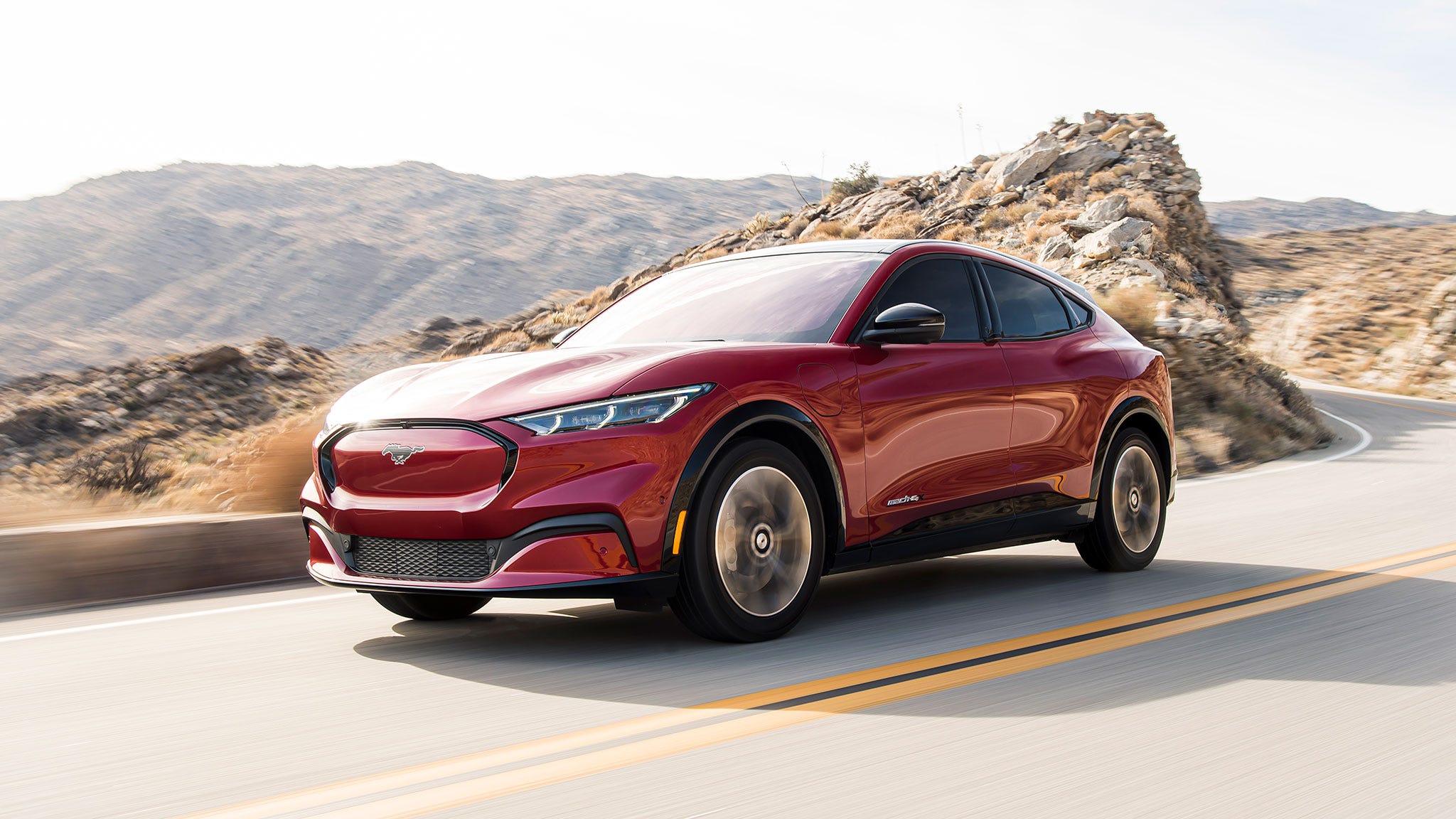
The Ford Mustang Mach-E Has a Battery Secret: 92% Health After 5 Years
 www.motortrend.com
The Ford Mustang Mach-E Is Quietly Crushing the EV Battery-Death Myth
Ford analyzed 36,000 2021 Mustang Mach-E EVs and found an average 92% battery health after 5.2 years and billions of miles.



I wonder if Scout provided any assistance here…
Perhaps - but reading about VW's history, at least in Germany they avoided it. It was a catch 22 for them. Automation would have made them more profitable, but would have required them to reduce their workforce. They had a long tradition of supporting their workforce. In a way it was similar to the infighting between groups of VWAG sabotaging their internal attempt to develop a common software platform. Now they are invested in Rivian to do it for them, still don't think they have actually adopted it too widely (perhaps it just takes time, or perhaps it is still infighting, and are 10 years too late - and they are already suffering financially due to the delay.


I thought the same thing. Ugh.Doesn't sound promising for @cyure 's local economy...

Yeah, I'm not even considering driving to Idaho....To be fair-they did come to your state. Albeit a very long state/long drive, they were there. I’m back to a vote for eastern shore of Maryland or northern Chesapeake Bay Area, somewhere near the water-won’t even ask for PA
actually, I found this in a BaT auction from '25. It came with all the luggage; but, NOT Edna. It was BYOB(body).Is Aunt Edna included in the deal?


Let robots do the jobs that no humans want - the jobs that are hard to staff, the jobs that have low retention, the jobs that can be dangerous, boring or repetitive. And at the same time allow those workers that want to learn new skills to be trained to work in the factories of the future. As long as the local economy is training for jobs of the future, this can be quite promising (and rewarding for those workers). OEM's have no choice but to implement automation (or be crushed). Robots still need humans - the humans just need to up-skill and train for new work. I don't think this is as black and white as it might seem to be.Doesn't sound promising for @cyure 's local economy...

I mean, this is the same problem with AI, right? If AI can do a job, the person who works that job loses their job. If Rivian's factories are now staffed with 80% humans, when its staffed with 80% robots, there are only so many other human jobs to go around as it relates to those robots (service, for example) and people will, unfortunately, lose their jobs.Let robots do the jobs that no humans want - the jobs that are hard to staff, the jobs that have low retention, the jobs that can be dangerous, boring or repetitive. And at the same time allow those workers that want to learn new skills to be trained to work in the factories of the future. As long as the local economy is training for jobs of the future, this can be quite promising (and rewarding for those workers). OEM's have no choice but to implement automation (or be crushed). Robots still need humans - the humans just need to up-skill and train for new work. I don't think this is as black and white as it might seem to be.
Correct, and robots depend heavily on AI, Perception, Camera-Vision, Mechatronics, Machine Learning, SW, HW, etc. (all of which need and are developed, managed & maintained by human hands and human minds). That is where the up-skilling comes into play. There is no shortage of humans to do the type of work that some robots can do, but there is a shortage of available labor that actually WANTS to do this work. This theme has repeated itself over and over. It's not the fault of Rivian or Scout for choosing to be competitive, for choosing to implement automation. The robots aren't run completely by robots, and AI still needs serious levels of human direction, oversight and interaction to be effective in things like SW and product development. There is a re-tooling our entire economy starting to take shape, and with that comes new types of jobs, which can be better for humans compared to rote, repetitive and dangerous tasks.I mean, this is the same problem with AI, right? If AI can do a job, the person who works that job loses their job. If Rivian's factories are now staffed with 80% humans, when its staffed with 80% robots, there are only so many other human jobs to go around as it relates to those robots (service, for example) and people will, unfortunately, lose their jobs.
This is a transition, but it is happening and I don't see it stopping anytime soon myself. I was in a meeting last month where I heard the term "artisanal code" for expensive SW that was written by a human... The job of SW engineers has changed to effectively manage, monitor, QA, test, deploy and implement code generated by AI. Did the job go away? No, but it has changed significantly from what I can see, in a fairly short period of time.
You must have a much more motivated workforce than we have in the south... I've never understood the concept of being content with a low-wage, low-skill job, but there are a LOT of people around here content with mediocrity at best.Correct, and robots depend heavily on AI, Perception, Camera-Vision, Mechatronics, Machine Learning, SW, HW, etc. (all of which need and are developed, managed & maintained by human hands and human minds). That is where the up-skilling comes into play. There is no shortage of humans to do the type of work that some robots can do, but there is a shortage of available labor that actually WANTS to do this work. This theme has repeated itself over and over. It's not the fault of Rivian or Scout for choosing to be competitive, for choosing to implement automation. The robots aren't run completely by robots, and AI still needs serious levels of human direction, oversight and interaction to be effective in things like SW and product development. There is a re-tooling our entire economy starting to take shape, and with that comes new types of jobs, which can be better for humans compared to rote, repetitive and dangerous tasks.
This is a transition, but it is happening and I don't see it stopping anytime soon myself. I was in a meeting last month where I heard the term "artisanal code" for expensive SW that was written by a human... The job of SW engineers has changed to effectively manage, monitor, QA, test, deploy and implement code generated by AI. Did the job go away? No, but it has changed significantly from what I can see, in a fairly short period of time.
Oh, make no mistake - I don't think everyone in these jobs will want to up-skill at all. We have already seen a lot of workers move to the gig economy or out of factories instead.You must have a much more motivated workforce than we have in the south... I've never understood the concept of being content with a low-wage, low-skill job, but there are a LOT of people around here content with mediocrity at best.
You also need to consider Normal IL and Blythwood SC before Rivian or Scout, and all of the surrounding jobs that boost the economy around a factory (indirectly). Maybe Cyure can help us understand what the before and after effect of the plant revitalization effort that took place in normal, b/c before Rivian moved in, this is what that plant looked like:
Rivian supports roughly 7,000–8,000 direct jobs in Illinois PLUS a similar number of indirect jobs, with the supplier park adding a few hundred more as R2 production ramps.


Scout Is Poaching Bronco and Wrangler Owners. This Data Proves It
With nearly 212,000 reservations for its electrified off-roaders, Scout says it's conquesting drivers of the nation's favorite 4x4s above all else.
 www.thedrive.com
And this interesting stat; "Scout CEO Scott Keogh told the media this week that right now, there are nearly 212,000 reservations on the books. Of those, about 87% are for the gas-assisted Harvester models, with the pure electric models making up the remaining 13%. Additionally, the Traveler SUV is commanding 75% of reservations, with just a quarter of committed Scout customers choosing the Terra pickup."
It was so sad when the Mitsubishi factory shut down. If I’m remembering correctly it was about 1600 people that lost their jobs at the factory and then you have all the spiderwebs of fallout when that happens.Oh, make no mistake - I don't think everyone in these jobs will want to up-skill at all. We have already seen a lot of workers move to the gig economy or out of factories instead.
You also need to consider Normal IL and Blythwood SC before Rivian or Scout, and all of the surrounding jobs that boost the economy around a factory (indirectly). Maybe Cyure can help us understand what the before and after effect of the plant revitalization effort that took place in normal, b/c before Rivian moved in, this is what that plant looked like:
View attachment 20064
Rivian supports roughly 7,000–8,000 direct jobs in Illinois PLUS a similar number of indirect jobs, with the supplier park adding a few hundred more as R2 production ramps.
Now Normal is right next to Bloomington, Illinois. Bloomington is the home of State Farm. The original building is downtown and the company just turned 100 recently. State Farm is the biggest employer by far (15,000 employees is the last number I heard) in the BloNo area, but losing that factory still made a difference. It felt like growth just slowed.
The city really did a good job promoting the fact that they had a factory space ready to go.
Now that Rivian is here we have some other issues that happen when a community grows. There’s a lack of housing, especially affordable housing. The city council is approving large apartment complexes and trying to add more affordable housing as well. We have so many fast food and fast casual restaurants opening. It seems like every time I turn around a new restaurant is opening.
Our mall has been slowly dying and I just saw an article that a builder is buying it to turn it into an indoor/outdoor shopping and dining complex.
So all in all, I am very glad that Rivian decided to put their plant here.
Here is one small example of how unintended economic growth can happen. I was talking to the car dealer shuttle driver one day. He said that he lived alone and he got tired of living alone and had an empty room. So he advertised on Airbnb for long term rental of a room. He ended up getting Rivian engineers that were coming in for months at a time and weren’t going to relocate permanently. He loved it because he said they were great company, young professionals and Rivian paid the bill directly so he didn’t have to worry about it. I had no idea that was even something that was happening.
Oh for goodness sake. Stay home and take a nap!

 electrek.co
Police charge another Tesla driver caught asleep in rush hour as cases pile up
Ontario police charged a Tesla driver found asleep on Ottawa's Highway 417. It's at least the fifth Canadian case this year as FSD complacency grows.
electrek.co
The rental thing happens way more than most realize. I’ve seen homes I’ve designed/built get picked up by realtors who then do corporate rentals. It’s a great gig if you get connected. We had a lot of big pharma and others that shipped people for several years at a time and they bring full families and rent a 3400 SF house at $3000k a month and that was 10 years ago so I can only imagine costs these daysIt was so sad when the Mitsubishi factory shut down. If I’m remembering correctly it was about 1600 people that lost their jobs at the factory and then you have all the spiderwebs of fallout when that happens.
Now Normal is right next to Bloomington, Illinois. Bloomington is the home of State Farm. The original building is downtown and the company just turned 100 recently. State Farm is the biggest employer by far (15,000 employees is the last number I heard) in the BloNo area, but losing that factory still made a difference. It felt like growth just slowed.
The city really did a good job promoting the fact that they had a factory space ready to go.
Now that Rivian is here we have some other issues that happen when a community grows. There’s a lack of housing, especially affordable housing. The city council is approving large apartment complexes and trying to add more affordable housing as well. We have so many fast food and fast casual restaurants opening. It seems like every time I turn around a new restaurant is opening.
Our mall has been slowly dying and I just saw an article that a builder is buying it to turn it into an indoor/outdoor shopping and dining complex.
So all in all, I am very glad that Rivian decided to put their plant here.
Here is one small example of how unintended economic growth can happen. I was talking to the car dealer shuttle driver one day. He said that he lived alone and he got tired of living alone and had an empty room. So he advertised on Airbnb for long term rental of a room. He ended up getting Rivian engineers that were coming in for months at a time and weren’t going to relocate permanently. He loved it because he said they were great company, young professionals and Rivian paid the bill directly so he didn’t have to worry about it. I had no idea that was even something that was happening.
I wonder if this is what Jamie was talking about when he commented a while back that the 9.6% of members here wanting the Terra BEV was high when compared to actual reservation numbers. I can't find his post or I would link it here. If only 13% of all reservation holders have reserved the Terra, and 87% of all reservations are for the Harvester, you have to think the up-take on the Terra BEV has to be low single digits.Scout Is Poaching Bronco and Wrangler Owners. This Data Proves It
With nearly 212,000 reservations for its electrified off-roaders, Scout says it's conquesting drivers of the nation's favorite 4x4s above all else.
View attachment 20065View attachment 20066View attachment 20067
And this interesting stat; "Scout CEO Scott Keogh told the media this week that right now, there are nearly 212,000 reservations on the books. Of those, about 87% are for the gas-assisted Harvester models, with the pure electric models making up the remaining 13%. Additionally, the Traveler SUV is commanding 75% of reservations, with just a quarter of committed Scout customers choosing the Terra pickup."
Ford had a plant in St. Paul along the Mississippi River where they manufactured Ford Rangers. For shut it down in 2011. Minnesota and St. Paul bulldozed it, cleaned it up, and a developer turned the site into mixed-use: apartment complexes, senior living, condos, town homes single family homes, and some, but not much, commercial. It's called "Hyland Bridge." In fairness, that real estate is some of, if not the, highest valued in St. Paul so it probably made more tax-sense to do that. But the different approaches are interesting.It was so sad when the Mitsubishi factory shut down. If I’m remembering correctly it was about 1600 people that lost their jobs at the factory and then you have all the spiderwebs of fallout when that happens.
Now Normal is right next to Bloomington, Illinois. Bloomington is the home of State Farm. The original building is downtown and the company just turned 100 recently. State Farm is the biggest employer by far (15,000 employees is the last number I heard) in the BloNo area, but losing that factory still made a difference. It felt like growth just slowed.
The city really did a good job promoting the fact that they had a factory space ready to go.
Now that Rivian is here we have some other issues that happen when a community grows. There’s a lack of housing, especially affordable housing. The city council is approving large apartment complexes and trying to add more affordable housing as well. We have so many fast food and fast casual restaurants opening. It seems like every time I turn around a new restaurant is opening.
Our mall has been slowly dying and I just saw an article that a builder is buying it to turn it into an indoor/outdoor shopping and dining complex.
So all in all, I am very glad that Rivian decided to put their plant here.
Here is one small example of how unintended economic growth can happen. I was talking to the car dealer shuttle driver one day. He said that he lived alone and he got tired of living alone and had an empty room. So he advertised on Airbnb for long term rental of a room. He ended up getting Rivian engineers that were coming in for months at a time and weren’t going to relocate permanently. He loved it because he said they were great company, young professionals and Rivian paid the bill directly so he didn’t have to worry about it. I had no idea that was even something that was happening.
The Rivian plant is outside of town about 15 minutes with really nothing else around it but fields. It made sense to keep it a factory.Ford had a plant in St. Paul along the Mississippi River where they manufactured Ford Rangers. For shut it down in 2011. Minnesota and St. Paul bulldozed it, cleaned it up, and a developer turned the site into mixed-use: apartment complexes, senior living, condos, town homes single family homes, and some, but not much, commercial. It's called "Hyland Bridge." In fairness, that real estate is some of, if not the, highest valued in St. Paul so it probably made more tax-sense to do that. But the different approaches are interesting.
Similar threads


- Replies
- 137
- Views
- 6K


- Replies
- 5
- Views
- 1K


- Replies
- 69
- Views
- 3K

