

Generator + Solar integration

  • From all of us at Scout Motors, welcome to the Scout Community! We created this community to provide Scout vehicle owners, enthusiasts, and curiosity seekers with a place to engage in discussion, suggestions, stories, and connections. Supportive communities are sometimes hard to find, but we're determined to turn this into one.

    Additionally, Scout Motors wants to hear your feedback and speak directly to the rabid community of owners as unique as America. We'll use the Scout Community to deliver news and information on events and launch updates directly to the group. Although the start of production is anticipated in 2026, many new developments and milestones will occur in the interim. We plan to share them with you on this site and look for your feedback and suggestions.

    How will the Scout Community be run? Think of it this way: this place is your favorite local hangout. We want you to enjoy the atmosphere, talk to people who share similar interests, request and receive advice, and generally have an enjoyable time. The Scout Community should be a highlight of your day. We want you to tell stories, share photos, spread your knowledge, and tell us how Scout can deliver great products and experiences. Along the way, Scout Motors will share our journey to production with you.

    Scout is all about respect. We respect our heritage. We respect the land and outdoors. We respect each other. Every person should feel safe, included, and welcomed in the Scout Community. Being kind and courteous to the other forum members is non-negotiable. Friendly debates are welcomed and often produce great outcomes, but we don't want things to get too rowdy. Please take a moment to consider what you post, especially if you think it may insult others. We'll do our best to encourage friendly discourse and to keep the discussions flowing.

    So, welcome to the Scout Community! We encourage you to check back regularly as we plan to engage our members, share teasers, and participate in discussions. The world needs Scouts™. Let's get going.


    We are Scout Motors.

mastertroll

Scout Community Veteran
Jun 29, 2025
217
176
Oklahoma
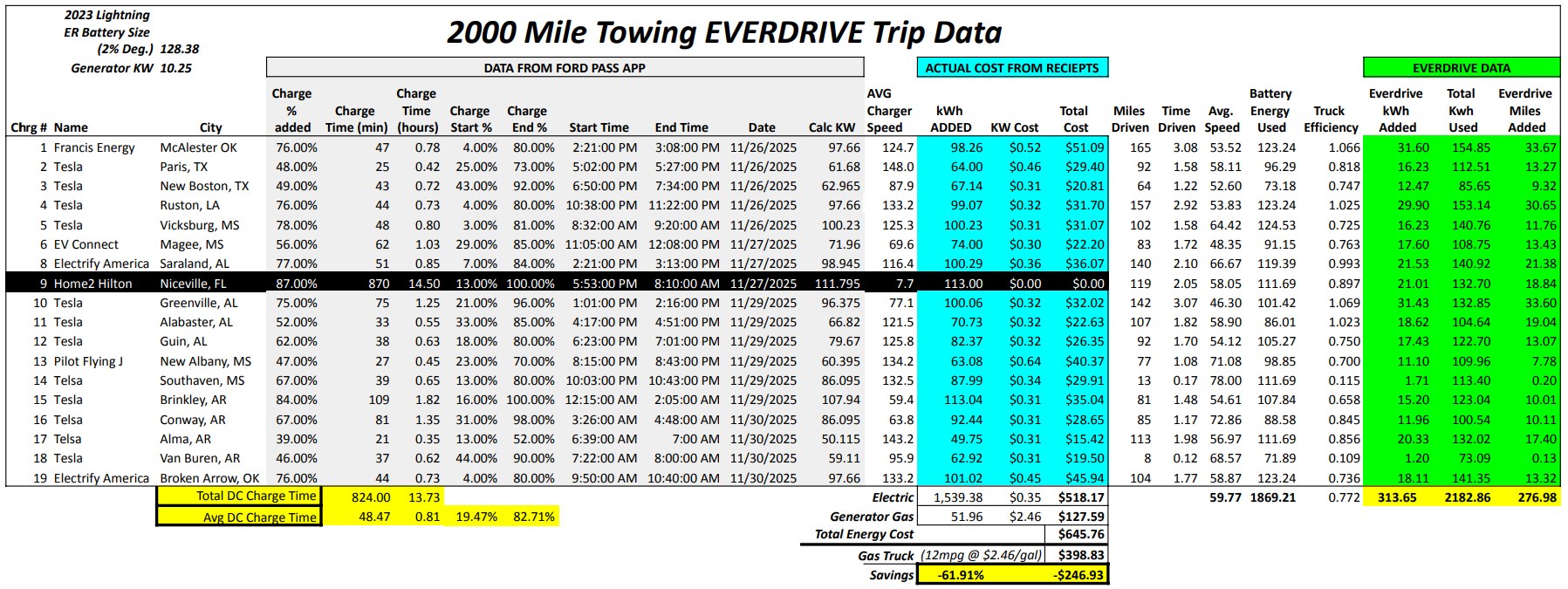
I've been talking with the guy that created a generator system (Everdrive) for the Ford Lightning. It involves running a cable across through the bottom of the carriage that attaches to the front charging area. This allows you to run a charger through the bed of the truck. It's all plug and play, there's no modifying or drilling required. This got me thinking about Scouts offering which I doubt that this will be taken seriously but I wish more thought would be put into it by thinking ahead. (innovation)

1. Do the same thing with the charging receptacle. If I loaded a generator in the bed or tow hitch like shown in the video, I could charge while driving and extend my range. This is especially important if there are emergencies and you can't charge. There are tons of reasons to do this. One is the vehicle will never get the rated range. Two, people who don't want the compromises of the built in generator. It's modular system and obviously you can remove the generator for that special use case or emergency scenario.
592901188_25445959525013112_5833408770506715011_n.jpg


Showing how to easily integrate into a Ford lightning. (vehicle that wasn't designed to be an extended range)


2. Built in Solar connections to inverter. We need direct access to the inverter. Solar panels don't have to be limited to the bed or top. I imagine a connection that is seamlessly built into the frame involving connections but if anything put some MC4 inputs in the bed at the minium. Places to integrate solar would be hood, top and bed. This type of system would allow 5-10 miles+ a day and provide power to the vehicle or tools onsite without dipping into range. If you got stuck out in the middle of nowhere with no grid. You may become a hunter gatherer but you could in the end make it out. Lastly, Scout is marketed as offgrid and outdoor... Don't miss being a leader (not a follower).

(this is just showing that you can build a hood with more solar)
(Claims 10 miles a day)


https://www.worksport.com/products/solis (600 Watts in the bed)
https://www.youtube.com/shorts/QH2pyI0Q-Rk
https://www.youtube.com/watch?v=h-u0Z2zmiHs
 
  • Like
Reactions: SearFerret
Upvote 1
I’ve shared plenty of real data here including my own exp. I’m not trolling. I wouldn’t call it “influencers” when they clearly state exactly how the tests are performed.

Everyone knows EPA numbers aren’t real-world driving (perhaps not first time buyers). I’m planning to buy a Terra. I just don’t want them pulling the same range tricks Tesla and other EV makers have done in the past. If anything I am advocating.
Let me start by saying that I agree with you. Tesla is the worst when it comes to overpromising range. I also disagree with the EPAs formula for calculating range that lets the manufacturer choose a "factor" that let's them put their thumb on the scale. It should be a controlled, single variable test.

But how is this different from the stated MPG numbers in an ICE? It can be challenging to actually see the window sticker numbers in the real world there too. Most people understand that if it's cold or if you drive fast or are hauling a bunch of weight or whatever then you are not going to get the advertised range whether it's an ICE or an EV.
 
Let me start by saying that I agree with you. Tesla is the worst when it comes to overpromising range. I also disagree with the EPAs formula for calculating range that lets the manufacturer choose a "factor" that let's them put their thumb on the scale. It should be a controlled, single variable test.

But how is this different from the stated MPG numbers in an ICE? It can be challenging to actually see the window sticker numbers in the real world there too. Most people understand that if it's cold or if you drive fast or are hauling a bunch of weight or whatever then you are not going to get the advertised range whether it's an ICE or an EV.
It's not much different but when you run out unexpectedly during a trip it can be brutal. Imagine new buyers with a full load kids/pets. There's a big difference between something that can reliably do 400 (EPA rated 500+) miles to tank and something that can only get 200 (or 133) in worst case scenarios (when you expected 320). Honestly, owning EV's was a pretty big learning curve when you don't/can't rely on certain networks. I am used to exploring way out on back roads and I found a way to do it with EV's but it still requires some planning. When you think about people coming over from ICE vehicles, they are used to not worrying about filling up. You see a gas station because we know there will be some somewhere. You add range anxiety when you are always having to plan around where to go. Then on top of that, now there's a concern about will you actually make it. It can be a lot for people to take and there is a lot of turnovers or buyers remorse for that reason. I think Scout is entering into a market with a good product that is user friendly with the built in generator (especially a product that can recharge itself using gas) but for those of us that want to do it the other way, I really want to see some stuff happen.
 
I’m not trolling.
You are trolling.

Look at your posts. Consider why you are here spreading FUD & misinformation when scout has not even published a single efficiency spec OR EPA rating. Once they do, there will be plenty of reliable articles written by trusted sources (like Edmunds). Your motivation is clear here.
 
Last edited:
  • Like
Reactions: J Alynn
You are trolling.

Look at your posts. Consider why you are here spreading FUD & misinformation when scout has not even published a single efficiency spec OR EPA rating. Once they do, there will be plenty of reliable articles written by trusted sources (like Edmunds). Your motivation is clear here.
"I'm not trolling" -That's a tough debate with the username "Mastertroll"
 
You are trolling.

Look at your posts. Consider why you are here spreading FUD & misinformation when scout has not even published a single efficiency spec OR EPA rating. Once they do, there will be plenty of reliable articles written by trusted sources (like Edmunds). Your motivation is clear here.
Please show the misinformation
 
I think Scout is entering into a market with a good product that is user friendly with the built in generator (especially a product that can recharge itself using gas) but for those of us that want to do it the other way, I really want to see some stuff happen.
What is this "stuff" of which you speak? As I said, it is trivial to make a long range EV - just throw batteries at it. But that dramatically increases cost. See also: Tesla, Rivian, Lucid, Silverado. Scout is trying to hit a certain price point and so they cannot just throw batteries at it. I'm sorry, this is physics.....

While Tesla definitely abuses the EPA factor to inflate their EPA numbers, I find that their remaining range calculations while driving to be incredibly accurate. It is also largely within your control - just adjust your right foot. When I roadtrip I target 3% range remaining at the destination. If it drops to 2% I back off the cruise control a few mph. If I climbs to 4% I will speed up slightly.

I also suggest changing the SOC meter (think fuel gauge) from miles to %. IMO they never should have allowed you to choose "miles remaining" and instead display "% remaining."

Ultimately, people will have to go through a transition. The "common knowledge" will need to change. It's no different than the change from horses to ICE. "You mean I can't just stop on the side of the road and refuel by car? I have to go to a place that stores this noxious chemical and pay money? Grass is free!" Today, everyone knows that mileage goes down at altitude, you have to check your oil, you have to change your oil, spark plugs, air filter, etc. That knowledge will change to knowing things like preconditioning the car before you leave if it's cold. Doing that dramatically improves your cold weather range.

Finally, we are still early in this transition. Just like the move from horses, in the early days you had to bring a mechanic with you, now cars are incredibly reliable. You had to buy gas at pharmacies, now there are gas stations everywhere. Let me be clear, there is a higher penetration of electricity than gas stations. For example, you can charge your EV in Yosemite valley. You can't buy gas there.

We are getting closer and closer to being able to just jump in your EV and go but we're not there yet. If you are not willing to do a little planning ahead of time, then get a Harvester and carry on. I think you will be pleasantly surprised at how little gas you use.
 
What is this "stuff" of which you speak? As I said, it is trivial to make a long range EV - just throw batteries at it. But that dramatically increases cost. See also: Tesla, Rivian, Lucid, Silverado. Scout is trying to hit a certain price point and so they cannot just throw batteries at it. I'm sorry, this is physics.....

While Tesla definitely abuses the EPA factor to inflate their EPA numbers, I find that their remaining range calculations while driving to be incredibly accurate. It is also largely within your control - just adjust your right foot. When I roadtrip I target 3% range remaining at the destination. If it drops to 2% I back off the cruise control a few mph. If I climbs to 4% I will speed up slightly.

I also suggest changing the SOC meter (think fuel gauge) from miles to %. IMO they never should have allowed you to choose "miles remaining" and instead display "% remaining."

Ultimately, people will have to go through a transition. The "common knowledge" will need to change. It's no different than the change from horses to ICE. "You mean I can't just stop on the side of the road and refuel by car? I have to go to a place that stores this noxious chemical and pay money? Grass is free!" Today, everyone knows that mileage goes down at altitude, you have to check your oil, you have to change your oil, spark plugs, air filter, etc. That knowledge will change to knowing things like preconditioning the car before you leave if it's cold. Doing that dramatically improves your cold weather range.

Finally, we are still early in this transition. Just like the move from horses, in the early days you had to bring a mechanic with you, now cars are incredibly reliable. You had to buy gas at pharmacies, now there are gas stations everywhere. Let me be clear, there is a higher penetration of electricity than gas stations. For example, you can charge your EV in Yosemite valley. You can't buy gas there.

We are getting closer and closer to being able to just jump in your EV and go but we're not there yet. If you are not willing to do a little planning ahead of time, then get a Harvester and carry on. I think you will be pleasantly surprised at how little gas you use.

1. I've done extensive range tests with Tesla and Ford EV's.

"I also suggest changing the SOC meter (think fuel gauge) from miles to %. IMO they never should have allowed you to choose "miles remaining" and instead display "% remaining." This doesn't work out well for trips. You either can drive 300 miles or your can't

There are a few EV's that are getting better than EPA and that's great. It's not ok for EV manufacturers to mislead buyers.
 
I don't know what to tell you. As I said, I think the EPA screwed up by allowing the use of a manufacturer-chosen factor but they did and so here we are.

That being said, you're not going to get EPA range in your ICE if you drive fast or through bad weather. EPA range is what it is - it is a test that is done under controlled conditions. Outside of those conditions, as they say, YMMV.

A buyer should do some research before making a large purchase. It is trivial to look at Car and Driver or one of the other groups that do real-world range tests.

We will see what Scout does. Hopefully the vehicles will be able to get very close to their EPA ranges.
 
  • Like
Reactions: mastertroll
I don't know what to tell you. As I said, I think the EPA screwed up by allowing the use of a manufacturer-chosen factor but they did and so here we are.

That being said, you're not going to get EPA range in your ICE if you drive fast or through bad weather. EPA range is what it is - it is a test that is done under controlled conditions. Outside of those conditions, as they say, YMMV.

A buyer should do some research before making a large purchase. It is trivial to look at Car and Driver or one of the other groups that do real-world range tests.

We will see what Scout does. Hopefully the vehicles will be able to get very close to their EPA ranges.
That's why I post this stuff. Scout has the opportunity not be "that manufacturer".
 
We need this on Scout for regular EV. It doesn't have to compete with the harvester model. It just shows thoughtfulness/utility in design
1000012609.png
 
Last edited: