



Time for Taxi Mom and her 4x4!


If you must. Safe travels.

I didn’t realize it was going to snow. It was totally clear when my husband left for work so the Supra is in the parking lot at his work.Time for Taxi Mom and her 4x4!

No one is thankfully until later this afternoon. And it’s apparently done now. Just really windy. They say Illinois can have all four seasons in a day and it’s true!If you must. Safe travels.


Beautiful building!Ford went to great lengths to renovate historic Michigan Central Station
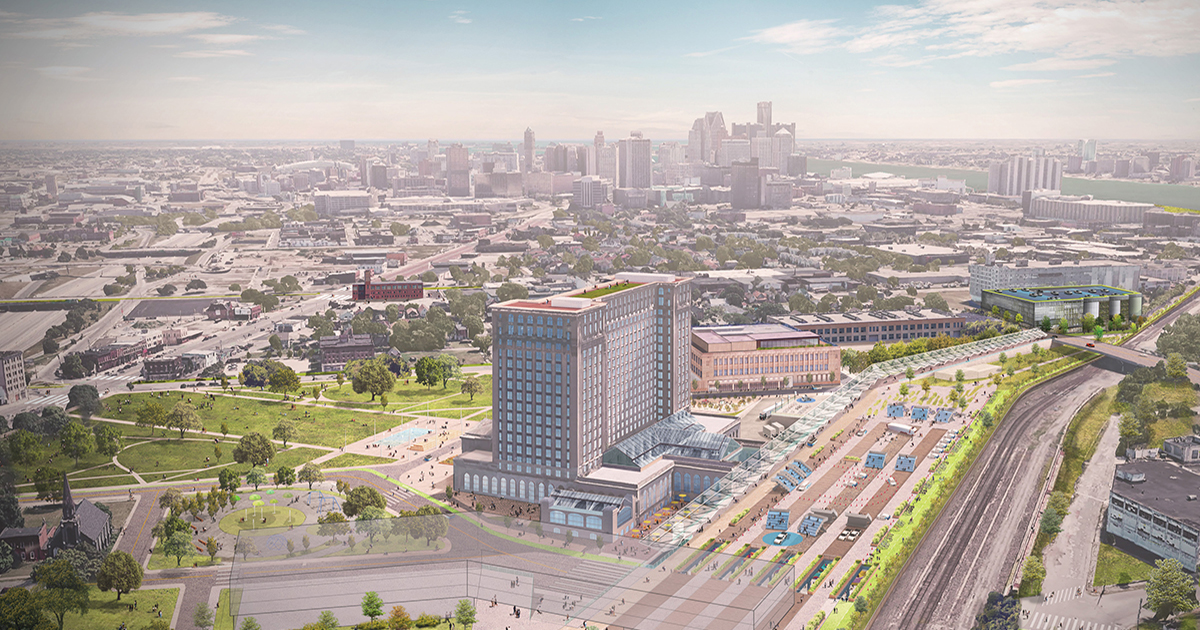
Ford has its fans and detractors here, but I would like to give them recognition for restoring this beautiful train station in Detroit. They spent $950 million on the restoration! It reopened in 2024. Lincoln is relocating their HQ there, and Ford currently houses its electric vehicle business unit, philanthropy arm and integrated services team there. I've driven by it, and it's quite impressive!
View attachment 12914
The automaker spent roughly $950 million renovating the 30-acre Michigan Central campus, with the centerpiece being the flagship train station that's reopening this week after sitting vacant and decaying since 1988. Ford bought the 18-story tower — designed more than a century ago by the same architects behind New York's Grand Central Terminal — for $90 million in 2018, saying at the time that it wanted to create a mobility hub for teams working on autonomous and electric vehicle technology.
While Ford's corporate headquarters will remain in nearby Dearborn, the train station in Detroit's historic Corktown neighborhood is expected to house roughly 1,000 Ford employees by the end of this year. The automaker has not specified which departments will be based there but plans to have 2,500 workers there by the end of 2028, alongside another 2,500 non-Ford employees.
Michigan Central lobby (D
Executive Chair Bill Ford, who has said he was motivated to undertake the project after growing tired of seeing it used as a symbol of Detroit's decline, believes the automaker is in a "war for talent" that the Michigan Central campus will help it win.
"Talent attraction is our No. 1 goal now," Ford said last year when the company finished restoring an adjacent building. "Yes, we have to be mindful of costs, but we also have to have an eye on the future. We have to be very cognizant of what this company will look like in the next 10 years and what will enable us to get there. [CEO Jim Farley] and I are in complete agreement that this Corktown area will do that."
Ford believes the automaker will be able to sell young people on working in a unique, historic building that's part of a larger renaissance for the city.
"For most of my career, when we were trying to attract people from outside the region, the first question they would ask is 'What about Detroit?' " Ford said last year. "I remember in the early days, we'd tell them about how great Northern Michigan was, how great the school systems in the suburbs were, but we didn't really sell Detroit. Now, we can."
Construction hurdles
The renovation project was a daunting task. Roughly 3,100 people worked a combined 1.7 million hours at the site over the past six years.
The COVID-19 pandemic added an additional layer of stress to the construction. An on-site nursing station was set up and workers took all necessary precautions to remain healthy, but progress was nonetheless slowed at times.
For example, in 2020 there was just one working elevator to transport people and materials to the top of the tower. Normally it could carry 20 people, but social distancing rules limited capacity to four.
Once the restoration was underway, contractors realized they needed to replace large chunks of limestone on the building's exterior. They were able to find the quarry in Indiana that produced the original blocks and reopened it to extract new stone.
Michigan Central
A master stone carver spent more than 400 hours chiseling a 20,000-pound block of limestone into an ornate column capital to mimic the original pattern.
Teams used historic photos to replicate exact details as much as possible. Researchers found part of the original cast-iron rosettes used around the edges of the largest exterior windows on sale at a Dearborn antique store for $350. They used it as a guide to recreate the full design with a 3D printer.
After purchasing the building, Ford put out requests to the community to return any artifacts taken by scavengers as the station fell into disrepair. Two anonymous donors dropped off the 750-pound original clock from the station's carriage house.
Someone else had come into possession of another clock that sat above the original ticket windows inside the lobby but was hesitant to part with it. Developers said they had to negotiate with the owner, purchasing it "on his terms." They did not specify a price.
Contractors pumped 3.5 million gallons of water out of the basement, restored 1,300 square feet of terra cotta cornice and installed 4,200 light fixtures, including recreations of three large chandeliers in the waiting room and grand hall.
Ford intends the ground floor to be open to the public with retail stores, restaurants and coffee shops, although it has not identified any specific tenants. The first are expected to move in by the fall.
A hotel is planned for the top floors, though details have not yet been finalized.
Ford, the great-grandson of company founder Henry Ford, said the campus is already having its intended effect. Since the building next door to the train depot opened last year, it's become home to nearly 100 startup companies and approximately 600 employees.
"We're now attracting new talent to this area, and they're getting funding as well, which is really important," Ford told Automotive News affiliate Crain's Detroit Business, noting that some $700 million in outside funding has gone to companies in that adjacent building. "All of a sudden we're going to have an ecosystem here that really will propel this region forward in terms of allowing it to be the Motor City for the next 100 years."
Ford went to great lengths to renovate historic Michigan Central Station
Ford has its fans and detractors here, but I would like to give them recognition for restoring this beautiful train station in Detroit. They spent $950 million on the restoration! It reopened in 2024. Lincoln is relocating their HQ there, and Ford currently houses its electric vehicle business unit, philanthropy arm and integrated services team there. I've driven by it, and it's quite impressive!
View attachment 12914
The automaker spent roughly $950 million renovating the 30-acre Michigan Central campus, with the centerpiece being the flagship train station that's reopening this week after sitting vacant and decaying since 1988. Ford bought the 18-story tower — designed more than a century ago by the same architects behind New York's Grand Central Terminal — for $90 million in 2018, saying at the time that it wanted to create a mobility hub for teams working on autonomous and electric vehicle technology.
While Ford's corporate headquarters will remain in nearby Dearborn, the train station in Detroit's historic Corktown neighborhood is expected to house roughly 1,000 Ford employees by the end of this year. The automaker has not specified which departments will be based there but plans to have 2,500 workers there by the end of 2028, alongside another 2,500 non-Ford employees.
Michigan Central lobby (D
Executive Chair Bill Ford, who has said he was motivated to undertake the project after growing tired of seeing it used as a symbol of Detroit's decline, believes the automaker is in a "war for talent" that the Michigan Central campus will help it win.
"Talent attraction is our No. 1 goal now," Ford said last year when the company finished restoring an adjacent building. "Yes, we have to be mindful of costs, but we also have to have an eye on the future. We have to be very cognizant of what this company will look like in the next 10 years and what will enable us to get there. [CEO Jim Farley] and I are in complete agreement that this Corktown area will do that."
Ford believes the automaker will be able to sell young people on working in a unique, historic building that's part of a larger renaissance for the city.
"For most of my career, when we were trying to attract people from outside the region, the first question they would ask is 'What about Detroit?' " Ford said last year. "I remember in the early days, we'd tell them about how great Northern Michigan was, how great the school systems in the suburbs were, but we didn't really sell Detroit. Now, we can."
Construction hurdles
The renovation project was a daunting task. Roughly 3,100 people worked a combined 1.7 million hours at the site over the past six years.
The COVID-19 pandemic added an additional layer of stress to the construction. An on-site nursing station was set up and workers took all necessary precautions to remain healthy, but progress was nonetheless slowed at times.
For example, in 2020 there was just one working elevator to transport people and materials to the top of the tower. Normally it could carry 20 people, but social distancing rules limited capacity to four.
Once the restoration was underway, contractors realized they needed to replace large chunks of limestone on the building's exterior. They were able to find the quarry in Indiana that produced the original blocks and reopened it to extract new stone.
Michigan Central
A master stone carver spent more than 400 hours chiseling a 20,000-pound block of limestone into an ornate column capital to mimic the original pattern.
Teams used historic photos to replicate exact details as much as possible. Researchers found part of the original cast-iron rosettes used around the edges of the largest exterior windows on sale at a Dearborn antique store for $350. They used it as a guide to recreate the full design with a 3D printer.
After purchasing the building, Ford put out requests to the community to return any artifacts taken by scavengers as the station fell into disrepair. Two anonymous donors dropped off the 750-pound original clock from the station's carriage house.
Someone else had come into possession of another clock that sat above the original ticket windows inside the lobby but was hesitant to part with it. Developers said they had to negotiate with the owner, purchasing it "on his terms." They did not specify a price.
Contractors pumped 3.5 million gallons of water out of the basement, restored 1,300 square feet of terra cotta cornice and installed 4,200 light fixtures, including recreations of three large chandeliers in the waiting room and grand hall.
Ford intends the ground floor to be open to the public with retail stores, restaurants and coffee shops, although it has not identified any specific tenants. The first are expected to move in by the fall.
A hotel is planned for the top floors, though details have not yet been finalized.
Ford, the great-grandson of company founder Henry Ford, said the campus is already having its intended effect. Since the building next door to the train depot opened last year, it's become home to nearly 100 startup companies and approximately 600 employees.
"We're now attracting new talent to this area, and they're getting funding as well, which is really important," Ford told Automotive News affiliate Crain's Detroit Business, noting that some $700 million in outside funding has gone to companies in that adjacent building. "All of a sudden we're going to have an ecosystem here that really will propel this region forward in terms of allowing it to be the Motor City for the next 100 years."

That is nice
Spectacular Reno. I remember when they announced that and I was thrilled. My focus in college for architecture was adaptive reuse and this exemplifies that in every manner. What a showpieceFord went to great lengths to renovate historic Michigan Central Station
Ford has its fans and detractors here, but I would like to give them recognition for restoring this beautiful train station in Detroit. They spent $950 million on the restoration! It reopened in 2024. Lincoln is relocating their HQ there, and Ford currently houses its electric vehicle business unit, philanthropy arm and integrated services team there. I've driven by it, and it's quite impressive!
View attachment 12914
The automaker spent roughly $950 million renovating the 30-acre Michigan Central campus, with the centerpiece being the flagship train station that's reopening this week after sitting vacant and decaying since 1988. Ford bought the 18-story tower — designed more than a century ago by the same architects behind New York's Grand Central Terminal — for $90 million in 2018, saying at the time that it wanted to create a mobility hub for teams working on autonomous and electric vehicle technology.
While Ford's corporate headquarters will remain in nearby Dearborn, the train station in Detroit's historic Corktown neighborhood is expected to house roughly 1,000 Ford employees by the end of this year. The automaker has not specified which departments will be based there but plans to have 2,500 workers there by the end of 2028, alongside another 2,500 non-Ford employees.
Michigan Central lobby (D
Executive Chair Bill Ford, who has said he was motivated to undertake the project after growing tired of seeing it used as a symbol of Detroit's decline, believes the automaker is in a "war for talent" that the Michigan Central campus will help it win.
"Talent attraction is our No. 1 goal now," Ford said last year when the company finished restoring an adjacent building. "Yes, we have to be mindful of costs, but we also have to have an eye on the future. We have to be very cognizant of what this company will look like in the next 10 years and what will enable us to get there. [CEO Jim Farley] and I are in complete agreement that this Corktown area will do that."
Ford believes the automaker will be able to sell young people on working in a unique, historic building that's part of a larger renaissance for the city.
"For most of my career, when we were trying to attract people from outside the region, the first question they would ask is 'What about Detroit?' " Ford said last year. "I remember in the early days, we'd tell them about how great Northern Michigan was, how great the school systems in the suburbs were, but we didn't really sell Detroit. Now, we can."
Construction hurdles
The renovation project was a daunting task. Roughly 3,100 people worked a combined 1.7 million hours at the site over the past six years.
The COVID-19 pandemic added an additional layer of stress to the construction. An on-site nursing station was set up and workers took all necessary precautions to remain healthy, but progress was nonetheless slowed at times.
For example, in 2020 there was just one working elevator to transport people and materials to the top of the tower. Normally it could carry 20 people, but social distancing rules limited capacity to four.
Once the restoration was underway, contractors realized they needed to replace large chunks of limestone on the building's exterior. They were able to find the quarry in Indiana that produced the original blocks and reopened it to extract new stone.
Michigan Central
A master stone carver spent more than 400 hours chiseling a 20,000-pound block of limestone into an ornate column capital to mimic the original pattern.
Teams used historic photos to replicate exact details as much as possible. Researchers found part of the original cast-iron rosettes used around the edges of the largest exterior windows on sale at a Dearborn antique store for $350. They used it as a guide to recreate the full design with a 3D printer.
After purchasing the building, Ford put out requests to the community to return any artifacts taken by scavengers as the station fell into disrepair. Two anonymous donors dropped off the 750-pound original clock from the station's carriage house.
Someone else had come into possession of another clock that sat above the original ticket windows inside the lobby but was hesitant to part with it. Developers said they had to negotiate with the owner, purchasing it "on his terms." They did not specify a price.
Contractors pumped 3.5 million gallons of water out of the basement, restored 1,300 square feet of terra cotta cornice and installed 4,200 light fixtures, including recreations of three large chandeliers in the waiting room and grand hall.
Ford intends the ground floor to be open to the public with retail stores, restaurants and coffee shops, although it has not identified any specific tenants. The first are expected to move in by the fall.
A hotel is planned for the top floors, though details have not yet been finalized.
Ford, the great-grandson of company founder Henry Ford, said the campus is already having its intended effect. Since the building next door to the train depot opened last year, it's become home to nearly 100 startup companies and approximately 600 employees.
"We're now attracting new talent to this area, and they're getting funding as well, which is really important," Ford told Automotive News affiliate Crain's Detroit Business, noting that some $700 million in outside funding has gone to companies in that adjacent building. "All of a sudden we're going to have an ecosystem here that really will propel this region forward in terms of allowing it to be the Motor City for the next 100 years."
I am digging these new liveries so far. 8 more to go.
It is great what Ford is doing in the area with all the rebuilding. When I was in Michigan last year I went down town to have lunch with my niece, who is an architect; and she took me over to the station for an impromptu walk through. Very nice. I especially like that drone shot, (picture #1).Ford went to great lengths to renovate historic Michigan Central Station
Ford has its fans and detractors here, but I would like to give them recognition for restoring this beautiful train station in Detroit. They spent $950 million on the restoration! It reopened in 2024. Lincoln is relocating their HQ there, and Ford currently houses its electric vehicle business unit, philanthropy arm and integrated services team there. I've driven by it, and it's quite impressive!
View attachment 12914
The automaker spent roughly $950 million renovating the 30-acre Michigan Central campus, with the centerpiece being the flagship train station that's reopening this week after sitting vacant and decaying since 1988. Ford bought the 18-story tower — designed more than a century ago by the same architects behind New York's Grand Central Terminal — for $90 million in 2018, saying at the time that it wanted to create a mobility hub for teams working on autonomous and electric vehicle technology.
While Ford's corporate headquarters will remain in nearby Dearborn, the train station in Detroit's historic Corktown neighborhood is expected to house roughly 1,000 Ford employees by the end of this year. The automaker has not specified which departments will be based there but plans to have 2,500 workers there by the end of 2028, alongside another 2,500 non-Ford employees.
Michigan Central lobby (D
Executive Chair Bill Ford, who has said he was motivated to undertake the project after growing tired of seeing it used as a symbol of Detroit's decline, believes the automaker is in a "war for talent" that the Michigan Central campus will help it win.
"Talent attraction is our No. 1 goal now," Ford said last year when the company finished restoring an adjacent building. "Yes, we have to be mindful of costs, but we also have to have an eye on the future. We have to be very cognizant of what this company will look like in the next 10 years and what will enable us to get there. [CEO Jim Farley] and I are in complete agreement that this Corktown area will do that."
Ford believes the automaker will be able to sell young people on working in a unique, historic building that's part of a larger renaissance for the city.
"For most of my career, when we were trying to attract people from outside the region, the first question they would ask is 'What about Detroit?' " Ford said last year. "I remember in the early days, we'd tell them about how great Northern Michigan was, how great the school systems in the suburbs were, but we didn't really sell Detroit. Now, we can."
Construction hurdles
The renovation project was a daunting task. Roughly 3,100 people worked a combined 1.7 million hours at the site over the past six years.
The COVID-19 pandemic added an additional layer of stress to the construction. An on-site nursing station was set up and workers took all necessary precautions to remain healthy, but progress was nonetheless slowed at times.
For example, in 2020 there was just one working elevator to transport people and materials to the top of the tower. Normally it could carry 20 people, but social distancing rules limited capacity to four.
Once the restoration was underway, contractors realized they needed to replace large chunks of limestone on the building's exterior. They were able to find the quarry in Indiana that produced the original blocks and reopened it to extract new stone.
Michigan Central
A master stone carver spent more than 400 hours chiseling a 20,000-pound block of limestone into an ornate column capital to mimic the original pattern.
Teams used historic photos to replicate exact details as much as possible. Researchers found part of the original cast-iron rosettes used around the edges of the largest exterior windows on sale at a Dearborn antique store for $350. They used it as a guide to recreate the full design with a 3D printer.
After purchasing the building, Ford put out requests to the community to return any artifacts taken by scavengers as the station fell into disrepair. Two anonymous donors dropped off the 750-pound original clock from the station's carriage house.
Someone else had come into possession of another clock that sat above the original ticket windows inside the lobby but was hesitant to part with it. Developers said they had to negotiate with the owner, purchasing it "on his terms." They did not specify a price.
Contractors pumped 3.5 million gallons of water out of the basement, restored 1,300 square feet of terra cotta cornice and installed 4,200 light fixtures, including recreations of three large chandeliers in the waiting room and grand hall.
Ford intends the ground floor to be open to the public with retail stores, restaurants and coffee shops, although it has not identified any specific tenants. The first are expected to move in by the fall.
A hotel is planned for the top floors, though details have not yet been finalized.
Ford, the great-grandson of company founder Henry Ford, said the campus is already having its intended effect. Since the building next door to the train depot opened last year, it's become home to nearly 100 startup companies and approximately 600 employees.
"We're now attracting new talent to this area, and they're getting funding as well, which is really important," Ford told Automotive News affiliate Crain's Detroit Business, noting that some $700 million in outside funding has gone to companies in that adjacent building. "All of a sudden we're going to have an ecosystem here that really will propel this region forward in terms of allowing it to be the Motor City for the next 100 years."
Audi Tomorrow!

Link to Audi livestream tomorrow.Audi Tomorrow!

 www.audif1.com
Was she involved with it or just talked your way in? It is a beautiful piece of architecture and grateful it wasn’t destroyed before Ford committed to restoring it.It is great what Ford is doing in the area with all the rebuilding. When I was in Michigan last year I went down town to have lunch with my niece, who is an architect; and she took me over to the station for an impromptu walk through. Very nice. I especially like that drone shot, (picture #1).
How so? I’m not seeing pros or cons but wondering. I figure some of it is posturing toward us to show they don’t need US imports but if they reduce tariffs and Canadians are more open to EVs it gives them solid options beyond US. Unless of course 2 years after screwing is the Chinese jack up prices-then they will feel the painI don't understand what Canada is doing. This is only going to exacerbate their current automotive issues.
I certainly didn’t know but next time I’m in NYC I’m having cousins meet there and have a drink. Probably coming in by train anyway so why not take advantage. What an amazing spaceOne of the hidden gems inside Grand Central was the Campbell Apartment - a refuge amongst the chaos, and one of the coolest places I have been for a cocktail. It was once an office, a studio and even a jail before becoming one of the coolest bar spaces in NYC. Billions of people have walked right by it and never knew it existed... Hidden there in plain sight!
I wonder if the Ford location has a secret cocktail bar hidden away somewhere within its walls?
Last time i was at the Campbell Aprtment, it even had a dress code, but is now is under new ownership and just known as the "Campbell"
View attachment 12916
It's open to the public and they have tours. There's also a coffee shop there, I believe.Was she involved with it or just talked your way in? It is a beautiful piece of architecture and grateful it wasn’t destroyed before Ford committed to restoring it.