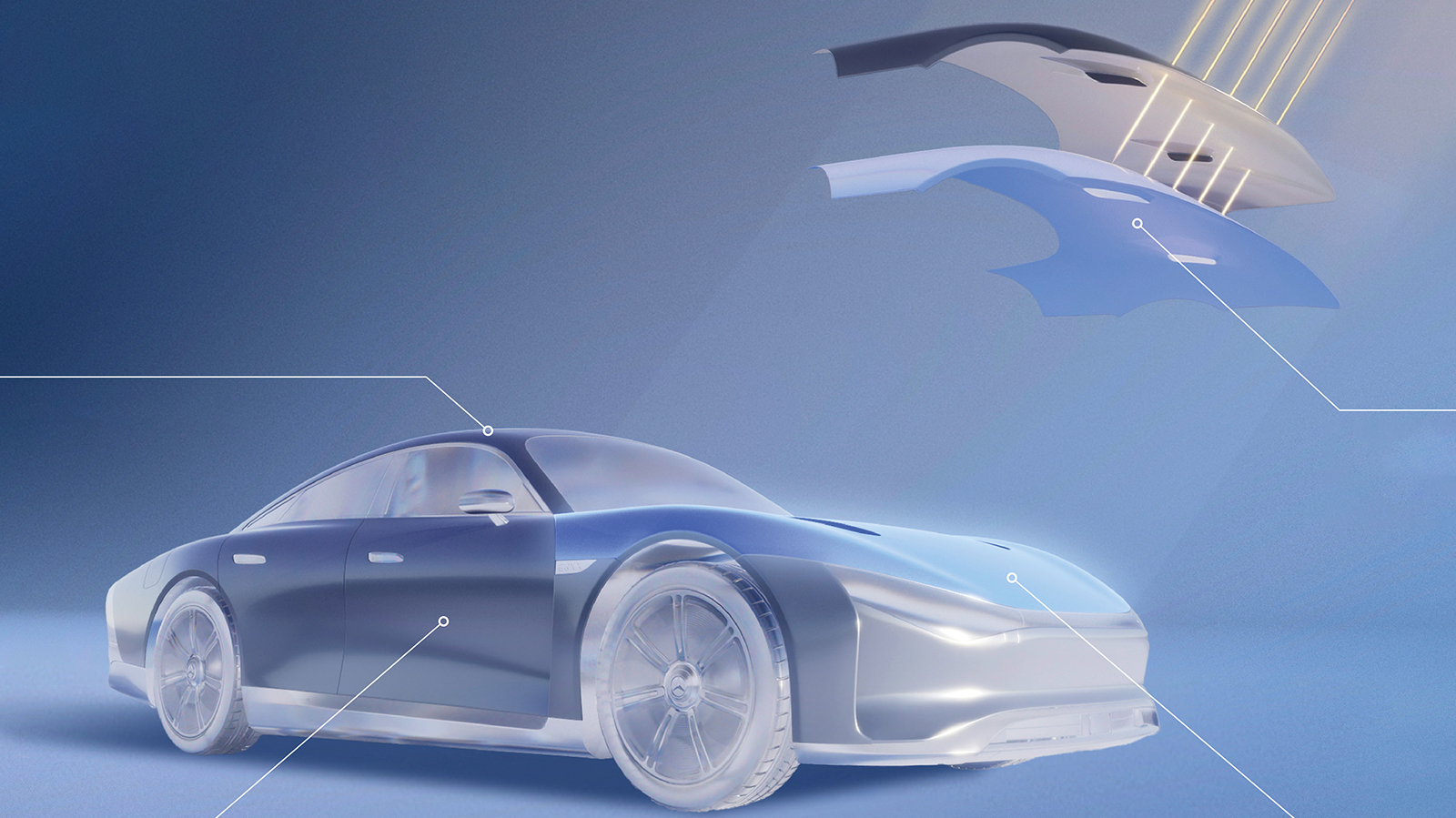


Generator + Solar integration

  • From all of us at Scout Motors, welcome to the Scout Community! We created this community to provide Scout vehicle owners, enthusiasts, and curiosity seekers with a place to engage in discussion, suggestions, stories, and connections. Supportive communities are sometimes hard to find, but we're determined to turn this into one.

    Additionally, Scout Motors wants to hear your feedback and speak directly to the rabid community of owners as unique as America. We'll use the Scout Community to deliver news and information on events and launch updates directly to the group. Although the start of production is anticipated in 2026, many new developments and milestones will occur in the interim. We plan to share them with you on this site and look for your feedback and suggestions.

    How will the Scout Community be run? Think of it this way: this place is your favorite local hangout. We want you to enjoy the atmosphere, talk to people who share similar interests, request and receive advice, and generally have an enjoyable time. The Scout Community should be a highlight of your day. We want you to tell stories, share photos, spread your knowledge, and tell us how Scout can deliver great products and experiences. Along the way, Scout Motors will share our journey to production with you.

    Scout is all about respect. We respect our heritage. We respect the land and outdoors. We respect each other. Every person should feel safe, included, and welcomed in the Scout Community. Being kind and courteous to the other forum members is non-negotiable. Friendly debates are welcomed and often produce great outcomes, but we don't want things to get too rowdy. Please take a moment to consider what you post, especially if you think it may insult others. We'll do our best to encourage friendly discourse and to keep the discussions flowing.

    So, welcome to the Scout Community! We encourage you to check back regularly as we plan to engage our members, share teasers, and participate in discussions. The world needs Scouts™. Let's get going.


    We are Scout Motors.

mastertroll

Scout Community Veteran
Jun 29, 2025
207
169
Oklahoma
I've been talking with the guy that created a generator system (Everdrive) for the Ford Lightning. It involves running a cable across through the bottom of the carriage that attaches to the front charging area. This allows you to run a charger through the bed of the truck. It's all plug and play, there's no modifying or drilling required. This got me thinking about Scouts offering which I doubt that this will be taken seriously but I wish more thought would be put into it by thinking ahead. (innovation)

1. Do the same thing with the charging receptacle. If I loaded a generator in the bed or tow hitch like shown in the video, I could charge while driving and extend my range. This is especially important if there are emergencies and you can't charge. There are tons of reasons to do this. One is the vehicle will never get the rated range. Two, people who don't want the compromises of the built in generator. It's modular system and obviously you can remove the generator for that special use case or emergency scenario.
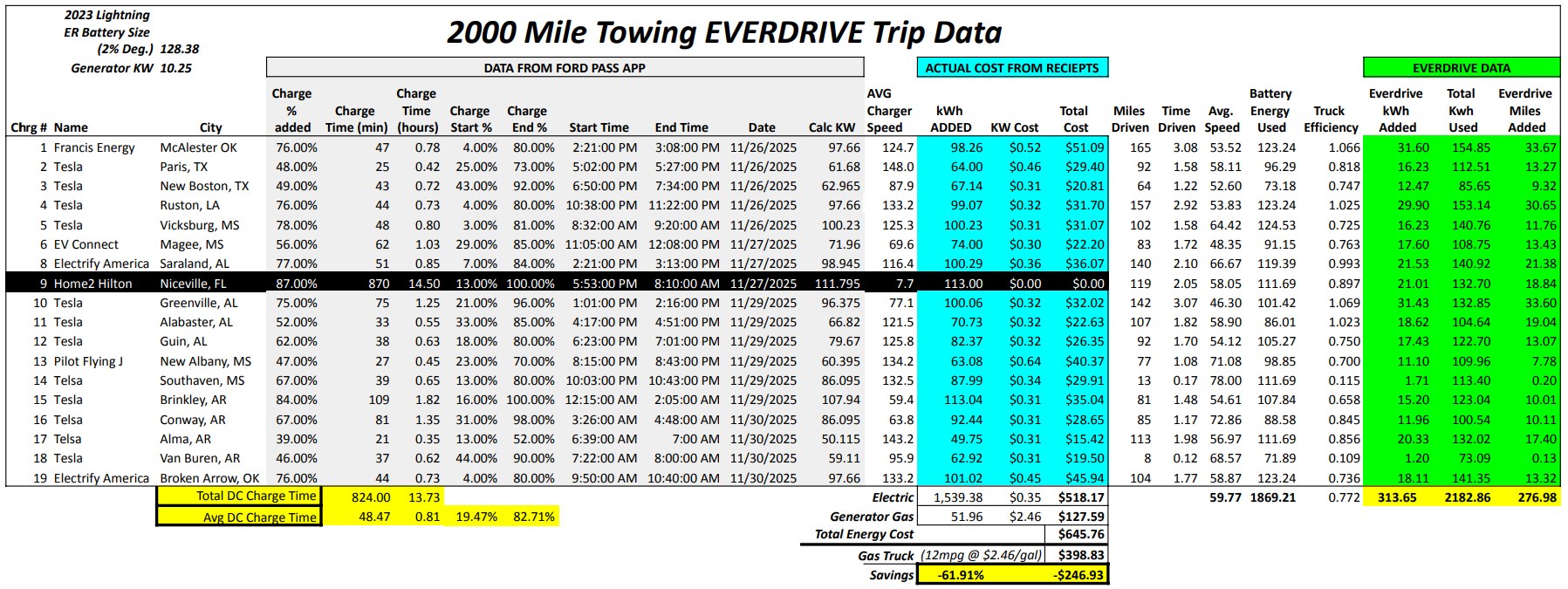
592901188_25445959525013112_5833408770506715011_n.jpg


Showing how to easily integrate into a Ford lightning. (vehicle that wasn't designed to be an extended range)


2. Built in Solar connections to inverter. We need direct access to the inverter. Solar panels don't have to be limited to the bed or top. I imagine a connection that is seamlessly built into the frame involving connections but if anything put some MC4 inputs in the bed at the minium. Places to integrate solar would be hood, top and bed. This type of system would allow 5-10 miles+ a day and provide power to the vehicle or tools onsite without dipping into range. If you got stuck out in the middle of nowhere with no grid. You may become a hunter gatherer but you could in the end make it out. Lastly, Scout is marketed as offgrid and outdoor... Don't miss being a leader (not a follower).

(this is just showing that you can build a hood with more solar)
(Claims 10 miles a day)


https://www.worksport.com/products/solis (600 Watts in the bed)
https://www.youtube.com/shorts/QH2pyI0Q-Rk
https://www.youtube.com/watch?v=h-u0Z2zmiHs
 
Upvote 0
"The Everdrive is still vapor and the people supposedly building it get very defensive if they’re asked engineering questions. I lost interest in their threads on the Lightning forums some time ago. Maybe they’ll eventually figure it out, but some of the early claims didn’t add up. And I have no interest in badly-polluting generators they were using. Their solution is also vehicle-specific and they would have to hack into other vehicles to make it a useful accessory for any other brand. I wish them well—demonstrating consumer interest in this may very well capture the attention of auto manufacturers. I would prefer a removable battery myself. But the cost to engineer it safely was clearly high enough that the auto manufacturer who promised it backed out of that promise."


330 miles in winter


This Everdrive (Electric Vehicle Extended Range Drive ) system shows total promise and I will be supporting it. The results I am seeing are great. I've seen examples of 500 miles of range added with the right generator. This is interesting because you can choose a gen based on your needs. Smaller and portable gives less miles, but maybe you don't need crazy range. Also, great results in towing — much better than stock.

"I have 400 Watts on the roof of my bed cap and I carry two 400 watt folding panels."

Are you using Ecoflow? I dig that setup. I also carry 3 400w. One, foldable, and two residential fixed in a frame. I want the Terra inverter to handle all this.


With today’s technology, you can integrate solar cells directly into body panels so they look completely normal — just like regular painted metal. On a truck like the Lightning or Scout Terra, 400–500 watts on the hood alone. If you also integrated solar into the bed tonneau and an optional removable or retractable top, you could potentially reach 900 watts to 1.2 kilowatts of peak power in a fully integrated setup.

The article is about Lightyear’s vehicle-integrated solar technology. They developed lightweight, flexible, high-efficiency solar panels that can be built directly into a car’s body panels — like the hood, roof, and doors — so they blend in and look sleek instead of like add-on solar panels.
Their panels reach up to 23% efficiency, and they claim the system can add as much as 43 miles of range per day under ideal conditions. They also say the panels perform well even when partially shaded and maintain very high conversion efficiency.


Mercedes solar paint is interesting.
The article covers Mercedes-Benz’s new solar paint technology — a super-thin photovoltaic coating (only 5 micrometers thick) that can be applied directly to a car’s body panels like regular paint.

Key points:
  • It turns the vehicle’s body (hood, roof, doors, etc.) into a solar panel while still looking like normal colored paint.
  • It has 20% efficiency, which is as good as many commercial solar panels.
  • It works on curved surfaces.
  • The paint lets 94% of sunlight through to the solar layer underneath.
  • On a mid-size SUV with about 118 sq ft (11 m²) of coverage, Mercedes claims it could generate enough energy for roughly 12,500 miles per year in Los Angeles or about 7,500 miles in Germany.
  • it could generate enough energy for roughly 19 to 24 miles per day in very sunny locations and under ideal conditions.
    That works out to about 5 kWh per day in good sun (based on typical EV efficiency.
1600x0.webp
 
Last edited:
100%

The Everdrive is still vapor and the people supposedly building it get very defensive if they’re asked engineering questions. I lost interest in their threads on the Lightning forums some time ago. Maybe they’ll eventually figure it out, but some of the early claims didn’t add up. And I have no interest in badly-polluting generators they were using. Their solution is also vehicle-specific and they would have to hack into other vehicles to make it a useful accessory for any other brand. I wish them well—demonstrating consumer interest in this may very well capture the attention of auto manufacturers. I would prefer a removable battery myself. But the cost to engineer it safely was clearly high enough that the auto manufacturer who promised it backed out of that promise.
 
"I have 400 Watts on the roof of my bed cap and I carry two 400 watt folding panels."

Are you using Ecoflow? I dig that setup. I also carry 3 400w. One, foldable, and two residential fixed in a frame. I want the Terra inverter to handle all this.

No. I have a cheap Chinese powerstation. Oukitel, I think is the name. It’s the same battery and same inverter as a lot of the bigger name brands, but it’s significantly cheaper. The biggest issue with it is that it doesn’t provide 240 Volt, 30 Amp output (few do, and the ones that do are incredibly over-priced). I have a 240 Volt solar inverter that I’ll probably end up using in the future.

With today’s technology, you can integrate solar cells directly into body panels so they look completely normal — just like regular painted metal. On a truck like the Lightning or Scout Terra, 400–500 watts on the hood alone. If you also integrated solar into the bed tonneau and an optional removable or retractable top, you could potentially reach 900 watts to 1.2 kilowatts of peak power in a fully integrated setup.

Except we’ve never seen this applied to a high-volume production vehicle.

The article is about Lightyear’s vehicle-integrated solar technology. They developed lightweight, flexible, high-efficiency solar panels that can be built directly into a car’s body panels — like the hood, roof, and doors — so they blend in and look sleek instead of like add-on solar panels.
Their panels reach up to 23% efficiency, and they claim the system can add as much as 43 miles of range per day under ideal conditions. They also say the panels perform well even when partially shaded and maintain very high conversion efficiency.

Again, it’s not available in production volumes, it’s simply a concept available to manufacturers who don’t want to have to charge $20k just to replace a body panel when it gets dented in the parking lot...

I don’t know where they calculate 43 miles of range per day. On the most efficient BEV available to US consumers, a Lucid Air (450 miles range, assuming 5 miles/kWh), you would need approximately 9 hours of 1 kW production. That’s not going to happen in reality with permanently-mounted/integrated panels. I can get high power by moving my two adjustable panels to face the Sun most of the day. I live in one of the sunniest places in the country (260-270 days of full sun a year), and I can get about 10-12 kWh per square meter on a good day in the middle of June with a PV system that tracks the Sun.

Mercedes solar paint is interesting.
The article covers Mercedes-Benz’s new solar paint technology — a super-thin photovoltaic coating (only 5 micrometers thick) that can be applied directly to a car’s body panels like regular paint.

Solar paint has been promised for 20+ years. It’s still not been put into production on a production vehicle.

The most effective way to use solar today is at home to provide power to charge the vehicle during the day. The second most is with a home battery that charges your vehicle at night after you come home from work. The third most is with a buffer battery and portable PV for small range-extending options while doing something like camping or road tripping.

I would like an all-electric travel trailer that can charge the truck while I’m driving. A 20-feet x 80-inch travel trailer would have about 12 m^2, which would allow about 2-2.8 kW maximum if the entire roof were covered in solar cells. Over a full day, it might add back 60-120 kWh to an onboard battery.

The trailer could easily carry a max-pack battery of about 140 kWh. And if you can enable L2 charging while driving via the vehicle's AC onboard charger (11 kW) or DC charging from DC-to-DC (but you want to limit it so the trailer battery doesn’t need active thermal management)...

When I drive on the freeway at 70 mph, not towing, I typically get around full range, or 320 miles. That’s 4.6 hours of driving. With the 131 kWh usable energy storage in the Lightning's battery, the average power draw is about 28.5 kW.

My experience towing something with a large frontal surface area at 65 mph is that I use about twice as much power. So I’d be using about 57 kW average. If I’m adding about 11 kW additional power to the system, then I would theoretically reduce the discharge rate from 57 kW to 46 kW. It still doesn’t recover the full range, but it could add back about 20%, so going from 320 to 160 miles towing a deadweight trailer to 200-250 miles towing a recharging trailer. I don’t want the trailers with powered wheels because I don’t imagine I want to carry the guilt if something went wrong and the trailer went careening off at high speed into oncoming traffic.
 
  • Like
Reactions: maynard and J Alynn
No. I have a cheap Chinese powerstation. Oukitel, I think is the name. It’s the same battery and same inverter as a lot of the bigger name brands, but it’s significantly cheaper. The biggest issue with it is that it doesn’t provide 240 Volt, 30 Amp output (few do, and the ones that do are incredibly over-priced). I have a 240 Volt solar inverter that I’ll probably end up using in the future.


Except we’ve never seen this applied to a high-volume production vehicle.


Again, it’s not available in production volumes, it’s simply a concept available to manufacturers who don’t want to have to charge $20k just to replace a body panel when it gets dented in the parking lot...

I don’t know where they calculate 43 miles of range per day. On the most efficient BEV available to US consumers, a Lucid Air (450 miles range, assuming 5 miles/kWh), you would need approximately 9 hours of 1 kW production. That’s not going to happen in reality with permanently-mounted/integrated panels. I can get high power by moving my two adjustable panels to face the Sun most of the day. I live in one of the sunniest places in the country (260-270 days of full sun a year), and I can get about 10-12 kWh per square meter on a good day in the middle of June with a PV system that tracks the Sun.


Solar paint has been promised for 20+ years. It’s still not been put into production on a production vehicle.

The most effective way to use solar today is at home to provide power to charge the vehicle during the day. The second most is with a home battery that charges your vehicle at night after you come home from work. The third most is with a buffer battery and portable PV for small range-extending options while doing something like camping or road tripping.

I would like an all-electric travel trailer that can charge the truck while I’m driving. A 20-feet x 80-inch travel trailer would have about 12 m^2, which would allow about 2-2.8 kW maximum if the entire roof were covered in solar cells. Over a full day, it might add back 60-120 kWh to an onboard battery.

The trailer could easily carry a max-pack battery of about 140 kWh. And if you can enable L2 charging while driving via the vehicle's AC onboard charger (11 kW) or DC charging from DC-to-DC (but you want to limit it so the trailer battery doesn’t need active thermal management)...

When I drive on the freeway at 70 mph, not towing, I typically get around full range, or 320 miles. That’s 4.6 hours of driving. With the 131 kWh usable energy storage in the Lightning's battery, the average power draw is about 28.5 kW.

My experience towing something with a large frontal surface area at 65 mph is that I use about twice as much power. So I’d be using about 57 kW average. If I’m adding about 11 kW additional power to the system, then I would theoretically reduce the discharge rate from 57 kW to 46 kW. It still doesn’t recover the full range, but it could add back about 20%, so going from 320 to 160 miles towing a deadweight trailer to 200-250 miles towing a recharging trailer. I don’t want the trailers with powered wheels because I don’t imagine I want to carry the guilt if something went wrong and the trailer went careening off at high speed into oncoming traffic.
The point is the technology is there. It's up to the manufacturers to implement and integrate. I am just showing what the future can look like.

This was a great example of showing how solar can be implemented into the body now.


"I don’t know where they calculate 43 miles of range per day. On the most efficient BEV available to US consumers, a Lucid Air (450 miles range, assuming 5 miles/kWh), you would need approximately 9 hours of 1 kW production. That’s not going to happen in reality with permanently-mounted/integrated panels. I can get high power by moving my two adjustable panels to face the Sun most of the day. I live in one of the sunniest places in the country (260-270 days of full sun a year), and I can get about 10-12 kWh per square meter on a good day in the middle of June with a PV system that tracks the Sun."
Because the entire vehicle is covered in cells. And efficiency is evolving.
"When I drive on the freeway at 70 mph, not towing, I typically get around full range, or 320 miles. That’s 4.6 hours of driving. With the 131 kWh usable energy storage in the Lightning's battery, the average power draw is about 28.5 kW."

I'd love to see that ;p I'm assuming you mean the Lightning without towing. I can rely on about 280 (on the best day) (250 is more reasonable) miles but pushing it more than that is asking for trouble. Headwind/Tailwind, AC, heat, cargo..Exterior Temp. The range is already working against you before you even begin. I am sure I could get 300 if I drive to where there is only a few miles left and wonder if I can make it somewhere to charge but that's not realistic. There are days when it's impossible to get 220 miles of range. I dare say there are days its possible to fail a 150 mile drive. (Scary) This is with normal driving and I even cut the E-heat/AC off periodically to maximize. Most Lightning owners report 260–290 miles in mixed driving with normal use of AC/heat. Getting close to 300 is already considered a really good day — perfect weather, no wind, conservative driving, and minimal AC.

*I mentioned this before.. Charge to 100 miles of range on the display. Drive 100 miles. Report back. ;p
 
Last edited:
  • Like
Reactions: J Alynn
The point is the technology is there. It's up to the manufacturers to implement and integrate. I am just showing what the future can look like.

This was a great example of showing how solar can be implemented into the body now.
Of course. You could embed pixies and fairy dust into the paint too. You can do whatever technology allows for.

But, at what cost? And at what VALUE to the Scout and at what value to the consumer? The complexity involved in developing, maintaining and servicing all of the additional components & parts is also going to be a major factor. The premium to do this to a Scout would be quite high at this early stage.
 
"When I drive on the freeway at 70 mph, not towing, I typically get around full range, or 320 miles. That’s 4.6 hours of driving. With the 131 kWh usable energy storage in the Lightning's battery, the average power draw is about 28.5 kW."

I'd love to see that ;p I'm assuming you mean the Lightning without towing. I can rely on about 280 (on the best day) (250 is more reasonable) miles but pushing it more than that is asking for trouble. Headwind/Tailwind, AC, heat, cargo..Exterior Temp. The range is already working against you before you even begin. I am sure I could get 300 if I drive to where there is only a few miles left and wonder if I can make it somewhere to charge but that's not realistic. There are days when it's impossible to get 220 miles of range. I dare say there are days its possible to fail a 150 mile drive. (Scary) This is with normal driving and I even cut the E-heat/AC off periodically to maximize. Most Lightning owners report 260–290 miles in mixed driving with normal use of AC/heat. Getting close to 300 is already considered a really good day — perfect weather, no wind, conservative driving, and minimal AC.

*I mentioned this before.. Charge to 100 miles of range on the display. Drive 100 miles. Report back. ;p

I get 2.3-2.5 miles/kWh on most road trip days (without towing). My average speed is around 65 mph, but I set my highway cruise control to 72 mph. Average speed is ~65 mph because I have a 2.5 mile gravel road and then several miles before getting to the freeway, then an on-ramp, off-ramp, and whatever road speed to the charger, then whatever time sitting before I take the photo.

EDIT— Edited to add: The Ford display skips 2.6 miles/kWh because of some silly memory size and binary rounding/truncation issues, so the display doesn’t change from 2.5 miles/kWh until it’s getting at least 2.7 miles/kWh.

With really bad headwinds, very high speeds (80 mph) or large elevation climbs, I can get as low as 2.0 miles/kWh. The only time I get worse is for a very steep climb at very high speed or when I’m towing.

Here are a few photos of random road trip legs with the efficiency calculated by the vehicle. I never use the estimated range for anything; it’s almost always incorrect. The GOM is conservative and always wrong.

First photo: Stopped to check the mail on this road trip since I would be out of town for a week, so about 10 minutes of the time was sitting not moving. As you can see on the dash, I had already driven 250 miles, the guess-o-meter suggests only 50 miles remaining, but it’s at 20%, so more like 60-70 miles remaining. Using the miles driven and % battery used: 250/0.8 = 312 miles range.
Using the efficiency and battery size: 2.5 miles/kWh * 131 kWh = 328 miles.
Whatever way it’s calculated, it’s more than 300 miles total range.
Screenshot 2026-05-04 at 1.16.25 PM.png


Second photo: 176 miles driven, 52% remaining. If I continued to get the same efficiency, I may have been able to drive 176/0.48 = 367 miles total. The 160 miles remaining on the guess-o-meter is conservative but suggests 336 miles total range.
2.5 miles/kWh * 131 kWh = 328 miles.
Screenshot 2026-05-04 at 1.16.07 PM.png


Third photo: 177 miles driven, 46% remaining. This was a poor efficiency drive (facing Santa Ana winds), but 177/0.54 = 328 miles, if the efficiency stayed the same. Using the 2.4 miles/kWh efficiency and the 131 kWh of battery, that’s 314 miles total.
Screenshot 2026-05-04 at 1.14.56 PM.png
 
Last edited:
I get 2.3-2.5 miles/kWh on most road trip days (without towing). My average speed is around 65 mph, but I set my highway cruise control to 72 mph. Average speed is ~65 mph because I have a 2.5 mile gravel road and then several miles before getting to the freeway, then an on-ramp, off-ramp, and whatever road speed to the charger, then whatever time sitting before I take the photo.

EDIT— Edited to add: The Ford display skips 2.6 miles/kWh because of some silly memory size and binary rounding/truncation issues, so the display doesn’t change from 2.5 miles/kWh until it’s getting at least 2.7 miles/kWh.

With really bad headwinds, very high speeds (80 mph) or large elevation climbs, I can get as low as 2.0 miles/kWh. The only time I get worse is for a very steep climb at very high speed or when I’m towing.

Here are a few photos of random road trip legs with the efficiency calculated by the vehicle. I never use the estimated range for anything; it’s almost always incorrect. The GOM is conservative and always wrong.

First photo: Stopped to check the mail on this road trip since I would be out of town for a week, so about 10 minutes of the time was sitting not moving. As you can see on the dash, I had already driven 250 miles, the guess-o-meter suggests only 50 miles remaining, but it’s at 20%, so more like 60-70 miles remaining. Using the miles driven and % battery used: 250/0.8 = 312 miles range.
Using the efficiency and battery size: 2.5 miles/kWh * 131 kWh = 328 miles.
Whatever way it’s calculated, it’s more than 300 miles total range.
View attachment 15527

Second photo: 176 miles driven, 52% remaining. If I continued to get the same efficiency, I may have been able to drive 176/0.48 = 367 miles total. The 160 miles remaining on the guess-o-meter is conservative but suggests 336 miles total range.
2.5 miles/kWh * 131 kWh = 328 miles.
View attachment 15526

Third photo: 177 miles driven, 46% remaining. This was a poor efficiency drive (facing Santa Ana winds), but 177/0.54 = 328 miles, if the efficiency stayed the same. Using the 2.4 miles/kWh efficiency and the 131 kWh of battery, that’s 314 miles total.
View attachment 15525
I will be happy to present a full trip from start to finish. As well as a 100 mile example.
 
Last edited:
I still have no idea what you’re saying, but good luck with your warranty claim.
Calculations and actual range are two different things. For example, my extended range lightning would say that I could drive 300 mi. It doesn't actually do it. And there's nothing wrong with it. I've been to service several times for routine work. Battery health is excellent. And this has been my experience from Tesla to Ford. Per 100 miles there's about 20 to 30 mi drop.

Please do post a video if you ever drive 367 mi.

Here is the realistic range of an extended range lightning. Because we're not going to be driving an EV till it dies on the side of the road.

The results of this video from 100% to 0% dead.
1000012543.png

 
Last edited:
@Scoutsie "Okay, be straight with me: do you find that the hills and banana trees of your home on Donkey Kong Island add or detract from your range? Do you generate the electricity from playing the bongos, or is it all from racing karts?"


I’m powered entirely by spite and potassium. I’m just here for the bananas.
 
Here are some more range tests with the Lightning. I did look into the difference in range between a Lariat and a Platinum. Not sure which one you have @SpaceEVDriver. The Lariat gives a "slight" advantage. I'm looking and can't find a single example of someone actually hitting 320 but I think it is possible under the right scenario but it's not feasible for real world stuff. The EPA rates the Lightning at 320 miles, but I’ve never seen anywhere close to that in real world driving. Even on my best days I can only get around 280. 250-270 is much more typical.

The truth is, very few Lightning owners are consistently seeing 2.5 mi/kWh at 70+ mph. Most are in the 2.1–2.3 range. Most Lightning owners struggle to get 2.3 mi/kWh even at 65–68 mph in perfect conditions.
  • At 2.3 mi/kWh → 2.3 × 131 kWh = 301 miles total range
  • At 2.1 mi/kWh → 2.1 × 131 kWh = 275 miles total range

So the realistic real-world range for most Lightning owners is roughly 275–300 miles. (Best case)


2022 Lightning 70MPH

1778012914759.png


2024 Lariat (granted speed is set to 75)
1778013095768.png


22 Lightning 300 miles (best case)
1778013272973.png


Rivian R1T vs Ford F-150 Lightning Range Test

Screenshot 2026-05-05 153609.png


Reality of real world results (worst case)

Screenshot 2026-05-05 154019.png


Winter weather trips (worst case)
1778013712084.png


Real World Range Test Of Ford Lightning Winter Nothern Ontario Canada
Calculation:
315.9 km ÷ 2.8 km/kWh = 112.8 kWh used
That’s an extremely good efficiency number.
Converted to miles:
315.9 km = 196.3 miles
2.8 km/kWh = 1.74 mi/kWh

Screenshot 2026-05-05 154019.png


Highway Efficiency Logged In Our 10% EV Road Trip Challenge
1778015010108.png
 
Last edited:
@Scoutsie "Okay, be straight with me: do you find that the hills and banana trees of your home on Donkey Kong Island add or detract from your range? Do you generate the electricity from playing the bongos, or is it all from racing karts?"


I’m powered entirely by spite and potassium. I’m just here for the bananas.
That answers that question.

Seriously, though, where were you going with all of this? Who cares?
 
Last edited:
That answers that question.

Seriously, though, where were you going with all of this? Who cares?
People who spend $80–100k on a new vehicle care. First-time EV buyers especially. Preparing buyers for real world stuff not fluffed EPA is the difference between getting absolutely review-bombed (not to mention those who will feel betrayed by the marketing) or having the real-world knowledge necessary to get through a trip when a vehicle marketed as “350 miles” only gets you 200. Yeah, it matters.
 
Last edited:
Well, trolling people with YouToober influencer videos with ulterior motives & hidden agendas is hardly "real world stuff".

And, we already went over all of this a month ago. My lord: https://community.scoutmotors.com/threads/higher-range.2774/page-5#posts

View attachment 15559
View attachment 15560
I’ve shared plenty of real data here including my own exp. I’m not trolling. I wouldn’t call it “influencers” when they clearly state exactly how the tests are performed.

Everyone knows EPA numbers aren’t real-world driving (perhaps not first time buyers). I’m planning to buy a Terra. I just don’t want them pulling the same range tricks Tesla and other EV makers have done in the past. If anything I am advocating.
 
Last edited:
I’ve shared plenty of real data here including my own exp. I’m not trolling. I wouldn’t call it “influencers” when they clearly state exactly how the tests are performed.

Everyone knows EPA numbers aren’t real-world driving (perhaps not first time buyers). I’m planning to buy a Terra. I just don’t want them pulling the same range tricks Tesla and other EV makers have done in the past. If anything I am advocating.
Guess it depends on your driving habits. We may be just 2 weeks in to our new EV but we are continuing to maintain better mileage that what manufacturer stated