SCOUT TRAVELER FAQ

  • From all of us at Scout Motors, welcome to the Scout Community! We created this community to provide Scout vehicle owners, enthusiasts, and curiosity seekers with a place to engage in discussion, suggestions, stories, and connections. Supportive communities are sometimes hard to find, but we're determined to turn this into one.

    Additionally, Scout Motors wants to hear your feedback and speak directly to the rabid community of owners as unique as America. We'll use the Scout Community to deliver news and information on events and launch updates directly to the group. Although the start of production is anticipated in 2026, many new developments and milestones will occur in the interim. We plan to share them with you on this site and look for your feedback and suggestions.

    How will the Scout Community be run? Think of it this way: this place is your favorite local hangout. We want you to enjoy the atmosphere, talk to people who share similar interests, request and receive advice, and generally have an enjoyable time. The Scout Community should be a highlight of your day. We want you to tell stories, share photos, spread your knowledge, and tell us how Scout can deliver great products and experiences. Along the way, Scout Motors will share our journey to production with you.

    Scout is all about respect. We respect our heritage. We respect the land and outdoors. We respect each other. Every person should feel safe, included, and welcomed in the Scout Community. Being kind and courteous to the other forum members is non-negotiable. Friendly debates are welcomed and often produce great outcomes, but we don't want things to get too rowdy. Please take a moment to consider what you post, especially if you think it may insult others. We'll do our best to encourage friendly discourse and to keep the discussions flowing.

    So, welcome to the Scout Community! We encourage you to check back regularly as we plan to engage our members, share teasers, and participate in discussions. The world needs Scouts™. Let's get going.


    We are Scout Motors.
1) The prototypes use NACS, I believe that is also what is planned for the production models?

2) I believe that we've seen automagic route planning in some of the UX videos, but perhaps I'm hallucinating like AI :D.

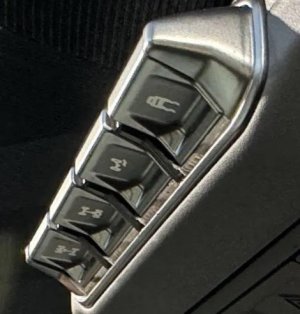
3) Some of this has been discussed. Manual locker controls are confirmed (F/R/C I believe), but I don't think we've seen anything about a FWD-low sort of "digger" option. Although in other threads we've talked about cutting brakes, and "trail braking" which do similar things, but AFAIK we haven't heard anything official on any of that front.
Other than some of the labeled toggles up top-forget what they are but most of those are for off-road type behavior and handling adjustments
 
  • Like
Reactions: MasterSpam
Other than some of the labeled toggles up top-forget what they are but most of those are for off-road type behavior and handling adjustments
Switches are used for locking the front and rear differentials, disconnecting the sway bar, and traction control (supposedly).
 

Attachments

  • Switches.jpg
    Switches.jpg
    40.7 KB · Views: 186
SCOUT TRAVELER FAQ

View attachment 3481


Our Scout support teams have set up a central location for all questions regarding the company, products, reservations and more it can be found here:


The Scout support link above will always have the latest official answers.

We will do our best to maintain a "greatest hits" FAQ in the Scout Community to help answer some of the most frequent questions here in the forums.


Q: Where can I find more information about the Scout Traveller?

A: https://www.scoutmotors.com/traveler


Q: How can I place a reservation?

A: https://www.scoutmotors.com and click on "RESERVATION" in the upper right-hand corner.


Q: Why are Scout vehicles fully electric?

A: New Scout vehicles are designed to be equipped with electric powertrains that push capability and performance into the future while aiming to reduce environmental impact. These powertrains would enhance off-road capabilities with instant torque and precise control, delivering better performance than traditional gas vehicles.

With an electric powertrain, we intend to deliver exceptional off-road capability, massive torque for towing and working, and top-tier ride quality. Plus, it enables useful features like powering accessories off-site -- whether for tailgating, camping, or working remotely -- or even powering your home during a power outage. We’ve perfectly blended our rugged heritage with cutting-edge technology to create a Scout vehicle ready for today’s adventures and tomorrow’s challenges.


Q: Will a gas-burning or hybrid version be available in the future?

A: Scout Motors is focus on electric vehicles because we believe it's the best way to deliver peak performance, capability, and sustainability. Electric powertrains offer instant torque, enhanced off-road capabilities, and integrated features like powering accessories or even homes — capabilities that gas-powered or hybrid vehicles can’t match.

We understand some drivers may have concerns about battery range, so in addition to our fully electric models, we expect offer options with a gas-powered range extender (REX) system to extend the vehicle's maximum range from a projected estimate of up to 350 miles (563 km) to more than 500 miles (804 km), based on manufacturers internal estimates. EPA estimates will be provided when available.


Q: Can I provide feedback or input on Scout vehicles?

A: Yes, right here in our Scout Community forums. Our teams regularly read the forums here and respond to many suggestions and questions.


Q: Where are you building the new Scout vehicles?

A: At a brand new Scout Production Center in Blythewood, South Carolina.


Q: How much will Scout vehicles cost?

A: Entry-model Scout vehicles are expected to be priced starting under $60,000. We'll be sharing more details about pricing as we get closer to production. Pricing is subject to change.


Q: What exterior dimensions will Scout vehicles have?

A:
Traveler SUV Dimensions*
Length With Spare Wheel Carrier: 207.9 in
Length Without Spare Wheel Carrier: 190.9 in
Width Without Mirrors: 79.9 in
Width With Mirrors: 91.6 in
Max Height: 76.3 in
Wheelbase: 120.4 in
Max Ground Clearance: 12+ in
Offered Tire Size: 35 in

Terra Pickup Dimensions*
Length: 229.2 in
Width Without Mirrors 79.9 in
Width With Mirrors 91.6 in
Max Height: 77.7 in
Wheelbase: 148.6 in
Max Ground Clearance: 12+ in
Bed Length: 66 in (5.5 ft)
Cab to Bumper: 71.7 in
Offered Tire Size: 35 in

*Dimensions are approximate and subject to change. They may not accurately represent production vehicle sizes or all available trims and offerings.


Q: What level of off-road capability will Scout vehicles have?

A: Scout vehicles are designed to be highly capable off-road, featuring high ground clearance and excellent approach, departure, and breakover angles. They are projected to come standard with dual motors for four-wheel drive, a solid rear axle, a locking rear differential, and off-road drive modes. Plus, the bumpers and rockers are separated from the body and are designed to act as protective elements.

For even more capability, customers will be able to select an optional off-road package, which includes off-road tires, special shock tuning, a locking front differential, and more. Scout vehicles will also offer a front sway bar disconnect, designed to improve wheel articulation, comfort, and traction on uneven terrain – offering the best of both on-road and off-road handling. Final details will be confirmed as we approach production.


Q: What manufacturer estimated range will Scout vehicles offer?

A: Scout Motors estimates the Traveler™ SUV and Terra™ pickup will have up to 350 miles (563 km) of all-electric range or more than 500 miles (804 km) for gas-powered range extender-equipped versions. These are manufacturer's projected estimate based on internal targets. EPA estimates will be provided when available.


Q: How will the Harvester™ range extender work?

A: To account for different work needs, we're planning to offer the choice of two energy systems: an all-electric system, or a gas-powered range extender called Harvester™. The Harvester™ Range Extender is a generator packaged in the vehicle platform that will recharge the vehicle's high voltage battery. It unlocks the ability to refuel anywhere and extend the expected range to over 500 miles (based on manufacturer estimates, EPA estimates will be provided when available.).


Q: What is the projected ground clearance for Scout vehicles?

A: Scout vehicles are projected to offer over 1 foot of ground clearance. These are preliminary specifications and may change. They may not accurately represent production vehicle sizes or all available trims and offerings. Final details will be confirmed as we approach production.


Q: What water fording capability will Scout vehicles offer?

A: Both Scout models are engineered for high water fording performance, with a projected ability to wade through and traverse water depths of nearly 3 feet.


Q: Will Scout vehicles offer a front bench seat?

A: Yes. We plan for customers to choose between a multifunctional console or a front bench seat—both options will be available to order in the Traveler™ and Terra™ models.

 
Great first post.

Scout Motors. “People. Connections. Community. Authenticity." Welcome to the Scout community. Enjoy the ride. 🛻 🚙
Remember the built in search on the forums is a great place to start getting answers to your many questions. 😀
 
I think the real difference for pure EV vs Harvester largely comes down to customer understanding/perceptions of range anxiety, existing EV infrastructure, and recharge times.

I get what you are saying, I really do. In part because I do have and really enjoy a “pure” BEV already that does great on long trips, except when I tow domething with a lot of wind resistance (six trees on my cargo trailer? No big, two freezers on the same trailer? It works out. A dump trailer full of stuff to dump? Like it is barely there! A travel trailer? Sucksville.)

[....]
I do understand the higher voltage architecture should allow for shorter recharge times, but even then it seems like the last 20% of charge takes a LONG time compared to say 20-80%, so after that first leg you are looking at shorter legs which means more stops.

Just to be sure here, you are saying “hey only charge to 80% unless you really really really need the reach of that last 20%” right? This is a “hey shave 20% off the range when you are looking at how frequently you have to stop”, not a “it looks good during the first 80% of the charge, and then you may as well set up a tent for that last 20%..."

It definitely seems like the charging infrastructure is improving but there are countless horror stories about stations being down or charging at half or lower rate etc., all of which simply is not the case for gas/diesel vehicles at this point.

My current EV is a Rivian, and it looks like VW has access to a lot of Rivian’s software, and it looks like from some recent Scout videos Scout has decided to use a lot of it. So it is entirely possible Scout will get Rivians route planning software which when you tell it where you are going plans out where you ought to stop and charge. It will assign a letter grade to each charger it picks for you based on how reliable the charger is (especially recent reports and any real time reports) and their speed. You aren’t going to see an “A” rating on a charge site that hasn’t been reliable. Probably not even a B. I’ve occasionally tried to get my route to include a C or D rated site, and it is really good at finding another A or B for you. (you can tell it “don’t use this site”, that is about the only way I’ve forced it to get some bad chargers on a route)

Honestly the whole time I’ve had a Rivian I’ve never been directed to a charger that didn’t work. I once stopped at a gas station to grab a soda, and it had some chargers which didn’t work. Apparently my EV already knew that because looking at the map they were rated “F” already.

All this to say, Harvester was key for me - I am very happy that Scout realized what the overall customer base was saying and responded.

You might be overestimating the value of the harvester, but I’m absolutely not saying it doesn’t have one. That part about the travel trailer not begin good tow with my EV? That is my use case for a Harvester. Assuming it can fill the battery as fast as hauling a TT takes it out. I assume I’ll have the same sort of range loss and end up at 1.6 miles per kWh when hauling the TT so the battery range will likely drop from 150 to 75, and the 350 from the harvester will drop from 350 to 175. Unlike an EV battery though I expect time to fill the harvesters gas tank to be basically static. So I’ll end up at a gas staton roughly every 175 miles to keep going. I’m making a leap of faith here that I don’t also need to charge the battery because that is what the harvester is actually doing with the gas for me.

On the plus side my reservation is pretty recent, so I expect other people will have a Scout in their hands for over a year before I have the chance so I’ll know much better how it handles in the real world.
 
  • Like
Reactions: cyure
I genuinely hope there is a way to disable fake engine noises and pedestrian alert sounds.
NHSTA has a requirement for the pedestrian alert sounds. My wife had a For dCMAX that predated that requirement and didn’t have one. In parking lots it was silent and people would wonder in front of her, and stand milling about until she tapped her horn and more then once nearly caused a heart attack.

So I seriously doubt you would enjoy having a vehicle that lacks the warning sounds, and more over I doubt Scout would be allowed to sell a vehicle that lacked them. Even if it was “on by default, driver has to disable them and read and sign a 3 page waiver to turn them off” deal. If they were allowed to sell them that way it is likely they would be open the losing end of a lawsuit every time someone was involved in a low speed Scout v pedestrian accident, disclaimer or not. Maybe if they used fancy camera crap to detect pedestrians and only play the sound when someone is walking in the general area they could get away with it (or not -- I absolutely gaurantee someone in court would argue that since Scout was “looking” to see if anyone was around they are responsible for any accidents failure to find them causes, attractive nuisance type argument).

Besides fake pedestrian noises are still dramatically quieter then real engine noises, so even though it is 100% intentionally added noise it is at least far quieter then someone driving in the backwoods.