


Harvester Battery Size
- Thread starter nalvi84
- Start date
-
 From all of us at Scout Motors, welcome to the Scout Community! We created this community to provide Scout vehicle owners, enthusiasts, and curiosity seekers with a place to engage in discussion, suggestions, stories, and connections. Supportive communities are sometimes hard to find, but we're determined to turn this into one.
Additionally, Scout Motors wants to hear your feedback and speak directly to the rabid community of owners as unique as America. We'll use the Scout Community to deliver news and information on events and launch updates directly to the group. Although the start of production is anticipated in 2026, many new developments and milestones will occur in the interim. We plan to share them with you on this site and look for your feedback and suggestions.
How will the Scout Community be run? Think of it this way: this place is your favorite local hangout. We want you to enjoy the atmosphere, talk to people who share similar interests, request and receive advice, and generally have an enjoyable time. The Scout Community should be a highlight of your day. We want you to tell stories, share photos, spread your knowledge, and tell us how Scout can deliver great products and experiences. Along the way, Scout Motors will share our journey to production with you.
Scout is all about respect. We respect our heritage. We respect the land and outdoors. We respect each other. Every person should feel safe, included, and welcomed in the Scout Community. Being kind and courteous to the other forum members is non-negotiable. Friendly debates are welcomed and often produce great outcomes, but we don't want things to get too rowdy. Please take a moment to consider what you post, especially if you think it may insult others. We'll do our best to encourage friendly discourse and to keep the discussions flowing.
So, welcome to the Scout Community! We encourage you to check back regularly as we plan to engage our members, share teasers, and participate in discussions. The world needs Scouts™. Let's get going.
We are Scout Motors.
You are using an out of date browser. It may not display this or other websites correctly.
You should upgrade or use an alternative browser.
You should upgrade or use an alternative browser.



Coming from the support page:
While final specifications for the production models have not been released, we expect the capacity of the battery packs to be in the ranges below:
Full-electric models: 120-130 kWh
Harvester range extender models: 60-70 kWh
We’ll be sharing more details about battery sizes as we get closer to production. Stay tuned for updates.
While final specifications for the production models have not been released, we expect the capacity of the battery packs to be in the ranges below:
Full-electric models: 120-130 kWh
Harvester range extender models: 60-70 kWh
We’ll be sharing more details about battery sizes as we get closer to production. Stay tuned for updates.

And if you want to see it for yourself, and find out more information, here is the link to Scout page that @THil08 provided:
 support.scoutmotors.com
What battery size will Scout® vehicles use? | Scout Motors Help Center

Probably the BEV will have 120-130 kWh and the Harvester will have 60-70 kWh.
For practical application, you can also compare with existing options.
The 2025 Lightning has the following:
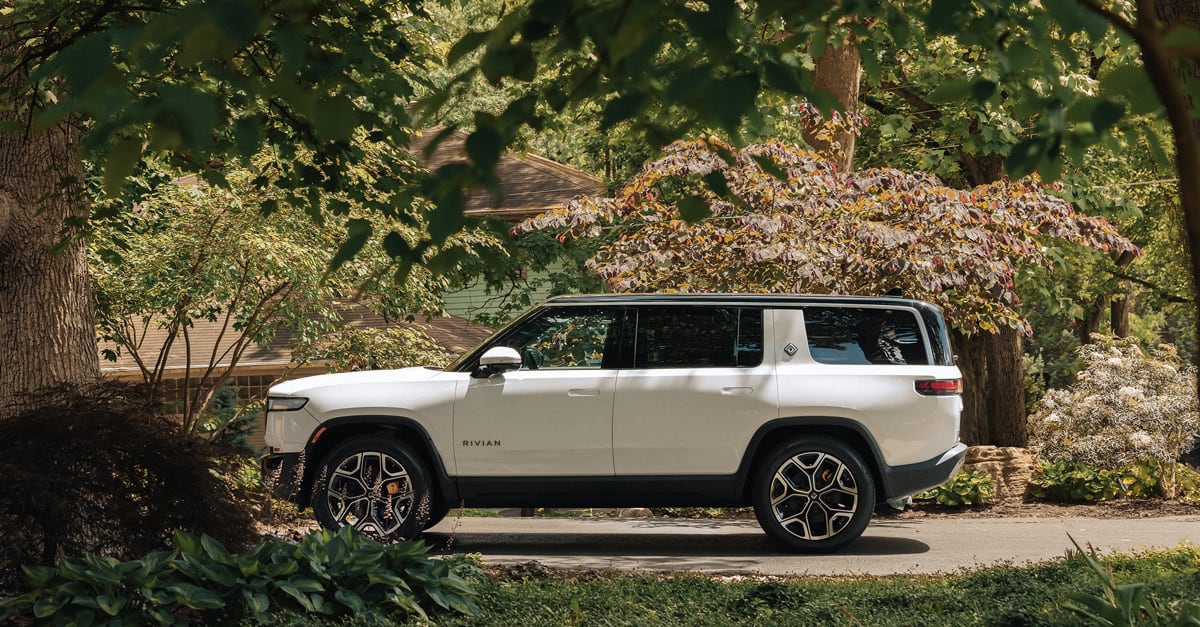
The Rivian has a lot of configurations with multiple motor options, so I’m just going to chose the 2026 dual motor options since that’s closest to the Scout Motors options. I’ll also choose only the 22” wheels, since those are the highest efficiency options.
Note that these efficiency estimates do not include charging inefficiencies. They’re once you’ve filled the battery, how much range can you expect if you drive according to the EPA test models. Charging efficiency has a lot to do with the charger involved, the ambient temperatures, and etc., so it’s not so much about the vehicle and is more about the charger.
 rivian.com
rivian.com
rivian.com
For practical application, you can also compare with existing options.
The 2025 Lightning has the following:
| Model | Battery size (kWh) | EPA Range (miles) | EPA Driving Efficiency (miles/kWh) |
| Pro | 98 | 240 | 2.45 |
| Flash | 123 | 300 | 2.44 |
| Extended Range | 131 | 320 | 2.45 |
| Extended Range Platinum | 131 | 300 | 2.29 |
The Rivian has a lot of configurations with multiple motor options, so I’m just going to chose the 2026 dual motor options since that’s closest to the Scout Motors options. I’ll also choose only the 22” wheels, since those are the highest efficiency options.
| Model | Battery size (kWh) | EPA Range (miles) | EPA Driving Efficiency (miles/kWh) |
| R1T Dual Standard 22” wheels | 96 | 258 | 2.69 |
| R1T Dual Large 22” wheels | 110 | 329 | 2.99 |
| R1T Dual Max 22” wheels | 140 | 420 | 3.00 |
Note that these efficiency estimates do not include charging inefficiencies. They’re once you’ve filled the battery, how much range can you expect if you drive according to the EPA test models. Charging efficiency has a lot to do with the charger involved, the ambient temperatures, and etc., so it’s not so much about the vehicle and is more about the charger.
Rivian Support - Support Center - Rivian
Find out technical information about the high voltage batteries in Rivian vehicles. For more information on our batteries, please email batteryinfo@rivian.com
rivian.com
Rivian Support - Support Center - Rivian
Gen 2 Vehicles R1S Standard battery: 258 mi / 415 km Large battery: 329 mi / 529 km Max battery: 410 miles / 660 km (Dual configurations), 371 mi / 597 km (Tri configurations), 374 mi / 602 km (Quad configurations) R1T Standard battery: 258 mi / 415 km Large battery: 329 mi / 529 km Max...
rivian.com

Hello everyone, aside from the size of battery, i'm talking Harvester model. I thought driving on gas will charge battery. Is this not true. I'm asking because getting a home charger is very pricey, especially the level 2 chargers. This will be my first hybrid vehicle, so be easy on me haha. Thanks

The Harvester ICE engine only charges the battery when driving and falling below a set SOC to extend your driving range. This is why a vehicle with Harvester is considered an Extended Range Electric Vehicle, EREV. However, there has been talk about Scout having a plan for charging the battery when static, like a camping mode. But, without output specifications on the harvester it is hard to tell how efficient it will be in this mode. I don't think it was Scouts intension for owners to forgo some form of external charging.Hello everyone, aside from the size of battery, i'm talking Harvester model. I thought driving on gas will charge battery. Is this not true. I'm asking because getting a home charger is very pricey, especially the level 2 chargers. This will be my first hybrid vehicle, so be easy on me haha. Thanks

I’m sure others will have more detailed answers, but yes the gas engine will charge the battery.Hello everyone, aside from the size of battery, i'm talking Harvester model. I thought driving on gas will charge battery. Is this not true. I'm asking because getting a home charger is very pricey, especially the level 2 chargers. This will be my first hybrid vehicle, so be easy on me haha. Thanks
Quick question, are you ever planning on charging by plugging in or are you wanting to treat this as a hybrid where you only charge the battery by getting gas?
As clarification SOC is State of Charge. I didnt know this when I started so just adding if you also don’t knowThe Harvester ICE engine only charges the battery when driving and falling below a set SOC to extend your driving range. This is why a vehicle with Harvester is considered an Extended Range Electric Vehicle, EREV. However, there has been talk about Scout having a plan for charging the battery when static, like a camping mode. But, without output specifications on the harvester it is hard to tell how efficient it will be in this mode. I don't think it was Scouts intension for owners to forgo some form of external charging.
Hello everyone, aside from the size of battery, i'm talking Harvester model. I thought driving on gas will charge battery. Is this not true. I'm asking because getting a home charger is very pricey, especially the level 2 chargers. This will be my first hybrid vehicle, so be easy on me haha. Thanks
If you drive 12,000 local miles per year, you would break even in the first year by paying for a Level 2 charger installation, if you can afford to pony up the capital.
Kinda wish I had a hotel next to my house so I could just use their’s at night 
Hello everyone, aside from the size of battery, i'm talking Harvester model. I thought driving on gas will charge battery. Is this not true. I'm asking because getting a home charger is very pricey, especially the level 2 chargers. This will be my first hybrid vehicle, so be easy on me haha. Thanks
A level-1 charger will cost you less than $150 and uses a standard 15amp house outlet (so no electrical upgrade is necessary). With the savings of using electricity over gasoline, the charger will pay for itself in less than 3,000 miles of driving.
But to answer your question - yes you can run the vehicle just using gasoline. It has been said by Scout reps that he Harvester will support gas-and-go, so you do not need to charge the battery to drive.
Of course if Scout supples a Level 2 charger with installation or complementary charging when we order that would be great. Many manufacturers have done this.If you drive 12,000 local miles per year, you would break even in the first year by paying for a Level 2 charger installation, if you can afford to pony up the capital.

Without a LII home charger, I would not own an EV. The convenience alone is worth more than paying for gas. But, yes, the ROI equation is also important and it will absolutely pay for itself over time. Unless I lived in the city and had chargers in a garage or something along those lines, I would absolutely get a LII charger and enjoy overnight "fill-ups" at home for less! Or, just use a 240V outlet and the EVSE that will likely come with the truck.
I can’t wait. I got gas before we went to Chicago, halfway there and now I need gas again. So I will have gone to the gas station 3 times in 4 days. I’m over it.Without a LII home charger, I would not own an EV. The convenience alone is worth more than paying for gas. But, yes, the ROI equation is also important and it will absolutely pay for itself over time. Unless I lived in the city and had chargers in a garage or something along those lines, I would absolutely get a LII charger and enjoy overnight "fill-ups" at home for less! Or, just use a 240V outlet and the EVSE that will likely come with the truck.

For a little over a year I only charged on L1 but have had a L2 the entire time, but the first install estimate was $3K and at the time a 12-24 hours for a charge was manageable, but back in September I started driving a lot more for work again, I called the electrician recommended by Chevrolet, got a quote the same day, I mounted my charger preemptively to avoid any confusion, got a quote for $1,300k ended up being $1,100 since then I’ve managed to avoid going to the local DCFC and superchargers. While it hasn’t financially paid for itself yet, it won’t take much longer and I can comfortably charge at home on my breaks and overnight.
Hello everyone, aside from the size of battery, i'm talking Harvester model. I thought driving on gas will charge battery. Is this not true. I'm asking because getting a home charger is very pricey, especially the level 2 chargers. This will be my first hybrid vehicle, so be easy on me haha. Thanks
A level-1 charger will cost you less than $150 and uses a standard 15amp house outlet (so no electrical upgrade is necessary). With the savings of using electricity over gasoline, the charger will pay for itself in less than 3,000 miles of driving.
As a follow-up:
Since the Harvester battery will have a 60-70 kWh capacity and an efficiency similar to the Ford F150 Lightning, a Level-1 charger will not fully charge the battery overnight. If you have a short daily commute you may be able to get by with a Level-1 charger. But if you have a long daily commute or regularly drive more than 60 miles in a day I would suggest you consider running power to install a Level-2 EVSE. If you can't do the work yourself, get a few quotes to install a dedicated 50amp 240V outlet where you will be charging the vehicle. A basic Level-2 charger is only $300-$400. Even with the cost of the new outlet and the Level-2 EVSE, paying for that and charging every night will still cheaper than running the Scout strictly on gasoline.
If you can't charge at home (and don't have some other option for free or cheap charging), I would suggest not getting a BEV or an EREV. The extra cost of a BEV and EREV is offset by the savings of home charging. If you are strictly using DCFC or gasoline, you can't take advantage of that savings.

In my previous house I had a 30 amp outlet in the kitchen for an oven (my wife prefers gas). Since it was an outside wall I "repurposed" that outlet for a hottub disconnect on the outside and then eventually a L2 charger limited to 24 amps, worked great!As a follow-up:
Since the Harvester battery will have a 60-70 kWh capacity and an efficiency similar to the Ford F150 Lightning, a Level-1 charger will not fully charge the battery overnight. If you have a short daily commute you may be able to get by with a Level-1 charger. But if you have a long daily commute or regularly drive more than 60 miles in a day I would suggest you consider running power to install a Level-2 EVSE. If you can't do the work yourself, get a few quotes to install a dedicated 50amp 240V outlet where you will be charging the vehicle. A basic Level-2 charger is only $300-$400. Even with the cost of the new outlet and the Level-2 EVSE, paying for that and charging every night will still cheaper than running the Scout strictly on gasoline.
If you can't charge at home (and don't have some other option for free or cheap charging), I would suggest not getting a BEV or an EREV. The extra cost of a BEV and EREV is offset by the savings of home charging. If you are strictly using DCFC or gasoline, you can't take advantage of that savings.


I can’t wait. I got gas before we went to Chicago, halfway there and now I need gas again. So I will have gone to the gas station 3 times in 4 days. I’m over it.
Oof!
Even last year, before I bought the EV, in the summer time we put more gas through the lawn mower than the car (the PHEV... in the summer with local driving we often got ~2000 miles or more out of our 11gal tank).
But the week or two I had to drive the jeep for stuff, it was just like you said. The straight six (4.0L) isn't bad on gas for what it is, its just... 14-20mpg (I got 22mpg on one trip that was mostly flatterish and like 100 miles rather than in the hills by my house).
It really just depends on how far/often you drive. But an L1 is totally viable for many people, even if an L2 charger is much more ideal.As a follow-up:
Since the Harvester battery will have a 60-70 kWh capacity and an efficiency similar to the Ford F150 Lightning, a Level-1 charger will not fully charge the battery overnight. If you have a short daily commute you may be able to get by with a Level-1 charger. But if you have a long daily commute or regularly drive more than 60 miles in a day I would suggest you consider running power to install a Level-2 EVSE. If you can't do the work yourself, get a few quotes to install a dedicated 50amp 240V outlet where you will be charging the vehicle. A basic Level-2 charger is only $300-$400. Even with the cost of the new outlet and the Level-2 EVSE, paying for that and charging every night will still cheaper than running the Scout strictly on gasoline.
If you can't charge at home (and don't have some other option for free or cheap charging), I would suggest not getting a BEV or an EREV. The extra cost of a BEV and EREV is offset by the savings of home charging. If you are strictly using DCFC or gasoline, you can't take advantage of that savings.
My buddy and I just bought EV's in Sept. I had a L2 charger at home due to my PHEV, and a home that had a 240v outlet in the garage. But he charged with just L1, for over a month.
He did install a L2 charger, and prefers that. But, with his daily routine of dropping off kids/picking them up at school/etc, they were able to totally charge on L1 (120v normal outlets) and then some (ie, he got home from the dealer with like 50%, and in a few days was up to full).
Personally, with the EREV, I might end up running it with 120v charging as well, just because of where I'll have to park the thing. And my personal driving pattern uses less mileage than my wife/kids, so they would keep the easy L2 access.
But there is no way I'd buy an EREV without the intention to ever plan on plugging it in.
A level 1 got us through two years of my being too busy with other things to install our L2. By the end, this included using two L1s for two EVs, one with a 92 kWh battery and the other with a 131 kWh battery. We have never charged on a local DCFC in our 80,000 miles of driving.
I’ve done opportunistic charging at city hall and the gym, but only because it was there, it was free, and I figured they might as well see that someone appreciates the L2 chargers’ existence.
It’s entirely possible to run a BEV with L1. You just have to know a bit about how much time it’ll take to charge and how much energy you use while driving.
The math is simple. If the vehicle sits where it can charge on L1 for a number of hours that’s equal to approximately 83.3% or more of the number of kWh you use in a given week, then you can recharge enough to recover the energy used over a week.
Example:
If you drive 150 miles a week in a 2 mile/kWh vehicle, then you use 75 kWh.
If you need to recover all of that on L1, you need 0.833*75 = 62.5 hours of charging.
62.5 hours of charging evenly distributed over 7 days is 8.9 hours per day; call it 9 hours. Many of us can park the car for 9 hours near a simple household outlet. If your car is home from 6 PM to 6 AM, that’s 12 hours, 33% more than you need.
If you get 3 miles/kWh, then you only use 50 kWh, and you only need 42 hours of charging, or about 6 hours a day.
You can also do the math the other way:
If you can park your vehicle for L1 charging for some known number of hours, say 10 hours a day, 7 days a week, that’s 70 hours. Multiply that by 1.2 to get 84. That’s how many kWh you can recover in a week of charging on L1. If you get 2 miles/kWh, you can drive 168 miles. If you get 3 miles/kWh, you can drive 252 miles in a week.
You can drive those miles and recover all the energy you expend on L1.
I know many people who have gone years on L1 and still are only using L1 and DCFC for trips.
You are almost never recharging from 0% to 100% in a single session, whether that’s L1, L2, or DCFC, so you don’t need to worry about the full size of the battery; you just need to know how much energy you need to recover for the next driving session.
All of that said, L2 is much, much more convenient.
I’ve done opportunistic charging at city hall and the gym, but only because it was there, it was free, and I figured they might as well see that someone appreciates the L2 chargers’ existence.
It’s entirely possible to run a BEV with L1. You just have to know a bit about how much time it’ll take to charge and how much energy you use while driving.
The math is simple. If the vehicle sits where it can charge on L1 for a number of hours that’s equal to approximately 83.3% or more of the number of kWh you use in a given week, then you can recharge enough to recover the energy used over a week.
Example:
If you drive 150 miles a week in a 2 mile/kWh vehicle, then you use 75 kWh.
If you need to recover all of that on L1, you need 0.833*75 = 62.5 hours of charging.
62.5 hours of charging evenly distributed over 7 days is 8.9 hours per day; call it 9 hours. Many of us can park the car for 9 hours near a simple household outlet. If your car is home from 6 PM to 6 AM, that’s 12 hours, 33% more than you need.
If you get 3 miles/kWh, then you only use 50 kWh, and you only need 42 hours of charging, or about 6 hours a day.
You can also do the math the other way:
If you can park your vehicle for L1 charging for some known number of hours, say 10 hours a day, 7 days a week, that’s 70 hours. Multiply that by 1.2 to get 84. That’s how many kWh you can recover in a week of charging on L1. If you get 2 miles/kWh, you can drive 168 miles. If you get 3 miles/kWh, you can drive 252 miles in a week.
You can drive those miles and recover all the energy you expend on L1.
I know many people who have gone years on L1 and still are only using L1 and DCFC for trips.
You are almost never recharging from 0% to 100% in a single session, whether that’s L1, L2, or DCFC, so you don’t need to worry about the full size of the battery; you just need to know how much energy you need to recover for the next driving session.
All of that said, L2 is much, much more convenient.
Similar threads

- Replies
- 29
- Views
- 1K

- Replies
- 21
- Views
- 616


- Replies
- 29
- Views
- 2K

- Replies
- 62
- Views
- 7K


- Replies
- 9
- Views
- 1K