

Generator + Solar integration

  • From all of us at Scout Motors, welcome to the Scout Community! We created this community to provide Scout vehicle owners, enthusiasts, and curiosity seekers with a place to engage in discussion, suggestions, stories, and connections. Supportive communities are sometimes hard to find, but we're determined to turn this into one.

    Additionally, Scout Motors wants to hear your feedback and speak directly to the rabid community of owners as unique as America. We'll use the Scout Community to deliver news and information on events and launch updates directly to the group. Although the start of production is anticipated in 2026, many new developments and milestones will occur in the interim. We plan to share them with you on this site and look for your feedback and suggestions.

    How will the Scout Community be run? Think of it this way: this place is your favorite local hangout. We want you to enjoy the atmosphere, talk to people who share similar interests, request and receive advice, and generally have an enjoyable time. The Scout Community should be a highlight of your day. We want you to tell stories, share photos, spread your knowledge, and tell us how Scout can deliver great products and experiences. Along the way, Scout Motors will share our journey to production with you.

    Scout is all about respect. We respect our heritage. We respect the land and outdoors. We respect each other. Every person should feel safe, included, and welcomed in the Scout Community. Being kind and courteous to the other forum members is non-negotiable. Friendly debates are welcomed and often produce great outcomes, but we don't want things to get too rowdy. Please take a moment to consider what you post, especially if you think it may insult others. We'll do our best to encourage friendly discourse and to keep the discussions flowing.

    So, welcome to the Scout Community! We encourage you to check back regularly as we plan to engage our members, share teasers, and participate in discussions. The world needs Scouts™. Let's get going.


    We are Scout Motors.

mastertroll

Scout Community Veteran
Jun 29, 2025
190
166
Oklahoma
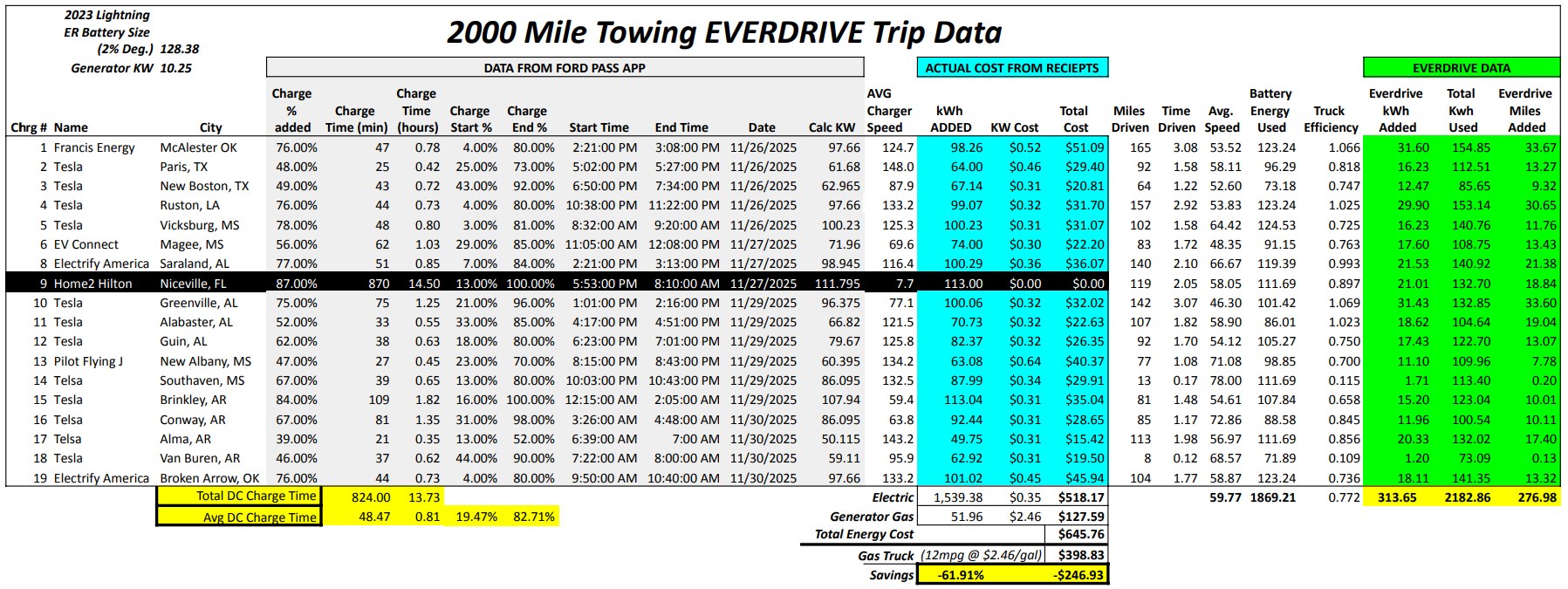
I've been talking with the guy that created a generator system (Everdrive) for the Ford Lightning. It involves running a cable across through the bottom of the carriage that attaches to the front charging area. This allows you to run a charger through the bed of the truck. It's all plug and play, there's no modifying or drilling required. This got me thinking about Scouts offering which I doubt that this will be taken seriously but I wish more thought would be put into it by thinking ahead. (innovation)

1. Do the same thing with the charging receptacle. If I loaded a generator in the bed or tow hitch like shown in the video, I could charge while driving and extend my range. This is especially important if there are emergencies and you can't charge. There are tons of reasons to do this. One is the vehicle will never get the rated range. Two, people who don't want the compromises of the built in generator. It's modular system and obviously you can remove the generator for that special use case or emergency scenario.
592901188_25445959525013112_5833408770506715011_n.jpg


Showing how to easily integrate into a Ford lightning. (vehicle that wasn't designed to be an extended range)


2. Built in Solar connections to inverter. We need direct access to the inverter. Solar panels don't have to be limited to the bed or top. I imagine a connection that is seamlessly built into the frame involving connections but if anything put some MC4 inputs in the bed at the minium. Places to integrate solar would be hood, top and bed. This type of system would allow 5-10 miles+ a day and provide power to the vehicle or tools onsite without dipping into range. If you got stuck out in the middle of nowhere with no grid. You may become a hunter gatherer but you could in the end make it out. Lastly, Scout is marketed as offgrid and outdoor... Don't miss being a leader (not a follower).

(this is just showing that you can build a hood with more solar)
(Claims 10 miles a day)


https://www.worksport.com/products/solis (600 Watts in the bed)
https://www.youtube.com/shorts/QH2pyI0Q-Rk
https://www.youtube.com/watch?v=h-u0Z2zmiHs
 
Upvote 0
I don't see enough of a use-case between the Harvester and full EV model to warrant spending the effort to have an aux input while you drive. If simple programming allows the charger input to be used while driving though, I'd be okay with that and I think you can figure out the range solution on your own from there.
 
  • Like
Reactions: J Alynn
I don't see enough of a use-case between the Harvester and full EV model to warrant spending the effort to have an aux input while you drive. If simple programming allows the charger input to be used while driving though, I'd be okay with that and I think you can figure out the range solution on your own from there.
Plugging a cord into the charger input while driving down the road? Some people actually do that. I personally wouldn’t want to. You’d need to have the input in the truck bed.
For those who don’t want to accept the usual compromises in towing capacity and performance, just having the option matters. It doesn’t cost anything but a little extra thought during design — and it can be genuinely useful for the people who want to take advantage of it
 
Plugging a cord into the charger input while driving down the road? Some people actually do that. I personally wouldn’t want to. You’d need to have the input in the truck bed.
For those who don’t want to accept the usual compromises in towing capacity and performance, just having the option matters. It doesn’t cost anything but a little extra thought during design — and it can be genuinely useful for the people who want to take advantage of it
If the inverter ends up right behind the rear axle, it shouldn't be too hard for Scout to have an optional charging kit with factory connectors from the inverter to a charging outlet in the bed, possibly including a DC port for solar. I don't think it makes sense to increase costs for everyone, but a factory option for this purpose could make sense.
 
If the inverter ends up right behind the rear axle, it shouldn't be too hard for Scout to have an optional charging kit with factory connectors from the inverter to a charging outlet in the bed, possibly including a DC port for solar. I don't think it makes sense to increase costs for everyone, but a factory option for this purpose could make sense.
People should pay for what they want. If people don't want solar then don't pay for it. I would gladly pay for this option. But another EV manufacturer coming out doing the same thing that everybody else has done? I mean who wouldn't want the ability to power tools or campsites without dipping into range.
 
Last edited:
Wait. What!? This just broke my brain. I had no idea you could trick an EV into AC charging while driving. What sorcery is this?

This is a fascinating idea. If you already have a 240V generator for home backup use (so it is a sunk cost), this could give you Harvester capability when you need it without dragging the generator around all the time.

I'm skeptical of doing direct (DC) solar as wouldn't you need to get to at least 400VDC in order to go direct? Otherwise the OEM would have to build some kind of mechanism to split the pack into smaller chunks. I realize they already do this for 800V packs to use 400V DCFCs but I would think that chopping it up even further would add a ton of cost and complexity.
 
  • Like
Reactions: mastertroll
Wait. What!? This just broke my brain. I had no idea you could trick an EV into AC charging while driving. What sorcery is this?

This is a fascinating idea. If you already have a 240V generator for home backup use (so it is a sunk cost), this could give you Harvester capability when you need it without dragging the generator around all the time.

I'm skeptical of doing direct (DC) solar as wouldn't you need to get to at least 400VDC in order to go direct? Otherwise the OEM would have to build some kind of mechanism to split the pack into smaller chunks. I realize they already do this for 800V packs to use 400V DCFCs but I would think that chopping it up even further would add a ton of cost and complexity.
Exactly. And to me it's the best of both worlds. When not in use you have a normal EV with all the expectations that come with that.
I'm going to add the ability to my lightning for this exact reason.
 
I'm skeptical of doing direct (DC) solar as wouldn't you need to get to at least 400VDC in order to go direct? Otherwise the OEM would have to build some kind of mechanism to split the pack into smaller chunks. I realize they already do this for 800V packs to use 400V DCFCs but I would think that chopping it up even further would add a ton of cost and complexity.
I'm going to reply to myself as I thought about this more. There is mechanism to convert to 12VDC in order to charge the standby battery. So maybe that system could be run backwards in order to charge the HV battery with 12VDC solar.
 
  • Like
Reactions: mastertroll
I'm going to reply to myself as I thought about this more. There is mechanism to convert to 12VDC in order to charge the standby battery. So maybe that system could be run backwards in order to charge the HV battery with 12VDC solar.
If you remember Elon originally said the Cybertruck would have an optional rollable solar-powered tonneau cover. Back when the truck was first revealed, he mentioned it could generate about 15 miles of range per day. Tesla even filed a patent for a retractable solar tonneau cover, but it never made it into production. The feature got quietly dropped along the way. I know it would have been a great implementation but Tesla didn't do it. It would be great marketing for a company to say that a vehicle recharges itself, even if only a little. The ability to power tools and acc, or just AC/Heat while not cutting into range.. I see a ton of use cases.
 
I'm going to reply to myself as I thought about this more. There is mechanism to convert to 12VDC in order to charge the standby battery. So maybe that system could be run backwards in order to charge the HV battery with 12VDC solar.
Charge at a DCFC and you're typically getting 200v-500v DC already, so the truck's inverter can already take varying voltage levels. Same with being able to take 110v-240v AC. I doubt it'd run all the way down to 12v as an acceptable level, but most rooftop panels seem to run in the 40v-60v range and wiring in series or parallel can change those voltages up or down as desired, so maybe you could run two panels on the bed and one panel on the roof and hit 140v or so which might be in the acceptable range for the inverter.