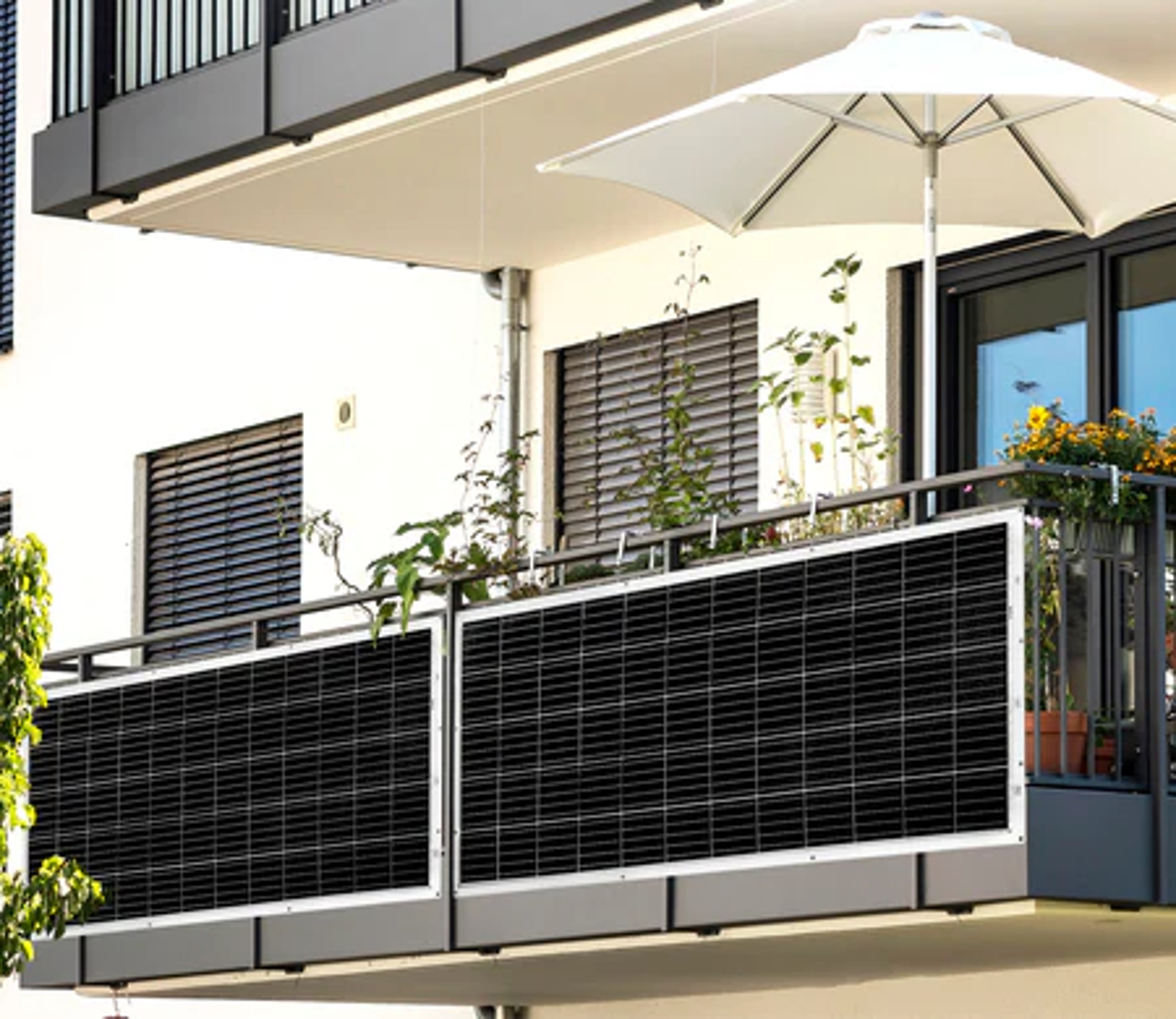




So, I studied a little EE in college, and I’m a bit stymied about how that links in with your houses system, eg syncing, and safety and stuff. Do you have any good info on that? Like if a circuit blows and that’s still feed power into it, isn’t that dangerous?
There are several specific approaches. They all behave basically the same way, which is also the same way a whole-home grid-tie or hybrid inverter operates, but at much lower amperage.
There’s a microinverter between the panel and the plug. That microinverter has a small circuit “on the grid side" that can sense the grid's frequency (~60 Hz) and voltage (~120 V). The inverter has another circuit that “follows” that frequency and voltage with high speed switching and allows power that matches the grid's frequency and voltage to flow from the panel to the plug into the house circuit. If the grid voltage drops to 0 V, the inverter is required to meet NEC rapid shutdown requirements.
If the circuit’s breaker blows (as opposed to the main grid going down), that is still registered as a 0V situation and the micro inverter is required to drop to low voltage rapidly. I don’t remember the NEC requirements, but these microinverters are designed to meet the same requirements for larger systems.
If something like that were to happen and I had a balcony panel, I would unplug the panel before doing any work on the circuit. Just as when I need to do work on my whole home circuits, I shut off the inverter and solar even though I trust that the system is taking care of itself. Five minutes of flipping breakers is better than one possible alternative…