
Extra, Extra....Read All About It!

  • From all of us at Scout Motors, welcome to the Scout Community! We created this community to provide Scout vehicle owners, enthusiasts, and curiosity seekers with a place to engage in discussion, suggestions, stories, and connections. Supportive communities are sometimes hard to find, but we're determined to turn this into one.

    Additionally, Scout Motors wants to hear your feedback and speak directly to the rabid community of owners as unique as America. We'll use the Scout Community to deliver news and information on events and launch updates directly to the group. Although the start of production is anticipated in 2026, many new developments and milestones will occur in the interim. We plan to share them with you on this site and look for your feedback and suggestions.

    How will the Scout Community be run? Think of it this way: this place is your favorite local hangout. We want you to enjoy the atmosphere, talk to people who share similar interests, request and receive advice, and generally have an enjoyable time. The Scout Community should be a highlight of your day. We want you to tell stories, share photos, spread your knowledge, and tell us how Scout can deliver great products and experiences. Along the way, Scout Motors will share our journey to production with you.

    Scout is all about respect. We respect our heritage. We respect the land and outdoors. We respect each other. Every person should feel safe, included, and welcomed in the Scout Community. Being kind and courteous to the other forum members is non-negotiable. Friendly debates are welcomed and often produce great outcomes, but we don't want things to get too rowdy. Please take a moment to consider what you post, especially if you think it may insult others. We'll do our best to encourage friendly discourse and to keep the discussions flowing.

    So, welcome to the Scout Community! We encourage you to check back regularly as we plan to engage our members, share teasers, and participate in discussions. The world needs Scouts™. Let's get going.


    We are Scout Motors.

VW-backed Scout is challenging franchise laws. What it means for EV direct sales​

Article from Automotive News

Electric vehicle makers are escalating their fight to sell directly to U.S. consumers, using ballot threats and new legal strategies to challenge dealer franchise laws.
Rivian, saying it believes the public is on its side, won a dealer license in Washington state in March after its threat to fund a ballot initiative sparked a legislative compromise with dealers.

Scout Motors, backed by Volkswagen Group, is taking a more consequential step: positioning itself as an independent brand to bypass dealerships entirely, a move that could upend the franchise model if it succeeds and other legacy automakers follow.
The tactics signal a new phase in a decade-plus effort Tesla pioneered to bypass a franchise model that still accounts for 96 percent of new-vehicle deliveries.
The biggest threat to dealers is not incremental gains by EV makers but a bigger crack in the model that would allow legacy brands to mix dealership and direct sales, said Leonard Bellavia, an attorney who represents auto retailers.
“I don’t think any Chevy dealers are worried about Rivian destroying their business,” Bellavia said. “I think they worry about a Chinese manufacturer coming in or someone like VW, if they’re successful with Scout.”
Dealers are “most terrified” of direct sales opening to any manufacturer, said Daniel Crane, a University of Michigan law professor who supports alternatives to the franchise model. “Every poll shows that voters — from liberal Democrats to conservative Republicans — overwhelmingly say, ‘Why shouldn’t I have a choice as to how I buy my car?’” Crane said.

EV startups face direct-sales restrictions in many states​

EV newcomers face direct-sale bans or restrictions in 28 states, including some where only Tesla is allowed, according to the Electrification Coalition, an advocacy group.


Texas, home to Tesla’s headquarters, bans direct sales entirely. California allows them for manufacturers without franchises. New York allows Tesla’s direct sales but caps it at five stores.

Direct-sales advocates say it expands choice, while dealer groups say the franchise system already provides competition.

Tesla, Rivian and Lucid combined captured less than 4 percent of the U.S. light-vehicle market last year, according to registration data from S&P Global Mobility.

Despite their patchwork of legal wins across the U.S., they still face tight restrictions in major markets. Often, transactions must happen out of state. In some states, even service centers are limited.

In Washington, Rivian forced dealers and lawmakers to choose between allowing it and Lucid Motors to sell directly or risk a broader challenge to the franchise system through a ballot initiative. The state granted Tesla a dealer license in 2014.

Rivian previously tried to advance legislation in the state but failed in the face of dealer opposition. This year, it had internal polling showing a majority of voters supported direct sales.

“Consumers should have the choice to buy a car from either a dealer or an American EV manufacturer like Rivian,” Alan Hoffman, Rivian’s chief policy officer, said in a statement. “Direct sales saves consumers money, is more convenient, and provides for more transparent pricing.”

While Washington was the first state where Rivian sought to place a statewide initiative on the ballot, it’s not the only one where that could be an option. Several other states that ban or limit direct sales allow ballot initiatives, including Arkansas, Montana, Nebraska, Oklahoma, South Dakota and Ohio, where Rivian is pursuing direct sales in court.

The Washington state compromise drew dealer support because it provides a “narrow exemption” to the franchise model, said Vicki Giles Fabre, executive vice president of the Washington State Auto Dealers Association.

“Proponents of direct sales have made modest progress in some areas of the country, primarily through limited carve-outs,” Fabre told Automotive News. “The retail automotive market is still predominantly made up of franchised dealerships.”

But dealer associations have become concerned in recent years that those carve-outs might grow into something broader, in which traditional automakers might try to circumvent their franchised dealers, particularly to sell EVs.

Automakers generally have maintained that they support their franchised retailers. In the Washington state case, automakers and the dealer association ultimately took opposite sides.

Legacy automakers opposed the bill, arguing it would give EV competitors an edge by allowing direct sales. Honda, Ford, General Motors, Toyota and the Alliance for Automotive Innovation testified against it.

The bill “signals a slow erosion of the franchise system,” said Craig Orlan, Honda’s director of state government affairs, in committee testimony in March.

The alliance referred Automotive News to a March op-ed from CEO John Bozzella, who called it “a discriminatory law that undermines the existing automotive retail system” and also opens a door for Chinese automakers to one day sell directly in the U.S.

The National Automobile Dealers Association, in a statement, said it is working with state associations in Florida and California to challenge Scout’s direct-sales plans.

Scout’s direct-sales plan draws dealership lawsuits​

Direct-to-consumer sales are central to Scout’s U.S. strategy. After the company revealed its plan in October 2024, dealers filed several lawsuits, including one seeking class-action status.

Unlike Tesla, Rivian and Lucid, which have no connection to a legacy brand, Scout is backed by VW Group — a distinction dealers say is critical.

VW dealers said comments from Scout CEO Scott Keogh, the former CEO of VW Group of America, during an October interview with Bloomberg’s Open Interest dismissed and downplayed their role.

“I don’t disagree with the dealer model, but there is a better path, and that’s exactly why we want to do it,” Keogh said at the time.

Keogh was more complimentary to dealers during a fireside chat at January’s BloombergNEF Summit in San Francisco, saying “they’ve treated customers well” but that Scout offers “an alternative.”

Scout in 2025 asked the U.S. government to eliminate state motor vehicle franchise laws, calling them “burdensome restrictions on competition.”

In December, Scout was awarded a dealer license in Colorado. It also has a dealer license in California and other undisclosed states, according to a company retail executive.

Scout plans to sell its Terra pickup and Traveler SUV as extended-range electric vehicles and full-electric models, but customer deliveries may not begin until later this decade.

“Most VW dealers would love to sell a pickup truck, but VW has decided that it will sell those vehicles through the Scout brand at the expense of supporting its business partner dealers,” said Brian Maas, president of the California New Car Dealers Association, which is suing VW over the issue.

A March 30 federal court ruling found the dealer association plausibly alleged Scout is a VW affiliate competing with franchised dealers and allowed the lawsuit to proceed.

“We believe every state should ensure that manufacturers can’t exclude their business partner franchised dealers from selling and servicing new vehicles,” Maas said. “I would encourage every state to review its laws to ensure this principle is protected.”
 

VW-backed Scout is challenging franchise laws. What it means for EV direct sales​

Article from Automotive News

Electric vehicle makers are escalating their fight to sell directly to U.S. consumers, using ballot threats and new legal strategies to challenge dealer franchise laws.
Rivian, saying it believes the public is on its side, won a dealer license in Washington state in March after its threat to fund a ballot initiative sparked a legislative compromise with dealers.

Scout Motors, backed by Volkswagen Group, is taking a more consequential step: positioning itself as an independent brand to bypass dealerships entirely, a move that could upend the franchise model if it succeeds and other legacy automakers follow.
The tactics signal a new phase in a decade-plus effort Tesla pioneered to bypass a franchise model that still accounts for 96 percent of new-vehicle deliveries.
The biggest threat to dealers is not incremental gains by EV makers but a bigger crack in the model that would allow legacy brands to mix dealership and direct sales, said Leonard Bellavia, an attorney who represents auto retailers.
“I don’t think any Chevy dealers are worried about Rivian destroying their business,” Bellavia said. “I think they worry about a Chinese manufacturer coming in or someone like VW, if they’re successful with Scout.”
Dealers are “most terrified” of direct sales opening to any manufacturer, said Daniel Crane, a University of Michigan law professor who supports alternatives to the franchise model. “Every poll shows that voters — from liberal Democrats to conservative Republicans — overwhelmingly say, ‘Why shouldn’t I have a choice as to how I buy my car?’” Crane said.

EV startups face direct-sales restrictions in many states​

EV newcomers face direct-sale bans or restrictions in 28 states, including some where only Tesla is allowed, according to the Electrification Coalition, an advocacy group.


Texas, home to Tesla’s headquarters, bans direct sales entirely. California allows them for manufacturers without franchises. New York allows Tesla’s direct sales but caps it at five stores.

Direct-sales advocates say it expands choice, while dealer groups say the franchise system already provides competition.

Tesla, Rivian and Lucid combined captured less than 4 percent of the U.S. light-vehicle market last year, according to registration data from S&P Global Mobility.

Despite their patchwork of legal wins across the U.S., they still face tight restrictions in major markets. Often, transactions must happen out of state. In some states, even service centers are limited.

In Washington, Rivian forced dealers and lawmakers to choose between allowing it and Lucid Motors to sell directly or risk a broader challenge to the franchise system through a ballot initiative. The state granted Tesla a dealer license in 2014.

Rivian previously tried to advance legislation in the state but failed in the face of dealer opposition. This year, it had internal polling showing a majority of voters supported direct sales.

“Consumers should have the choice to buy a car from either a dealer or an American EV manufacturer like Rivian,” Alan Hoffman, Rivian’s chief policy officer, said in a statement. “Direct sales saves consumers money, is more convenient, and provides for more transparent pricing.”

While Washington was the first state where Rivian sought to place a statewide initiative on the ballot, it’s not the only one where that could be an option. Several other states that ban or limit direct sales allow ballot initiatives, including Arkansas, Montana, Nebraska, Oklahoma, South Dakota and Ohio, where Rivian is pursuing direct sales in court.

The Washington state compromise drew dealer support because it provides a “narrow exemption” to the franchise model, said Vicki Giles Fabre, executive vice president of the Washington State Auto Dealers Association.

“Proponents of direct sales have made modest progress in some areas of the country, primarily through limited carve-outs,” Fabre told Automotive News. “The retail automotive market is still predominantly made up of franchised dealerships.”

But dealer associations have become concerned in recent years that those carve-outs might grow into something broader, in which traditional automakers might try to circumvent their franchised dealers, particularly to sell EVs.

Automakers generally have maintained that they support their franchised retailers. In the Washington state case, automakers and the dealer association ultimately took opposite sides.

Legacy automakers opposed the bill, arguing it would give EV competitors an edge by allowing direct sales. Honda, Ford, General Motors, Toyota and the Alliance for Automotive Innovation testified against it.

The bill “signals a slow erosion of the franchise system,” said Craig Orlan, Honda’s director of state government affairs, in committee testimony in March.

The alliance referred Automotive News to a March op-ed from CEO John Bozzella, who called it “a discriminatory law that undermines the existing automotive retail system” and also opens a door for Chinese automakers to one day sell directly in the U.S.

The National Automobile Dealers Association, in a statement, said it is working with state associations in Florida and California to challenge Scout’s direct-sales plans.

Scout’s direct-sales plan draws dealership lawsuits​

Direct-to-consumer sales are central to Scout’s U.S. strategy. After the company revealed its plan in October 2024, dealers filed several lawsuits, including one seeking class-action status.

Unlike Tesla, Rivian and Lucid, which have no connection to a legacy brand, Scout is backed by VW Group — a distinction dealers say is critical.

VW dealers said comments from Scout CEO Scott Keogh, the former CEO of VW Group of America, during an October interview with Bloomberg’s Open Interest dismissed and downplayed their role.

“I don’t disagree with the dealer model, but there is a better path, and that’s exactly why we want to do it,” Keogh said at the time.

Keogh was more complimentary to dealers during a fireside chat at January’s BloombergNEF Summit in San Francisco, saying “they’ve treated customers well” but that Scout offers “an alternative.”

Scout in 2025 asked the U.S. government to eliminate state motor vehicle franchise laws, calling them “burdensome restrictions on competition.”

In December, Scout was awarded a dealer license in Colorado. It also has a dealer license in California and other undisclosed states, according to a company retail executive.

Scout plans to sell its Terra pickup and Traveler SUV as extended-range electric vehicles and full-electric models, but customer deliveries may not begin until later this decade.

“Most VW dealers would love to sell a pickup truck, but VW has decided that it will sell those vehicles through the Scout brand at the expense of supporting its business partner dealers,” said Brian Maas, president of the California New Car Dealers Association, which is suing VW over the issue.

A March 30 federal court ruling found the dealer association plausibly alleged Scout is a VW affiliate competing with franchised dealers and allowed the lawsuit to proceed.

“We believe every state should ensure that manufacturers can’t exclude their business partner franchised dealers from selling and servicing new vehicles,” Maas said. “I would encourage every state to review its laws to ensure this principle is protected.”
I really hope Scout wins over the states that challenge them…
 
1777313903239.png
 
I keep seeing articles that say this. Excellent.

This is my experience. That said, we're certainly not extreme mileage drivers (we have only about 90k on two BEVs combined over four years of ownership of one BEV and two years of all BEV ownership).
 
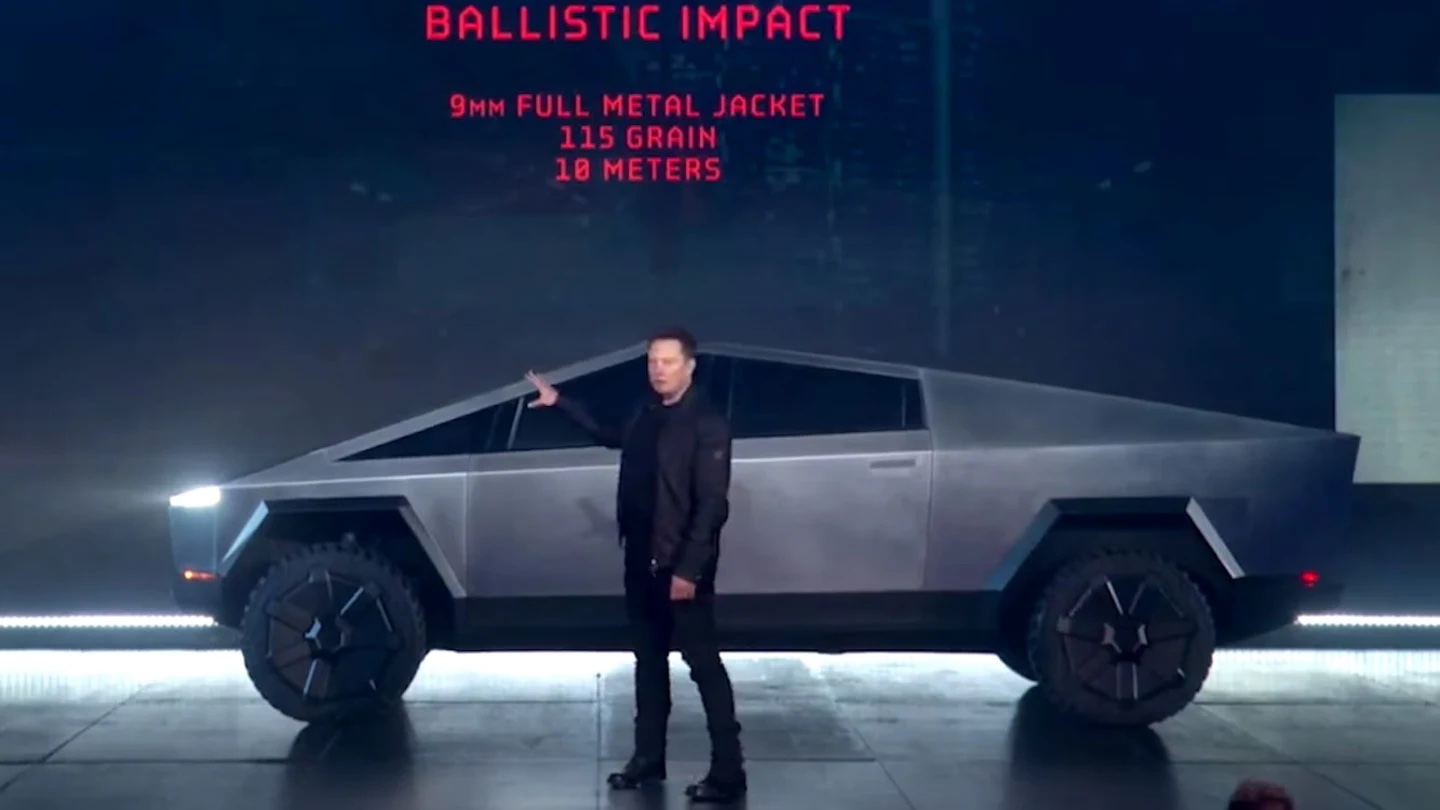
I don't think everything needs to be retro - there's plenty of articles about the pitfalls of nostalgia - the funny thing is, even these "futuristic" designs are based on the future from a retro/80s point of view. The Tesla unapologetically (for better or worse) took the design of the Cybertruck from Blade Runner.

There's definitely a place for taking design cues from the past - I admittedly like the Scout because it feels like a throwback (so I'm part of the nostalgia problem? lol), but it also feels current - but I also think automakers need to keep moving forward with their designs. Hard lines & angles aren't inherently bad, the issue is when they go too far to the extreme (and same can be said for going too retro).
100% agree. And other than lambo’s cars should have curves. That’s what makes them alluring to buyers
 
  • Like
Reactions: cyure and maynard
And then wonder why (most) people don't want to drive them. :ROFLMAO:

heading into an infomercial...

"That's what makes Scout so great! Not only do you get the benefits of EV or HREV ownership, but you also get the classically good looks that are associated with the brand from its great American go-anywhere heritage. Get yours, today!"
Agree but as was implied they are unique enough that even if you are 28 and have no understanding of Scout history it’s still a great and unique vehicle. Not a homogenous SIV and not a creased box on wheel
 
  • Like
Reactions: cyure and maynard
  • Haha
Reactions: cyure
I came here to share some of my dislike of Elon and his B.S. In fact I was going to say something like the Cybertruck has as much relation to Blade Runner as FSD has to Waymo... and well I said it anyway even though I found this article that arguably does show a relationship between a Syd Mead sketch for Blade Runner and the Cybertruck. I still think the car in Mr Mead's sketch is 1 million percent better looking that Elon's rolling aluminum monstrosity. But that's like just my opinion man.


The article is an interesting read.
I recall an article some time ago that there were German war machines that looked nearly identical to CT’s which intrigued me and not in a positive way
 
I do not believe I could fit in the Scout Terra’s frunk.

I know I can fit in the Lightning frunk with the hood closed. I am 6-feet, 1-inch tall on a good day and 6-feet on a slouchy day.

It’s like those old realtor commercials that said-any closet is a walk-in closet if you try hard enough. I think same applies for the frunk