Home Charger Reviews and FAQs

  • From all of us at Scout Motors, welcome to the Scout Community! We created this community to provide Scout vehicle owners, enthusiasts, and curiosity seekers with a place to engage in discussion, suggestions, stories, and connections. Supportive communities are sometimes hard to find, but we're determined to turn this into one.

    Additionally, Scout Motors wants to hear your feedback and speak directly to the rabid community of owners as unique as America. We'll use the Scout Community to deliver news and information on events and launch updates directly to the group. Although the start of production is anticipated in 2026, many new developments and milestones will occur in the interim. We plan to share them with you on this site and look for your feedback and suggestions.

    How will the Scout Community be run? Think of it this way: this place is your favorite local hangout. We want you to enjoy the atmosphere, talk to people who share similar interests, request and receive advice, and generally have an enjoyable time. The Scout Community should be a highlight of your day. We want you to tell stories, share photos, spread your knowledge, and tell us how Scout can deliver great products and experiences. Along the way, Scout Motors will share our journey to production with you.

    Scout is all about respect. We respect our heritage. We respect the land and outdoors. We respect each other. Every person should feel safe, included, and welcomed in the Scout Community. Being kind and courteous to the other forum members is non-negotiable. Friendly debates are welcomed and often produce great outcomes, but we don't want things to get too rowdy. Please take a moment to consider what you post, especially if you think it may insult others. We'll do our best to encourage friendly discourse and to keep the discussions flowing.

    So, welcome to the Scout Community! We encourage you to check back regularly as we plan to engage our members, share teasers, and participate in discussions. The world needs Scouts™. Let's get going.


    We are Scout Motors.

Took a look at the vehicles they say they've been able to discharge and there appear to be no GM vehicles. Not sure if that's because they haven't tried on one or if GMs software won't allow it to be discharged.
My initial guess was that it’s because the GMs with larger batteries switch between parallel to series battery configuration when charging, but the EV6 is also an 800 volt battery, so maybe not. Or maybe when the GM software causes this reconfiguration there are hardware pieces that disallow discharging.

I’m not sure.
 
For V2H charges it looks like:
GM has its own proprietary system
Ford has its own proprietary system
Tesla Cybertruck has its own proprietary system
Kia/Hyunda appear to be working with Wallbox and Wallbox says it's system will be able to work with other V2H capable vehicles in the future
Emporia has a Honda concept vehicle on their V2H webpage that may indicate they're partnered with Honda for a V2H setup

SigEnergy says their proprietary system can be used on any vehicle regardless of whether it has V2H capability built in... Still unclear on how exactly their getting the vehicle to discharge and what safeguards are in place to prevent damage to the vehicle...

If I've missed any let me know!
 
For V2H charges it looks like:
GM has its own proprietary system
Ford has its own proprietary system
Tesla Cybertruck has its own proprietary system
Kia/Hyunda appear to be working with Wallbox and Wallbox says it's system will be able to work with other V2H capable vehicles in the future
Emporia has a Honda concept vehicle on their V2H webpage that may indicate they're partnered with Honda for a V2H setup

SigEnergy says their proprietary system can be used on any vehicle regardless of whether it has V2H capability built in... Still unclear on how exactly their getting the vehicle to discharge and what safeguards are in place to prevent damage to the vehicle...

If I've missed any let me know!
Nissan’s Leaf still uses the CHAdeMO for V2X. CHAdeMO is the only standard in the world that was designed with V2X in mind. For various reasons, it’s being phased out, so it’s really only relevant in North America if you own a Leaf or a Mitsubishi Outlander PHEV (and a few other almost entirely irrelevant xEVs).
 
Nissan’s Leaf still uses the CHAdeMO for V2X. CHAdeMO is the only standard in the world that was designed with V2X in mind. For various reasons, it’s being phased out, so it’s really only relevant in North America if you own a Leaf or a Mitsubishi Outlander PHEV.
I thought the outlander PHEV was equipped with a J-1772 port… did they originally launched with CHadeMO?
 
  • Like
Reactions: maynard
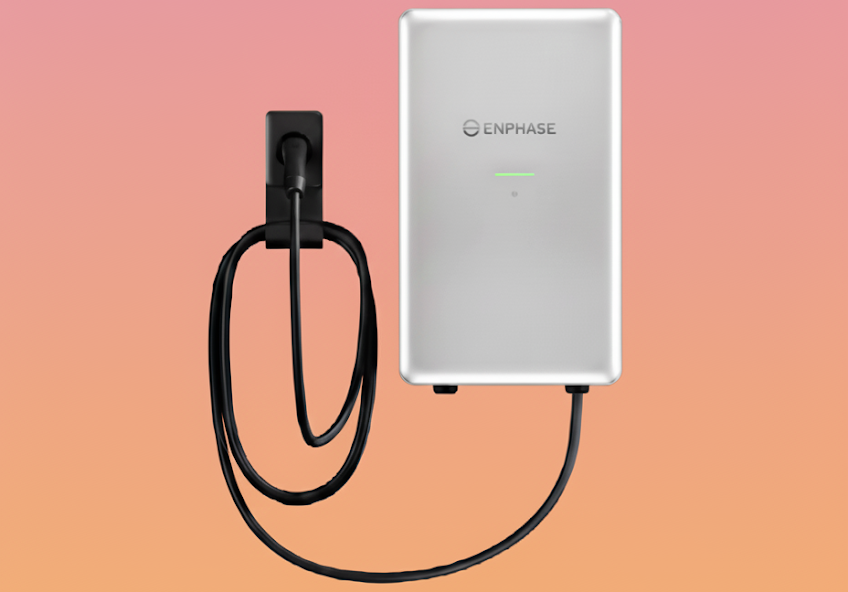
Enphase is coming out with a bidirectional charger for the global market sometime in 2026
 
Enphase is coming out with a bidirectional charger for the global market sometime in 2026
Here's the white paper on how the enphase system will work.
 
Here's the white paper on how the enphase system will work.
It’s difficult to tell from a skim of their document whether they require their energy storage system for the bidirectional charger to operate. It seems to be the case. If so, it’ll be another $10k system. Totally worth if if combined with solar and etc., but as someone who already has solar—and more importantly an inverter—installed, this would be a huge added expense. I’d be better off buying $10k worth of batteries (100 kWh of storage) and saving my truck battery for driving and longer-term emergency use via V2L.
 
  • Like
Reactions: maynard
It’s difficult to tell from a skim of their document whether they require their energy storage system for the bidirectional charger to operate. It seems to be the case. If so, it’ll be another $10k system. Totally worth if if combined with solar and etc., but as someone who already has solar—and more importantly an inverter—installed, this would be a huge added expense. I’d be better off buying $10k worth of batteries (100 kWh of storage) and saving my truck battery for driving and longer-term emergency use via V2L.
In section 4.1 of the paper it shows just the EVSE the meter collar and the vehicle. Seems like it can operate minus their battery storage system. Section 4.2 lays out the integrated energy system with their batteries.

I don't have solar or battery backup systems so using only the vehicle would interest me.
 
In section 4.1 of the paper it shows just the EVSE the meter collar and the vehicle. Seems like it can operate minus their battery storage system. Section 4.2 lays out the integrated energy system with their batteries.

I don't have solar or battery backup systems so using only the vehicle would interest me.
Thanks! I clearly haven’t read it in detail.
 
  • Like
Reactions: maynard and J Alynn
@Jamie@ScoutMotors it would also be beneficial to know if Scouts will have vehicle to load/home capability as well. Perhaps it will be an option and not standard?

Some manufacturers now have bi-directional charging as an option but it's not standard equipment. If V2L/H is going to be standard or a low cost option this may change folks plans for purchasing their chargers (EVSEs). Right now I have one that works for our current vehicle and I will be installing a second in the future so finding out the vehicles charging capabilities will help shape my future EVSE purchase.

It's good to resurrect some of these informational threads.

I've reached out to our teams to see if these details are finalized yet. I'll let you know.
 
  • Like
Reactions: SpaceEVDriver
I've reached out to our teams to see if these details are finalized yet. I'll let you know.
I am interested in the 240V V2L capability. This could potentially move me from my dependence on a gasoline generator during power outages. The catch is, I reserved the Traveler and the last I heard it only had 120V output :mad: where the Terra has both 120 and 240V :unsure:. What's the deal with that?
 
Last edited:
  • Like
Reactions: SpaceEVDriver
I am interested in the 240V V2L capability. This could potentially move me from my dependence on a gasoline generator during power outages. The catch is, I reserved the Traveler and the last I heard it only had 120V output :mad: where the Terra has both 120 and 240V :unsure:. What's the deal with that?
V2L isn’t the same as the 240 volt nema plug, that plug is using the vehicle as a generator. V2L is using a device plugged into the cars charging port that may supply 120 volt ac power up to a certain amperage.

V2H is intended to use a vehicles DC connection and an inverter built into an EVSE to supply power to the home via a transfer switch setup. The V2H and V2G (V2X combined) are relatively new advances and hopefully become more standardized and fleshed out in the coming year(s). The tech has promise and would be fantastic as backup power without having to have a standby genset and separate plugs.
 
  • Like
Reactions: SpaceEVDriver
V2L isn’t the same as the 240 volt nema plug, that plug is using the vehicle as a generator. V2L is using a device plugged into the cars charging port that may supply 120 volt ac power up to a certain amperage.

V2H is intended to use a vehicles DC connection and an inverter built into an EVSE to supply power to the home via a transfer switch setup. The V2H and V2G (V2X combined) are relatively new advances and hopefully become more standardized and fleshed out in the coming year(s). The tech has promise and would be fantastic as backup power without having to have a standby genset and separate plugs.
This is true.

But the consumer shouldn’t have to worry about the details. I much, much prefer to have the 240V AC power outlet separate from the charge port. This allows me to run appliances/tools/etc. from the truck while the truck is charging or driving. For example, running our camping fridge is possible while driving and while charging, neither of which is possible using V2L. This also means powering the house is as obvious and simple as getting a NEMA L14-30 generator cable, and installing a generator input receptacle and manual transfer switch on the house. There’s minimal extra equipment and it conforms to a de facto standard already in use by many people who would like to replace or augment their fossil fuel generator or who would like to add a manual switchover using their EV.

It’s not as convenient as automatic switchovers, but my opinion is that capability is less important in a home than many people believe.
 
  • Like
Reactions: J Alynn and apex96
I’d like to also have the nema 30 amp plug as well, I have several use cases where it would be beneficial while away from home.

I also have the manual transfer installed as well with the outlet for home backup. Unfortunately I don’t have gas so no heat except for space heaters when power goes out… I’m not spending the insane money for some 15-25 kW gensets that I’ll only use 1-2 times a year.