



What's the current timeline??
- Thread starter mastertroll
- Start date
-
 From all of us at Scout Motors, welcome to the Scout Community! We created this community to provide Scout vehicle owners, enthusiasts, and curiosity seekers with a place to engage in discussion, suggestions, stories, and connections. Supportive communities are sometimes hard to find, but we're determined to turn this into one.
Additionally, Scout Motors wants to hear your feedback and speak directly to the rabid community of owners as unique as America. We'll use the Scout Community to deliver news and information on events and launch updates directly to the group. Although the start of production is anticipated in 2026, many new developments and milestones will occur in the interim. We plan to share them with you on this site and look for your feedback and suggestions.
How will the Scout Community be run? Think of it this way: this place is your favorite local hangout. We want you to enjoy the atmosphere, talk to people who share similar interests, request and receive advice, and generally have an enjoyable time. The Scout Community should be a highlight of your day. We want you to tell stories, share photos, spread your knowledge, and tell us how Scout can deliver great products and experiences. Along the way, Scout Motors will share our journey to production with you.
Scout is all about respect. We respect our heritage. We respect the land and outdoors. We respect each other. Every person should feel safe, included, and welcomed in the Scout Community. Being kind and courteous to the other forum members is non-negotiable. Friendly debates are welcomed and often produce great outcomes, but we don't want things to get too rowdy. Please take a moment to consider what you post, especially if you think it may insult others. We'll do our best to encourage friendly discourse and to keep the discussions flowing.
So, welcome to the Scout Community! We encourage you to check back regularly as we plan to engage our members, share teasers, and participate in discussions. The world needs Scouts™. Let's get going.
We are Scout Motors.
You are using an out of date browser. It may not display this or other websites correctly.
You should upgrade or use an alternative browser.
You should upgrade or use an alternative browser.

Production to start 2027 with delivery to customers 2028. I see people asking this question on Instagram and the reply from Scout is 2028.I've been reading about 2028 and 2030 now

I read something about 2028 for the travelers and 2030 for terra. Hope it's not trueFound it. This is the statement from Scout regarding that article that came out that said 2030.
View attachment 16872
That statement above was in response to that. Scout refuted the 2030 timeline.I read something about 2028 for the travelers and 2030 for terra. Hope it's not true

Keep in mind they’ve shown the first frames coming together on the line and it’s mid 2026. That’s a full year for builds, final testing and working out the kinks in factory production. I suspect 1st quarter 2028 for the start of customer deliveries in heavier sense and maybe late 2028 for Terra but just me thinking through it. Guess only SM or Jamie can answer that accurately
The new plant building the ladder frames for Scout is expected to be finished in 2027. It's about 60 miles south of Blythewood.
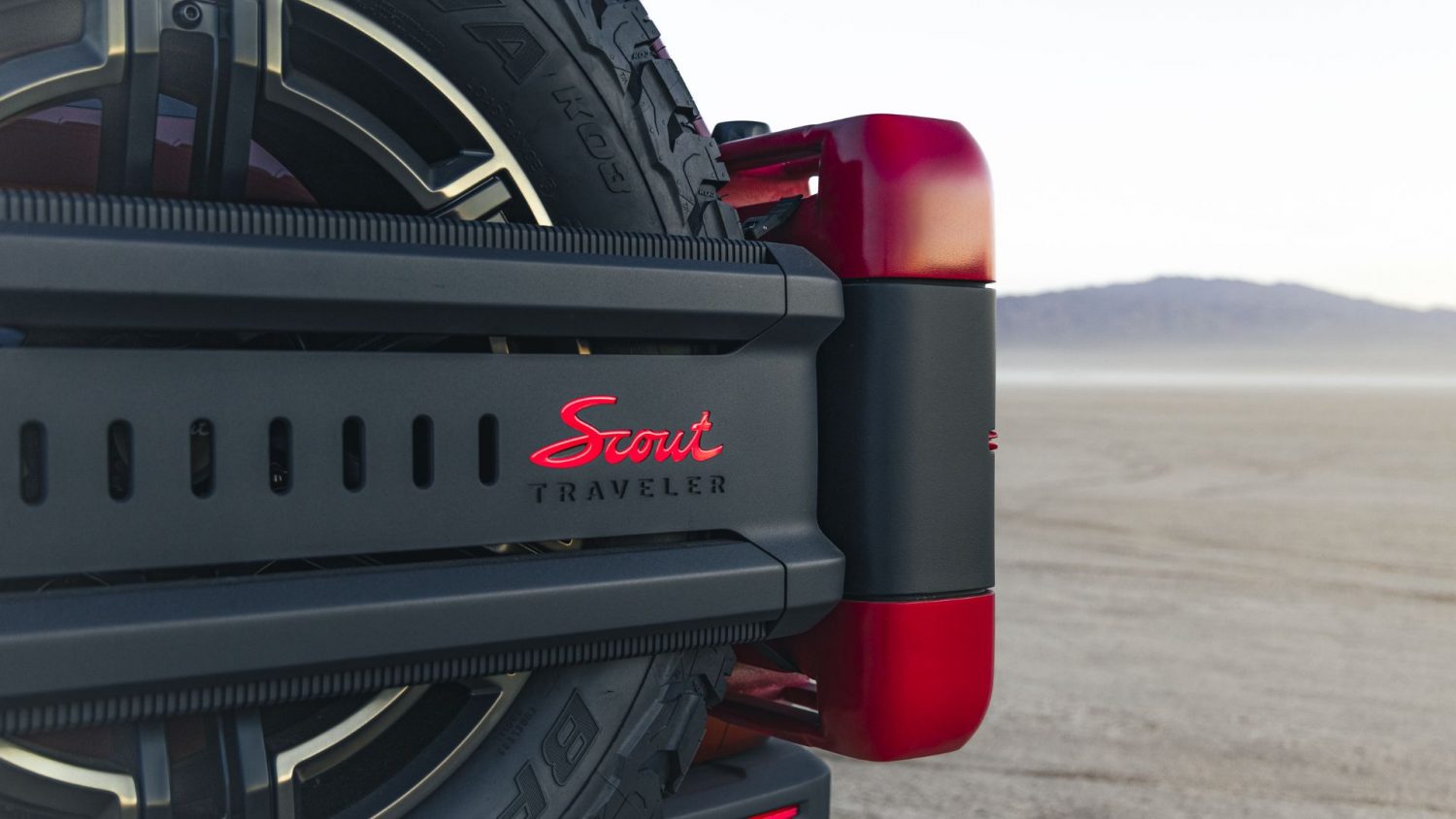
 www.cbtnews.com
Ladder Frames For Scout’s EVs Get $120M Boost
Ladder frames for Scout’s EVs will be produced in a new $120M South Carolina plant, creating jobs and supporting Scout Traveler and Terra models.
www.cbtnews.com
Okay guys, ladder frame? Exactly what is that and this sounds like good news. Things are growing nicely.The new plant building the ladder frames for Scout is expected to be finished in 2027. It's about 60 miles south of Blythewood.
Ladder Frames For Scout’s EVs Get $120M Boost
Ladder frames for Scout’s EVs will be produced in a new $120M South Carolina plant, creating jobs and supporting Scout Traveler and Terra models.
That's the vehicle frame the body, suspension, battery, etc bolt to. So far, it doesn't appear that the plant has even started construction. Listed at 4100 St Matthews Rd in Orangeburg, SC. Looks to be a building pad adjacent to the Norfolk Southern line, developed for potential customers, but nothing updated on any of the satellite views I can find. Probably locked up in regulatory purgatory.Okay guys, ladder frame? Exactly what is that and this sounds like good news. Things are growing nicely.
This announcement was made 7 months ago, so they better get a move on now that we're seeing a body coming out of the Blythewood factory.
Last edited:




This is quite surprising to me. The frames are gong to be built offsite by a 3rd party supplier? Considering the size of the Blythewood plant, I would think something as critical (and heavy/expensive to ship) would be built onsite? Maybe I'm influenced by 16 years with Tesla and their maniacal focus on doing everything themselves (er, being vertically integrated) that it feels odd
Apparently it's common. According to Google, Wranglers and Broncos have their frames built about an hour away from their assembly plants by third-party suppliers.This is quite surprising to me. The frames are gong to be built offsite by a 3rd party supplier? Considering the size of the Blythewood plant, I would think something as critical (and heavy/expensive to ship) would be built onsite? Maybe I'm influenced by 16 years with Tesla and their maniacal focus on doing everything themselves (er, being vertically integrated) that it feels odd I
Last edited:

That’s great to hear. That should time out perfectlyThe new plant building the ladder frames for Scout is expected to be finished in 2027. It's about 60 miles south of Blythewood.
Ladder Frames For Scout’s EVs Get $120M Boost
Ladder frames for Scout’s EVs will be produced in a new $120M South Carolina plant, creating jobs and supporting Scout Traveler and Terra models.


Okay guys, ladder frame? Exactly what is that and this sounds like good news. Things are growing nicely.
Short version of ladder frame.
For the longest time, a vehicle was built using a frame, with a body that was bolted onto it. Frames got better over time, and now mostly look a bit like "ladders", because they are effectively 2 main frame rails, with cross bracing.
They look like this. Easy to see why its called a "ladder" frame.
In the 70's and 80's brands started building "unibody" vehicles. Where the body, was "structural". Meaning, there is no more frame, the body "IS" the frame. Of course the body has stiffened areas that act like the frame, but thats all part of the unibody now. This was done because its cheaper for the manufacturer, and it often allows a lighter vehicle, which can help fuel economy.
Today, Unibody vehicles are basically ubiquitous. Almost every mainstream vehicle you see produced these days, save for trucks, and some SUV's (like the Wrangler), are unibody vehicles. The Trucks, and SUVs that remain body on frame, do it because of strength primarily. But also repairability (you can straighten a frame, straightening a whole unibody is much more difficult).
And its that strength/repairability, that makes it desireable for a working vehicle, and for offroad vehicles. Hence Scout constantly bragging about body on frame, and solid rear axle with mechanical lockers (they're speaking the language of the enthusiasts that care about this stuff).

Thanks!Short version of ladder frame.
For the longest time, a vehicle was built using a frame, with a body that was bolted onto it. Frames got better over time, and now mostly look a bit like "ladders", because they are effectively 2 main frame rails, with cross bracing.
They look like this. Easy to see why its called a "ladder" frame.
View attachment 16923
In the 70's and 80's brands started building "unibody" vehicles. Where the body, was "structural". Meaning, there is no more frame, the body "IS" the frame. Of course the body has stiffened areas that act like the frame, but thats all part of the unibody now. This was done because its cheaper for the manufacturer, and it often allows a lighter vehicle, which can help fuel economy.
Today, Unibody vehicles are basically ubiquitous. Almost every mainstream vehicle you see produced these days, save for trucks, and some SUV's (like the Wrangler), are unibody vehicles. The Trucks, and SUVs that remain body on frame, do it because of strength primarily. But also repairability (you can straighten a frame, straightening a whole unibody is much more difficult).
And its that strength/repairability, that makes it desireable for a working vehicle, and for offroad vehicles. Hence Scout constantly bragging about body on frame, and solid rear axle with mechanical lockers (they're speaking the language of the enthusiasts that care about this stuff).

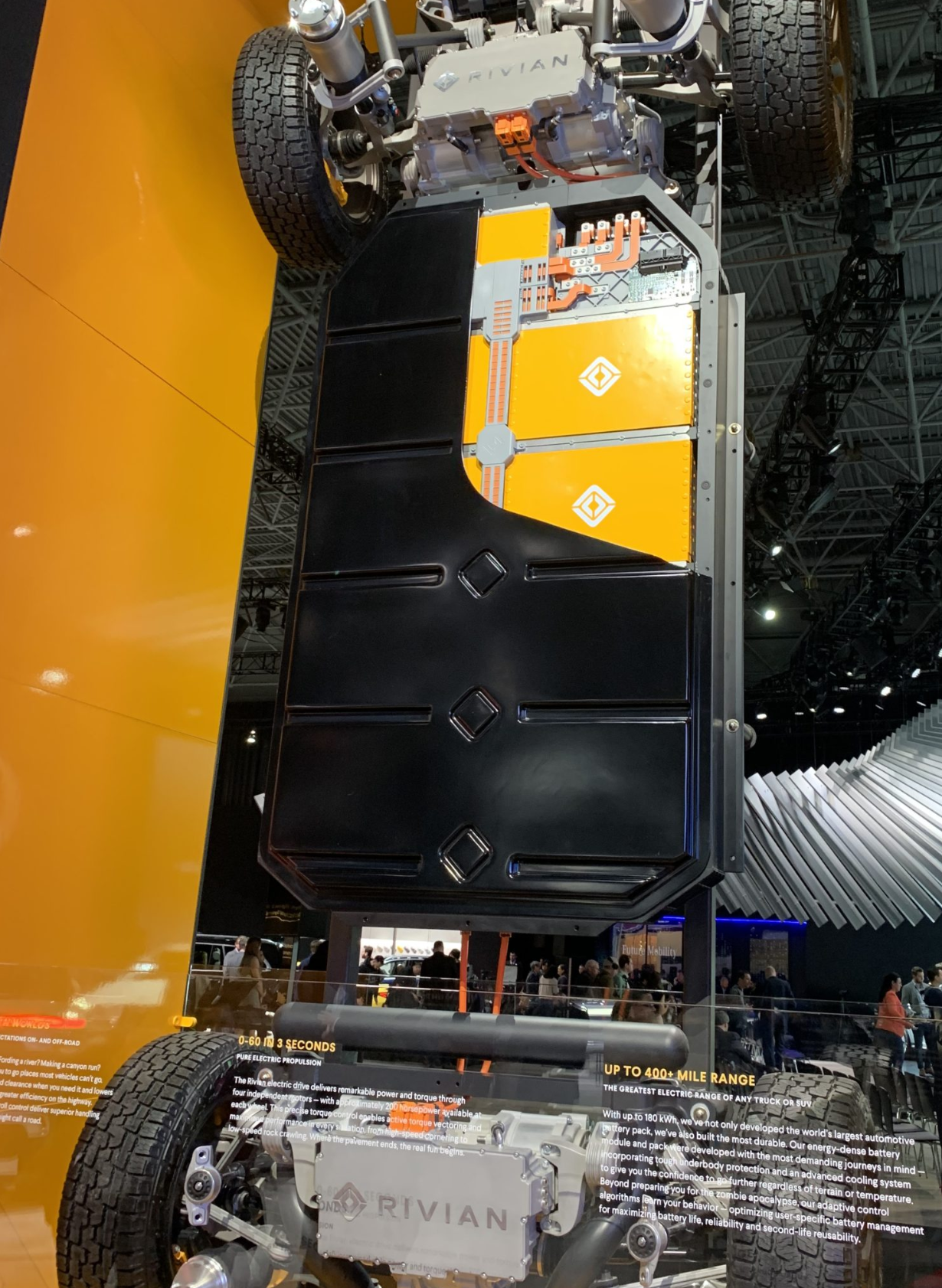
... And, when you are able to integrate battery modules neatly between the 2 rails you transform that ladder into a "Skateboard" with a low center of gravity, a rigid structure and a clean-slate above it, you realize massive space savings:
Ver nice summary. If those were all your own words that was really good. Hoping that helped @cyureShort version of ladder frame.
For the longest time, a vehicle was built using a frame, with a body that was bolted onto it. Frames got better over time, and now mostly look a bit like "ladders", because they are effectively 2 main frame rails, with cross bracing.
They look like this. Easy to see why its called a "ladder" frame.
View attachment 16923
In the 70's and 80's brands started building "unibody" vehicles. Where the body, was "structural". Meaning, there is no more frame, the body "IS" the frame. Of course the body has stiffened areas that act like the frame, but thats all part of the unibody now. This was done because its cheaper for the manufacturer, and it often allows a lighter vehicle, which can help fuel economy.
Today, Unibody vehicles are basically ubiquitous. Almost every mainstream vehicle you see produced these days, save for trucks, and some SUV's (like the Wrangler), are unibody vehicles. The Trucks, and SUVs that remain body on frame, do it because of strength primarily. But also repairability (you can straighten a frame, straightening a whole unibody is much more difficult).
And its that strength/repairability, that makes it desireable for a working vehicle, and for offroad vehicles. Hence Scout constantly bragging about body on frame, and solid rear axle with mechanical lockers (they're speaking the language of the enthusiasts that care about this stuff).
Very helpful.Ver nice summary. If those were all your own words that was really good. Hoping that helped @cyure
And for nearly all applications a lower center of gravity is always more desirable... And, when you are able to integrate battery modules neatly between the 2 rails you transform that ladder into a "Skateboard" with a low center of gravity, a rigid structure and a clean-slate above it, you realize massive space savings:
View attachment 16924
100% my own words, so thank youVer nice summary. If those were all your own words that was really good. Hoping that helped @cyure
 .
.A pleasant distraction between things at work while I was on call.
Similar threads

- Replies
- 212
- Views
- 14K


- Replies
- 88
- Views
- 6K


- Replies
- 3
- Views
- 477
