




From Expedition Portal:
https://expeditionportal.com/byd-shark-phev-outsells-toyota-hilux-in-australia/
In a year that will be talked about for decades, 2025 marked the moment plug-in electrified vehicles truly made themselves at home in the competitive Australian ute market. In a segment long dominated by diesel-burning workhorses—where names like HiLux and Ranger have been etched into the cultural DNA of farmers, tradies, and adventure seekers alike—something remarkable happened.
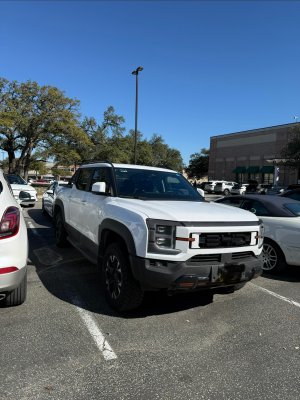
The BYD Shark 6, a plug-in hybrid electric utility vehicle from Chinese automaker BYD, outsold the venerable HiLux among private car buyers in Australia for the first time. Yes, that HiLux, the symbol of rugged reliability, fell behind a hybrid ute from a brand that, until recently, was barely on most Australians’ radar.
According to the latest sales data, the BYD Shark 6 recorded 15,564 private sales in Australia in 2025, comfortably ahead of the HiLux’s 12,529 deliveries into private hands. That’s no small feat given how entrenched Toyota is in the market. This is nothing short of a stunning result in its first full year on sale and one that helped BYD become one of the fastest-growing brands in the country.
Part of the Shark’s winning formula is value. In 2025, the Shark 6 was competitively priced from around A$57,900 before on-road costs, with many buyers securing drive-away deals in the $55,000–$60,000 range—roughly in line with, or cheaper than, comparable HiLux variants. For a vehicle that pairs the practicality of a dual-cab ute with the efficiency of a plug-in hybrid and enough tech to shame many mainstream SUVs, that’s a compelling proposition.
But the numbers tell only part of the story. Australia has historically been a very tough market for electric vehicles. Long distances, sparse charging infrastructure outside major cities, and a cultural skepticism toward EVs have combined to keep pure battery EV adoption relatively slow compared to other parts of the world. Yet 2025 saw electrified vehicles—including hybrids, PHEVs, and BEVs—collectively outsell internal-combustion-engine-only cars, a watershed moment reflecting a broader shift in consumer attitudes.
The Shark’s success isn’t just about price or novelty. It signals a deeper realization among buyers that electrified powertrains now deliver real-world utility without compromising versatility—and in some respects enhance it, offering instant torque, lower running costs, and the flexibility of gasoline backup when the trip calls for range.
For manufacturers entrenched in the internal-combustion world, this is a clear inflection point. Toyota and others are already accelerating their electrification strategies, but the BYD story underscores rising competition from Chinese brands that are marrying bold pricing with cutting-edge technology.
Long-term reliability and durability remain a large question mark, as the Shark has only been in customers’ hands in Australia for a little over 12 months. How the electrical systems, chassis, axles, and driveline will hold up to tens of thousands of miles of corrugations, heat cycles, and the stress of driving at or near maximum payload capacity is a question that can’t be answered yet.
With an impressive six-year, 90,000-mile warranty and an eight-year battery warranty, maybe early adopters are thinking it doesn’t matter too much? As the sun rises on a new era of vehicle choice in Australia, the Shark’s bite may be the first sign that even the most traditional segments are ripe for electrified disruption—and that Australia’s adventurous spirits might be more ready for the plug-in revolution than anyone expected. The BYD Shark is expected to be on sale soon in Canada, thanks to greatly reduced tariffs. The US continues to maintain a 100% tariff on all Chinese EVs, effectively keeping BYD vehicles off the road for now.


https://expeditionportal.com/byd-shark-phev-outsells-toyota-hilux-in-australia/
In a year that will be talked about for decades, 2025 marked the moment plug-in electrified vehicles truly made themselves at home in the competitive Australian ute market. In a segment long dominated by diesel-burning workhorses—where names like HiLux and Ranger have been etched into the cultural DNA of farmers, tradies, and adventure seekers alike—something remarkable happened.
The BYD Shark 6, a plug-in hybrid electric utility vehicle from Chinese automaker BYD, outsold the venerable HiLux among private car buyers in Australia for the first time. Yes, that HiLux, the symbol of rugged reliability, fell behind a hybrid ute from a brand that, until recently, was barely on most Australians’ radar.
According to the latest sales data, the BYD Shark 6 recorded 15,564 private sales in Australia in 2025, comfortably ahead of the HiLux’s 12,529 deliveries into private hands. That’s no small feat given how entrenched Toyota is in the market. This is nothing short of a stunning result in its first full year on sale and one that helped BYD become one of the fastest-growing brands in the country.
Part of the Shark’s winning formula is value. In 2025, the Shark 6 was competitively priced from around A$57,900 before on-road costs, with many buyers securing drive-away deals in the $55,000–$60,000 range—roughly in line with, or cheaper than, comparable HiLux variants. For a vehicle that pairs the practicality of a dual-cab ute with the efficiency of a plug-in hybrid and enough tech to shame many mainstream SUVs, that’s a compelling proposition.
But the numbers tell only part of the story. Australia has historically been a very tough market for electric vehicles. Long distances, sparse charging infrastructure outside major cities, and a cultural skepticism toward EVs have combined to keep pure battery EV adoption relatively slow compared to other parts of the world. Yet 2025 saw electrified vehicles—including hybrids, PHEVs, and BEVs—collectively outsell internal-combustion-engine-only cars, a watershed moment reflecting a broader shift in consumer attitudes.
The Shark’s success isn’t just about price or novelty. It signals a deeper realization among buyers that electrified powertrains now deliver real-world utility without compromising versatility—and in some respects enhance it, offering instant torque, lower running costs, and the flexibility of gasoline backup when the trip calls for range.
For manufacturers entrenched in the internal-combustion world, this is a clear inflection point. Toyota and others are already accelerating their electrification strategies, but the BYD story underscores rising competition from Chinese brands that are marrying bold pricing with cutting-edge technology.
Long-term reliability and durability remain a large question mark, as the Shark has only been in customers’ hands in Australia for a little over 12 months. How the electrical systems, chassis, axles, and driveline will hold up to tens of thousands of miles of corrugations, heat cycles, and the stress of driving at or near maximum payload capacity is a question that can’t be answered yet.
With an impressive six-year, 90,000-mile warranty and an eight-year battery warranty, maybe early adopters are thinking it doesn’t matter too much? As the sun rises on a new era of vehicle choice in Australia, the Shark’s bite may be the first sign that even the most traditional segments are ripe for electrified disruption—and that Australia’s adventurous spirits might be more ready for the plug-in revolution than anyone expected. The BYD Shark is expected to be on sale soon in Canada, thanks to greatly reduced tariffs. The US continues to maintain a 100% tariff on all Chinese EVs, effectively keeping BYD vehicles off the road for now.




 .
.


